Viburnum, Genus, ellipticum, Species,
- Genus & species
oval-leaf viburnum
Overview
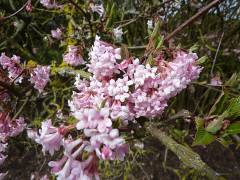
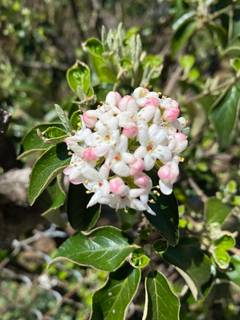
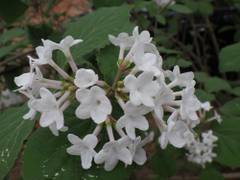
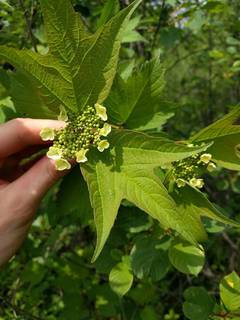
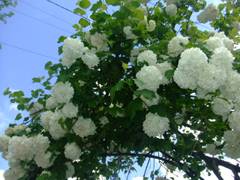
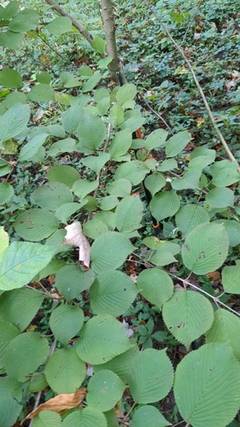
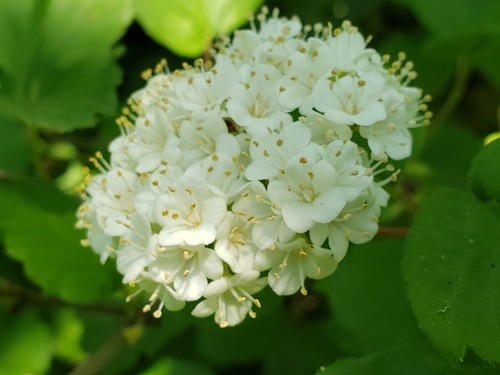
Viburnum ellipticum is a deciduous shrub reaching 5-12 feet (1.5-3.6 m) tall and 4-10 feet (1.2-3 m) wide at maturity, with a rounded form and ascending branches. Bark is gray-brown and develops shallow furrows on older stems. Leaves are opposite, broadly elliptic to oval, 1.5-4 inches (3.8-10 cm) long with prominent palmate venation and toothed margins on the upper two-thirds. Foliage is dark green above, paler below, and turns reddish-purple to bronze-red in October before drop. Flat-topped cymes 2-4 inches (5-10 cm) across bear 30-60 small white flowers with five petals from late April through early June. Drupes ripen from green through red to dark blue-black in late August and September; mature drupes are 0.3-0.4 inches (8-10 mm) across with a single flat seed. Plants form small colonies by basal sprouting in moist soils. Growth rate is slow to moderate at 6-12 inches (15-30 cm) per year; mature size is reached in 10-15 years.
Native Range
Native to the Pacific Northwest from southwestern Washington south through Oregon to northern California, with scattered populations in the Sierra Nevada foothills. Found on dry to moist slopes, oak woodlands, and chaparral edges below 5,000 feet (1,500 m) elevation. Most common on rocky to gravelly loam in zones with mild summers and wet winters.Suggested Uses
Used in native shrub borders, woodland edges, and riparian restoration plantings in zones 6-9, spaced 8-10 feet (2.4-3 m) apart for individual specimens or 4-5 feet (1.2-1.5 m) for hedge effect. Drupes are eaten by birds and small mammals from late summer into fall. Reddish-purple to bronze-red fall foliage holds 2-3 weeks before drop in October.How to Identify
Appearance
Size & Dimensions
Height5' - 12'
Width/Spread4' - 10'
Bloom Information
Late April through early June in zones 6-9, with flat-topped cymes of 30-60 small white flowers appearing as leaves expand. Bloom lasts 12-16 days at any single site; cool weather extends bloom to 21 days. Native solitary bees and hoverflies are the primary pollinators.
Detailed Descriptions
Foliage Description
dark green above, paler belowGrowing Conditions
Sun Requirements
Requires 4-8 hours of direct sunlight daily
• Full Sun: 6+ hours of direct sunlight
• Partial Shade: 3-6 hours of direct sunlight
• Full Shade: Less than 3 hours of direct sunlight
Care & Maintenance
Care Guide
Grows in part shade to full sun on moist, well-drained loam to clay loam at slightly acid to neutral pH. Water deeply once weekly during the first two growing seasons; established plants tolerate moderate summer dry but produce smaller drupes in dry years. Powdery mildew develops on foliage in shaded sites with poor air circulation; severity is cosmetic. Viburnum leaf beetle has not yet been recorded on this species in the western United States. Suckers from the base can be removed for a single-trunk form or left for thicket habit. Plants tolerate brief flooding (3-7 days), an adaptation to riparian habitat.Pruning
Prune in late winter (February to early March) before bud break to remove deadwood or crossing branches and shape the canopy. Heavy pruning reduces the next year's flower and drupe crop by 30-50%; light annual maintenance retains crop volume. Suckers from the base or rootstock are removed at ground level if a single-trunk form is wanted.Pruning Schedule
Prune: February–March
winterearly spring