Ulmus, Genus, glabra, Species,
- Genus & species
Wych elm
Northern and central Europe to the Caucasus
Overview
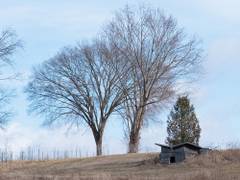
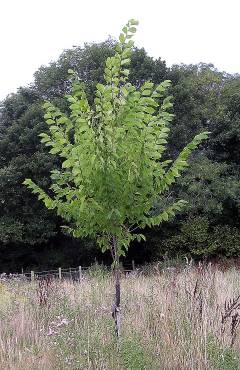
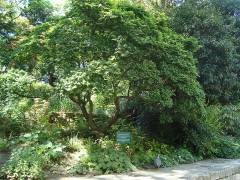
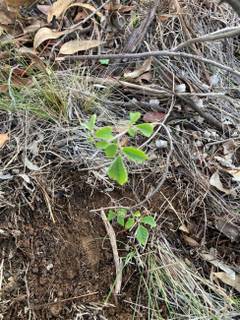
Ulmus glabra is a deciduous tree reaching 60-100 feet (18-30 m) with a broad spreading crown 50-70 feet (15-21 m) across on open-grown specimens. It does not sucker from the roots, unlike U. minor and U. procera, so regeneration comes from seed rather than clonal shoots. The trunk is short and frequently forks low, carrying heavy ascending limbs that arch outward at the tips. Leaves are 3-6 inches (7.5-15 cm) long, obovate, abruptly short-pointed, doubly toothed, and strongly unequal at the base, where the longer side can overlap the 0.1-0.2 inch (3-5 mm) petiole completely; the upper surface is rough with short stiff hairs. Flowers open in February and March ahead of the leaves, in tight red-purple clusters of 15-20 along two-year-old twigs. Round papery samaras 0.6-1 inch (15-25 mm) wide follow in May, each carrying a single seed set centrally in the wing. Bark is smooth grey on young stems and develops shallow interlacing ridges with age. The species is highly susceptible to Dutch elm disease caused by Ophiostoma novo-ulmi; mature populations across Britain and northern Europe collapsed from the 1970s onward, and seedling regeneration usually dies back once trunk diameter passes 6 inches (15 cm).
Native Range
Ulmus glabra is native to northern and central Europe, from Ireland and Scotland east through Scandinavia and the Baltic states to the Urals, and south to the mountains of Spain, Italy, and Greece, with outlying populations in Anatolia and the Caucasus. It grows in mixed deciduous woodland, damp ravines, and limestone scree. It tolerates cooler summers and higher altitudes than other European elms, reaching 4,900 feet (1,500 m) in the Alps.Suggested Uses
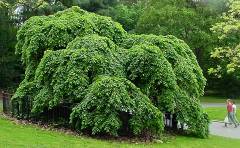
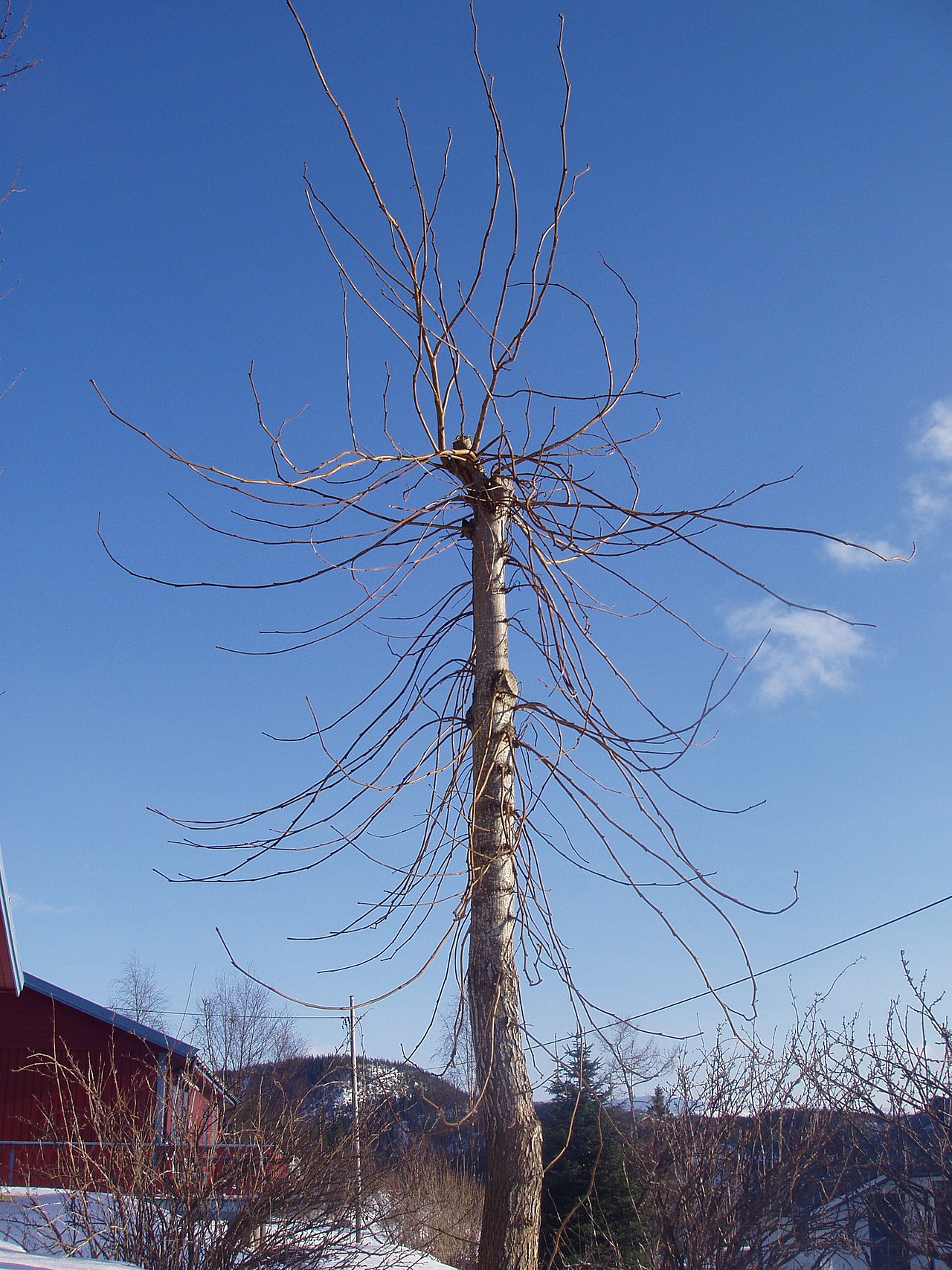
Grown as a large shade tree in parks, estates, and wide verges where a mature spread of 50-70 feet (15-21 m) can be accommodated. Upland and coastal shelterbelts use it for wind tolerance, planted 20-30 feet (6-9 m) apart. The weeping form, grafted onto a standard stem, is used in smaller gardens where it holds at 8-15 feet (2.4-4.5 m) tall.How to Identify
Appearance
Size & Dimensions
Height60' - 100'
Width/Spread50' - 70'
Bloom Information
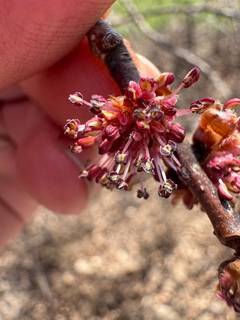
Flowering runs through February and March, three to six weeks before leaf emergence. Clusters of 15-20 petal-less flowers sit tight against two-year-old twigs, each about 0.2 inch (5 mm) across with dark red-purple anthers over a green calyx, casting a dull purple tone across whole branches for 10-14 days. Pollination is by wind. Samaras develop quickly and shed through May and June, often carpeting the ground beneath the crown.
Detailed Descriptions
Foliage Description
Dark greenGrowing Conditions
Sun Requirements
Requires 6-10 hours of direct sunlight daily
• Full Sun: 6+ hours of direct sunlight
• Partial Shade: 3-6 hours of direct sunlight
• Full Shade: Less than 3 hours of direct sunlight
Care & Maintenance
Care Guide
Grows in full sun to part shade and reaches full stature on deep, moist, free-draining loams over limestone or base-rich clay at pH 6.0-8.0. Water demand is moderate once established, though it is less drought-tolerant than U. minor and drops leaves early in prolonged dry summers. It withstands exposed coastal and upland sites, salt-laden wind, and urban air, and is hardy through zones 4-6. Dutch elm disease is the limiting factor: beetle-vectored infection shows as yellowing and wilting of individual limbs in midsummer, followed by whole-crown death within one to three seasons. Nursery stock in affected regions is now largely restricted to resistant hybrid selections rather than the wild species. Transplanting succeeds readily in the first five years, after which the coarse root system re-establishes poorly.Pruning
Formative pruning during the first 10 years removes competing leaders, since low forking otherwise produces narrow included-bark unions that split in storms. Cuts are made between July and February, outside the March-to-June flight period of the Scolytus bark beetles that carry Dutch elm disease. Wounds larger than 3 inches (7.5 cm) across close slowly and become entry points for decay fungi. Material removed from infected trees is burned or chipped, since bark left stacked on site breeds the vector.Pruning Schedule
Prune: July–August & November–January
summerfallwinter