Image 1 of 5
1 / 5
No machine-readable author provided. Ptelea assumed (based on copyright claims)., no rights reserved (CC0) · Wikimedia Commons
Ulmus, Genus, americana, Species, 'Princeton', Cultivar,
- Genus & species
- Cultivar
Princeton American elm tree
Eastern and central North America; cultivar from Princeton, NJ
Overview
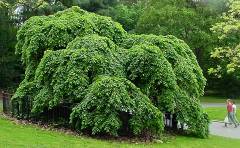
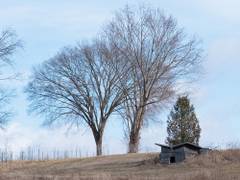
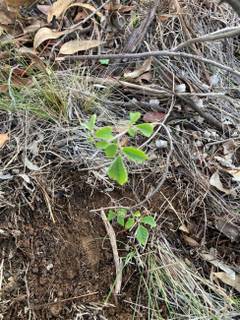
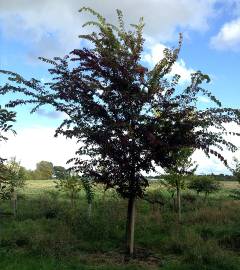
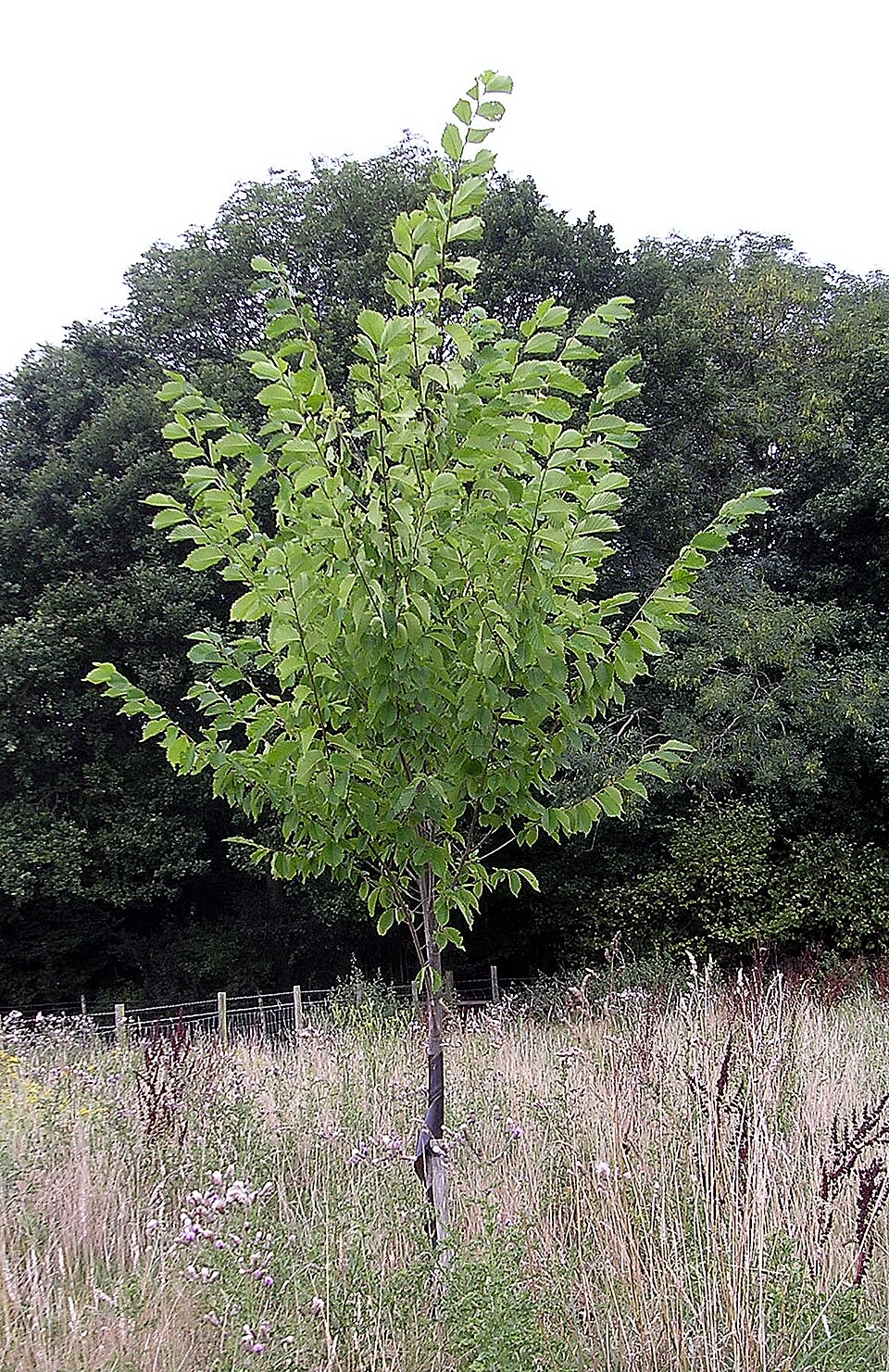
Ulmus americana 'Princeton' is a deciduous elm cultivar reaching 50-70 feet (15-21 m) tall and 40-50 feet (12-15 m) wide at maturity, with a vase-shaped crown and upright-arching primary branches. Selected at Princeton Nurseries in New Jersey in 1922 and now propagated for resistance to Dutch elm disease. Bark gray-brown, developing deep furrows and broad ridges with age. Leaves alternate, 3-6 inches (8-15 cm) long, ovate to elliptic with asymmetrical bases and doubly serrate margins; medium green above, paler beneath, turning clear yellow in fall. Reddish-brown flowers appear in tight clusters before leaf emergence in March or early April. Flat oval samaras 0.4-0.5 inch (10-13 mm) across mature in late April to early May and disperse by wind. Growth rate 2-3 feet (60-90 cm) per year on suitable urban sites, slowing as the tree matures. Resistant to Dutch elm disease in field and inoculation trials; remains susceptible to elm yellows phytoplasma in zones 5-7. Tolerates compacted soils, road salt, and seasonal drought once established; bark may split in late spring frost events.
Native Range
Ulmus americana is native to eastern and central North America from Newfoundland west to southeastern Saskatchewan, south to Florida and central Texas. The 'Princeton' cultivar originated at Princeton Nurseries in Princeton, New Jersey, in 1922 and is not found in wild populations. The species inhabits floodplains, river bottoms, and moist upland forests at elevations below 2,500 feet (760 m).Suggested Uses
Commonly planted as a street tree in zones 4-9 with 30-40 foot (9-12 m) spacing for canopy coverage at maturity. Used in residential lawns and large parks where the vase-shaped form creates shade without low-spreading branches. Tolerates urban compacted soils, road salt, and seasonal drought; performance is reduced in regions where elm yellows phytoplasma is present.How to Identify
Appearance
Size & Dimensions
Height50' - 70'
Width/Spread40' - 50'
Bloom Information
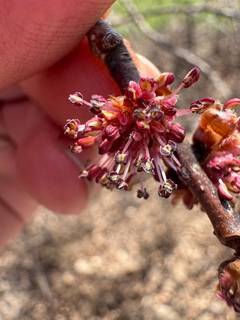
Reddish-brown clusters of bisexual flowers open before leaves in March or early April depending on latitude, with peak bloom lasting 7-10 days. Flat green samaras 0.4-0.5 inch (10-13 mm) across develop within 4-6 weeks of pollination and mature to papery tan in late April to early May. Wind disperses samaras over distances of 600 feet (180 m) from the parent tree. Bloom timing shifts 2-3 weeks later in zones 4-5 compared to zones 7-9.
Detailed Descriptions
Foliage Description
medium green above, paler beneath; turns clear yellow in fallGrowing Conditions
Sun Requirements
Requires 6-12 hours of direct sunlight daily
• Full Sun: 6+ hours of direct sunlight
• Partial Shade: 3-6 hours of direct sunlight
• Full Shade: Less than 3 hours of direct sunlight
Care & Maintenance
Care Guide
Newly planted trees require 15-20 gallons (57-76 L) of water per week during the first growing season, decreasing to bi-weekly watering during the second season. Mature trees tolerate periodic drought, with smaller leaves and reduced annual growth during prolonged dry periods. A 2-3 inch (5-8 cm) layer of organic mulch in a 4-6 foot (1.2-1.8 m) radius around the trunk reduces lawn competition and conserves moisture. Fertilization with balanced slow-release nitrogen at 1 pound per 1,000 square feet (0.5 kg per 90 sq m) of root zone in early spring supports young trees on urban soils. Elm leaf beetle and elm bark beetle occur throughout the species range; bark beetle activity is reduced by removal of dead branches before March each year. Trees grafted onto seedling rootstock occasionally produce non-resistant rootstock suckers below the graft union.Pruning
Structural pruning is performed in winter from December through February while the tree is dormant. Removal of co-dominant leaders before the tree reaches 8 inches (20 cm) of trunk diameter prevents future bark inclusions. Cuts 2-4 inches (5-10 cm) across callus over within 2-3 growing seasons; larger cuts decay faster than smaller ones. Spring and early summer pruning increases risk of bark beetle attraction in the eastern range.Pruning Schedule
Prune: December–February
winter