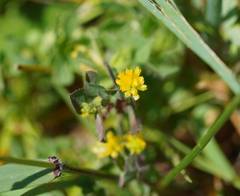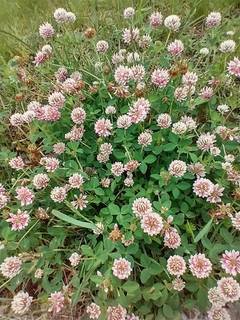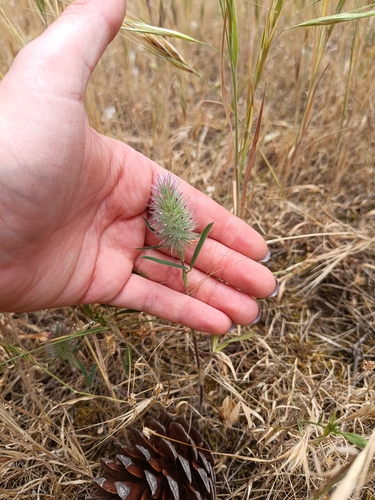
Trifolium, Genus, angustifolium, Species,
- Genus & species
narrow-leaved clover
Overview
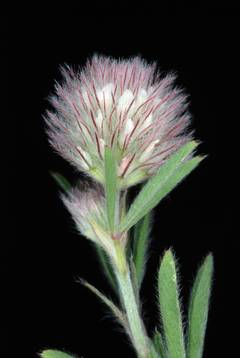
Trifolium angustifolium is an erect winter-growing annual clover 6-24 inches (15-60 cm) tall with slender, softly hairy stems. The leaves are divided into three very narrow leaflets 0.6-2 inches (1.5-5 cm) long, much narrower than those of most clovers and the source of the name narrow-leaved clover. Pink to pale rose flowers are packed into dense, elongated cylindrical heads 1-3 inches (2.5-7.5 cm) long that taper toward the tip and are softly hairy throughout. The plant germinates with autumn and winter rains, flowers in spring, and dies after setting seed in early summer. It grows a shallow root system and fixes nitrogen through root nodules like other legumes. Native to the Mediterranean region, it has naturalised widely in southern Australia on roadsides, pasture, and disturbed ground. The bristly mature seed heads can lodge in the mouths and eyes of grazing sheep and cause injury, which reduces the plant pasture value. As an annual it persists at a site only through its seed bank.
Native Range
Trifolium angustifolium is native to the Mediterranean region, southern Europe, North Africa, and western Asia. It has naturalised across southern Australia and other temperate regions, growing on roadsides, overgrazed pasture, and disturbed open ground.Suggested Uses
Has little deliberate cultivation and is regarded mainly as a naturalised pasture and roadside weed. It contributes some early grazing and nitrogen fixation on poor soils before the seed heads harden. It occupies disturbed open ground across temperate regions.How to Identify
Appearance
Size & Dimensions
Height6" - 2'
Width/Spread4" - 10"
Bloom Information
Detailed Descriptions
Flower Description
pink to roseFoliage Description
greenGrowing Conditions
Sun Requirements
Requires 6-12 hours of direct sunlight daily
• Full Sun: 6+ hours of direct sunlight
• Partial Shade: 3-6 hours of direct sunlight
• Full Shade: Less than 3 hours of direct sunlight
Water & Climate
Water Needs
Care & Maintenance
Care Guide
A hardy winter annual of open, sunny, free-draining ground, germinating on autumn rains and completing growth before summer drought. It tolerates low fertility and fixes its own nitrogen, establishing readily on poor and disturbed soils. The plant needs no cultivation and self-sows freely from a persistent seed bank. It is grazed while young, but the bristly seed heads can injure stock, lowering its pasture value. Plants die naturally after seeding in early summer. Growth is heaviest where winter rainfall is reliable.Pruning
As an annual, the plant is not pruned. Mowing or slashing before the heads harden reduces seed set and limits spread in pasture. The plant dies back fully after seeding.Toxicity
Non-toxicPlanting Guide
Planting Methods & Timing
Planting Method
direct sow
Direct Sow Timing
autumn
Days to Maturity
150–210 days
Plant Spacing
4 inches