Overview
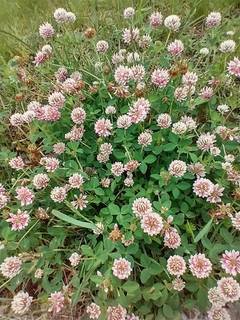
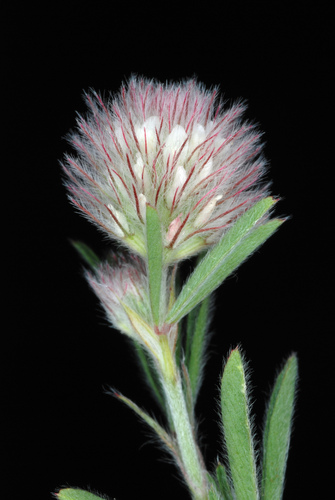
Trifolium arvense is a small annual in the pea family, growing 4-16 inches (10-40 cm) tall on slender, branching, softly hairy stems. The leaves are divided into three narrow leaflets 0.5-1 inch (1-2.5 cm) long, each finely toothed at the tip. From early summer into autumn the plant bears soft, cylindrical flower heads 0.5-1.5 inches (1-4 cm) long, densely covered in soft silvery hairs that give them a fuzzy, grey-pink look and the name rabbitfoot clover. The tiny individual flowers are pale pink to white and largely hidden among the hairs. Plants grow on poor, dry, sandy or gravelly soil, including roadsides, fields, and disturbed ground, and fix nitrogen through root nodules. The species self-seeds and can spread on bare, infertile ground where other plants struggle. It has naturalized widely outside its native range. Each plant completes its life cycle in a single season. The shallow roots make young plants easy to pull.
Native Range
Trifolium arvense is native to Europe, western Asia, and North Africa. It has naturalized widely across North America, Australia, and other temperate regions. It grows on dry, sandy, or gravelly soils in fields, roadsides, dunes, and disturbed open ground.Suggested Uses
Used in dry meadow mixes, sandy wildflower plantings, and as a cover on poor, eroding soil. As a nitrogen-fixing legume it can improve thin soils. Small bees visit the flowers for nectar and pollen.How to Identify
Appearance
Size & Dimensions
Height4" - 1'4"
Width/Spread4" - 10"
Bloom Information
Detailed Descriptions
Flower Description
grey-pink to whiteFoliage Description
greenGrowing Conditions
Sun Requirements
Requires 6-12 hours of direct sunlight daily
• Full Sun: 6+ hours of direct sunlight
• Partial Shade: 3-6 hours of direct sunlight
• Full Shade: Less than 3 hours of direct sunlight
Water & Climate
Water Needs
Drought Tolerance
Drought tolerant when established
Care & Maintenance
Care Guide
Plants grow in full sun and dry, infertile, sandy or gravelly soil with sharp drainage, and tolerate drought and poor ground. Rich or moist soil is not needed and tends to favor competing plants. As a legume, the species fixes its own nitrogen and needs no feeding. It self-seeds freely and can colonize bare, disturbed ground. Plants die after setting seed in autumn. Volunteer seedlings appear the next spring.Pruning
No pruning is needed for this small annual. Removing or mowing plants before the heads set seed limits spread. Spent plants are cleared after they dry and die.Toxicity
Non-toxicPlanting Guide
Planting Methods & Timing
Planting Method
direct sow