Trifolium, Genus, incarnatum, Species,
- Genus & species
crimson clover
Southern Europe and the Mediterranean
Overview
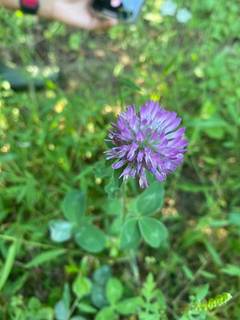
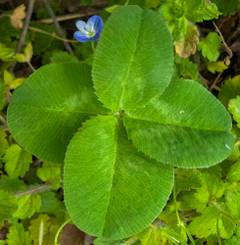
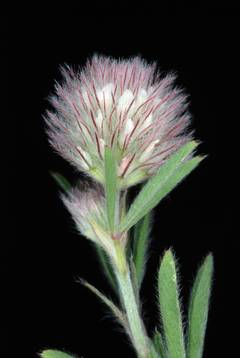
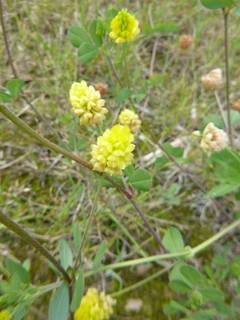
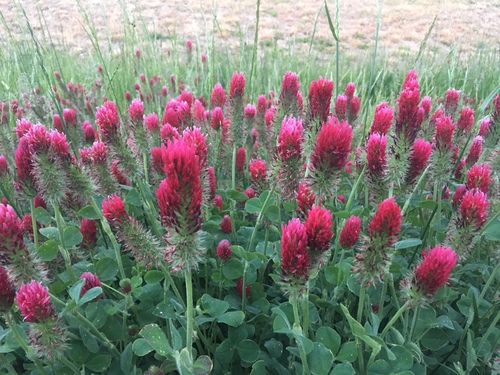
Trifolium incarnatum is an upright annual legume 8-20 in (20-50 cm) tall, with soft-hairy stems and stalked, three-part leaves whose rounded leaflets are 0.4-1 in (1-2.5 cm) long. In late spring and early summer it produces dense, elongated conical flower heads 1-2.5 in (2.5-6 cm) long packed with crimson to scarlet pea-type flowers that open from the base of the head upward. Each pollinated flower forms a small one-seeded pod enclosed in the dried calyx. As a legume it fixes nitrogen through root nodules and is widely sown as a cover crop, green manure, and forage plant. It grows quickly from an autumn or spring sowing, flowers, sets seed, and dies within a single season. The plant prefers well-drained soils and does not tolerate waterlogging or hard frost once in active growth. It is native to southern Europe but is now grown and naturalised across much of the temperate world. The crimson flower heads draw bees and other pollinators during bloom.
Native Range
Native to southern Europe and the Mediterranean region. It is now cultivated and naturalised across temperate North America, Europe, and other regions as a cover and forage crop.Suggested Uses
Sown as a winter cover crop, green manure, and forage legume to build soil nitrogen and reduce erosion. The crimson flowers also support bees and other pollinators, and the plant is used in wildflower and pollinator seed mixes.How to Identify
Appearance
Size & Dimensions
Height8" - 1'8"
Width/Spread4" - 8"
Bloom Information
Detailed Descriptions
Foliage Description
greenGrowing Conditions
Sun Requirements
Requires 6-12 hours of direct sunlight daily
• Full Sun: 6+ hours of direct sunlight
• Partial Shade: 3-6 hours of direct sunlight
• Full Shade: Less than 3 hours of direct sunlight
Water & Climate
Water Needs