Trifolium, Genus, spp., Multiple species,
- Genus
- Multiple species
clovers
Temperate Europe, Asia, Africa, and the Americas
Overview
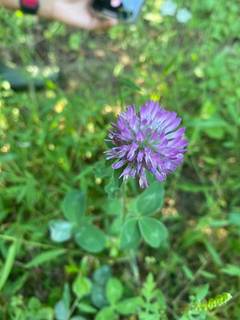
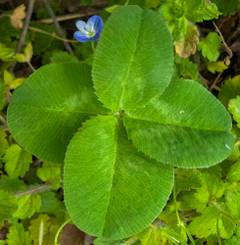
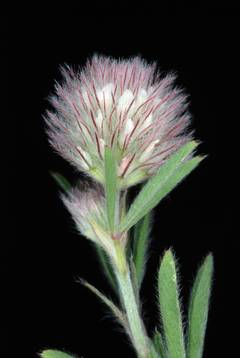
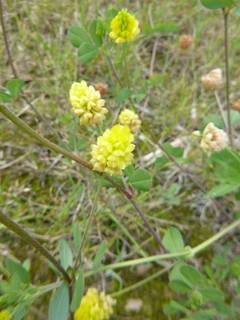
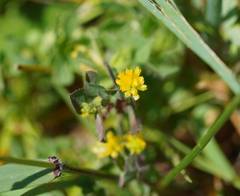
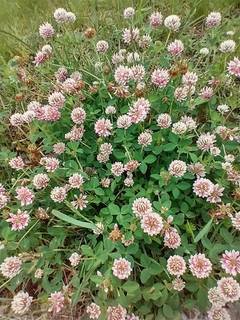
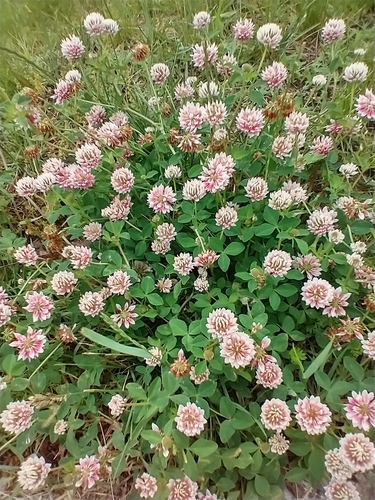
Trifolium is a genus of about 245 to 300 species of annual, biennial, and perennial herbs in the legume family (Fabaceae), found across temperate and subtropical regions of Europe, Asia, Africa, North America, and South America. Plants range from creeping mat-formers 2-6 inches (5-15 cm) tall, such as T. repens, to upright clumps reaching 16-24 inches (40-60 cm), such as T. pratense. The leaves are characteristically divided into three leaflets, occasionally four or more, often marked with a pale crescent or watermark. Small pea-type flowers are packed into dense rounded or oval heads 0.4-1.2 inches (1-3 cm) across, in white, pink, crimson, yellow, or purple, and are followed by small few-seeded pods enclosed in the persistent calyx. Like other legumes, clovers form root nodules housing Rhizobium bacteria that fix atmospheric nitrogen, enriching the soil. Many species are grown as forage, green manure, cover crops, and components of lawns and pollinator plantings, while several, including T. repens and T. pratense, have naturalized far beyond their native ranges. Most species spread by seed, and creeping types also root at the nodes. Clovers can become weedy in turf and cultivated ground.
Native Range
Trifolium species are native across Europe, western and central Asia, north and east Africa, and the Americas, with the greatest diversity in the Mediterranean region and western North America. Many species have naturalized worldwide through their use as forage and cover crops.Suggested Uses
Clovers are used in lawns, meadows, orchards, and pollinator plantings, and as cover crops and green manure sown to form continuous ground cover. Low creeping species suit pathways and turf alternatives that tolerate light traffic. Upright species are grown in wildflower meadows and as forage.How to Identify
Appearance
Size & Dimensions
Height2" - 2'
Width/Spread6" - 2'
Bloom Information
Most clovers flower from late spring through summer, roughly May to September in temperate zones, with some species continuing into autumn in mild climates. Individual heads remain in bloom for one to three weeks as the lowest florets open first. Flower color depends on species, spanning white, pink, red, yellow, and purple.
Detailed Descriptions
Flower Description
white, pink, red, yellow, or purpleFoliage Description
green, often with pale markingsGrowing Conditions
Sun Requirements
Requires 4-12 hours of direct sunlight daily
• Full Sun: 6+ hours of direct sunlight
• Partial Shade: 3-6 hours of direct sunlight
• Full Shade: Less than 3 hours of direct sunlight