Tragia, Genus, spp., Multiple species,
- Genus
- Multiple species
noseburns
Overview
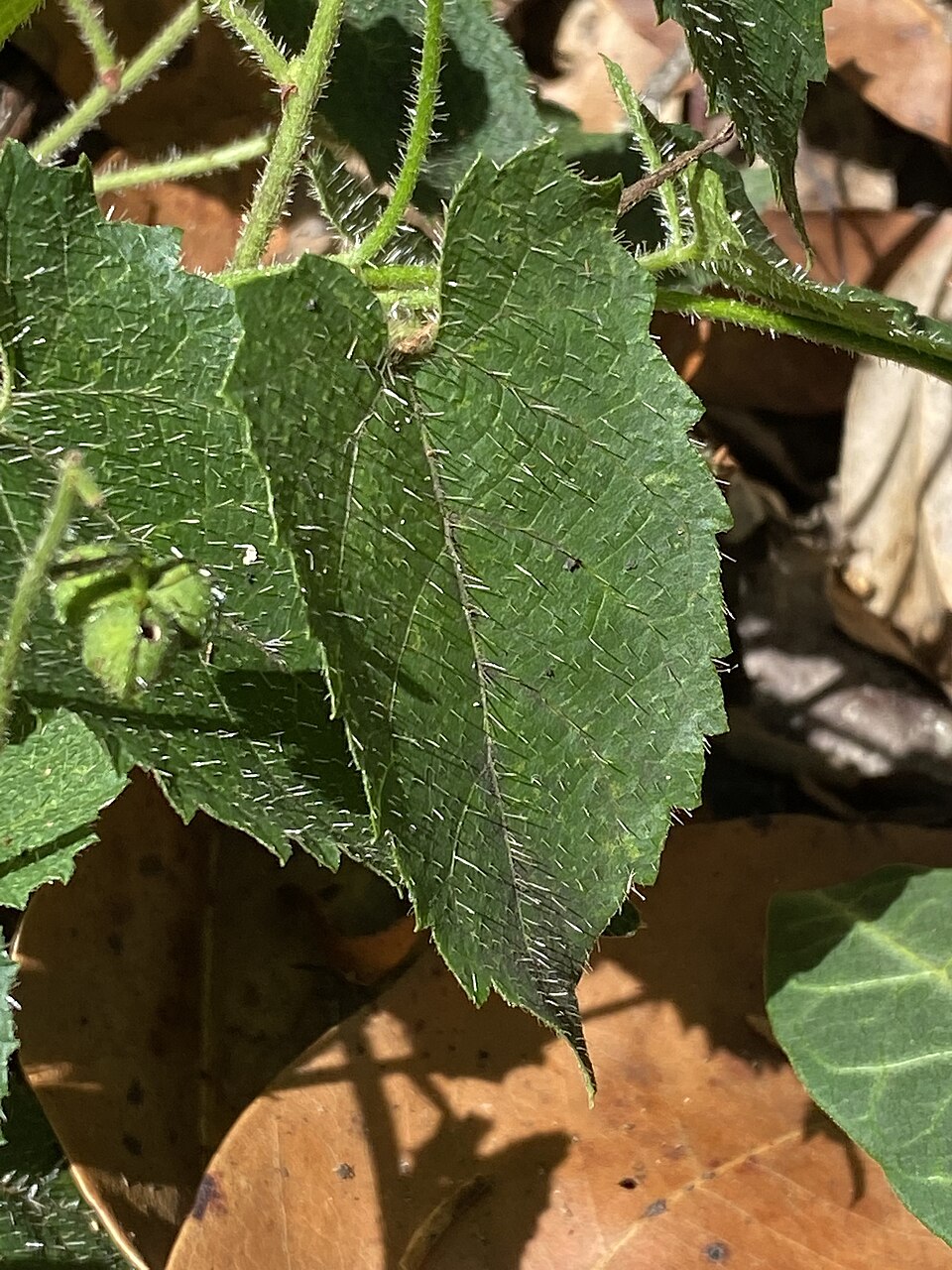
Tragia is a genus of roughly 150 species of perennial herbs and twining climbers in the spurge family, distributed across tropical and warm-temperate regions of the Americas, Africa, and southern Asia. Most species reach 0.3-2 m (1-6.5 ft), growing either as low-spreading herbs or as slender vines that scramble over neighbouring vegetation. The stems and foliage carry stinging hairs that release irritant compounds on contact, producing a burning, nettle-like sensation that gives the genus its common name. Leaves are alternate and simple, ranging from narrow and unlobed to broadly three-lobed, with toothed margins and blades 2-10 cm (0.8-4 in) long. The flowers are small, greenish to reddish, and lack petals, with separate male and female flowers carried on the same slender raceme. Fruit is a three-lobed capsule 6-10 mm (0.2-0.4 in) wide that splits open to eject its seeds. Species occupy dry woodland, rocky slopes, scrub, and disturbed ground. The stinging trichomes make the foliage difficult to handle and keep the genus to a minor role in cultivation. North American species include T. betonicifolia and T. ramosa.
Native Range
Tragia occurs across the Americas, sub-Saharan Africa, and southern and southeastern Asia, with centres of diversity in tropical America and Africa. North American species range through the southern and central United States into Mexico, while others extend across India and tropical Africa.Suggested Uses
Tragia is seldom planted ornamentally and is most often seen as a wild component of dry woodland, scrub, and prairie. In native-plant and habitat plantings the foliage and seed support local insects and small wildlife. The twining species climb low fences and shrubs, reaching 1-2 m (3-6.5 ft).How to Identify
Appearance
Size & Dimensions
Height1' - 6'6"
Width/Spread1' - 5'
Bloom Information
Flowering occurs mainly in spring and summer, with North American species blooming May-September depending on latitude and rainfall. The greenish flowers are inconspicuous and pollinated by small insects. In tropical parts of the range, some species flower whenever soil moisture is adequate.
Detailed Descriptions
Flower Description
greenish to reddishFoliage Description
greenGrowing Conditions
Sun Requirements
Requires 6-10 hours of direct sunlight daily
• Full Sun: 6+ hours of direct sunlight
• Partial Shade: 3-6 hours of direct sunlight
• Full Shade: Less than 3 hours of direct sunlight
Water & Climate
Water Needs
Drought Tolerance
Drought tolerant when established