Thespesia, Genus, populnea, Species,
- Genus & species
Milo
Tropical coasts of the Indian and Pacific Oceans
Overview
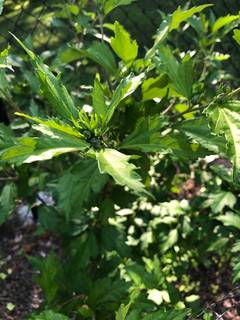
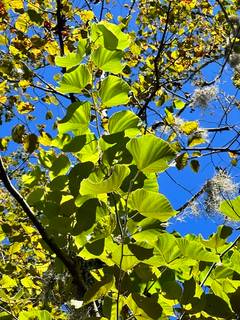
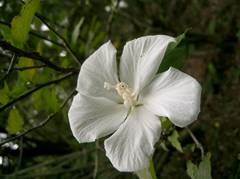
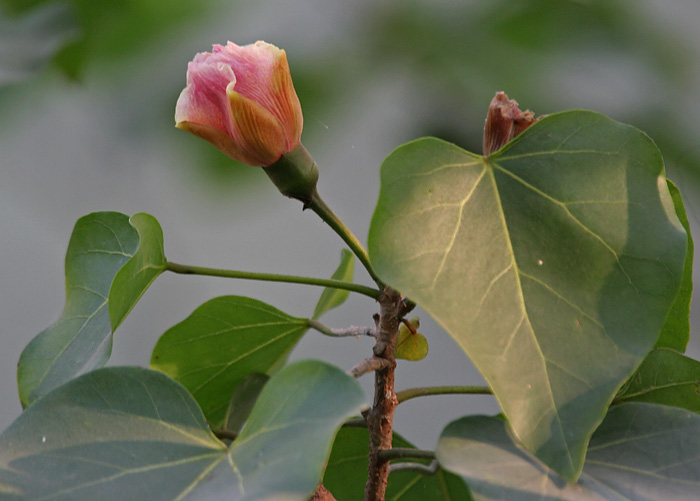
Thespesia populnea is an evergreen tree in the Malvaceae reaching 20-40 feet (6-12 m) tall with a crown as wide as it is high, often carried on several leaning trunks on exposed shorelines. Leaves are heart-shaped with a drawn-out tip, 3-8 inches (7.5-20 cm) long, glossy dark green above, and dotted beneath with small scales. Flowers are cup-shaped and 2-3 inches (5-7.5 cm) across, opening pale yellow with a maroon blotch at the base of each petal, deepening to orange and then purple-maroon over the course of a day before dropping. Fruit is a flattened leathery capsule 1-1.5 inches (2.5-4 cm) across that turns from green to blackish-brown, stays closed on the tree for months, and floats in seawater. Cut fruit and stems release a yellow sap that stains skin and cloth. Heartwood is dark reddish-brown and dense, at roughly 50 pounds per cubic foot (800 kg per cubic metre). Growth runs 24-48 inches (60-120 cm) per year. The species is listed as an invasive plant in Florida, where seedlings colonise mangrove margins and coastal hammocks.
Native Range
Widespread on tropical shores around the Indian and Pacific Oceans, from East Africa and India through Southeast Asia to Polynesia. It grows on beach strand, behind mangroves, and along tidal creeks from sea level to about 900 feet (275 m). Hawaiian populations date from Polynesian settlement, and the tree now grows on all main islands along leeward coasts.Suggested Uses
Planted as a shade and windbreak tree on shorelines, in coastal parks, and along roadways at 25-30 foot (7.6-9 m) spacing, where the crown withstands salt spray and steady wind. The dense dark heartwood is turned into bowls, calabashes, and carvings. Planting is restricted in Florida and parts of the Caribbean, where the species spreads into coastal wetlands.How to Identify
Appearance
Size & Dimensions
Height20' - 40'
Width/Spread20' - 40'
Bloom Information
Flowers appear in every month in frost-free coastal areas, heaviest from April through September. Each flower opens yellow in the morning, turns orange by midday and purple-maroon by evening, then drops within 24 to 36 hours. A mature tree carries 20-60 open flowers on a peak day. Flowering thins for 6-8 weeks following dry periods longer than 8 weeks.
Detailed Descriptions
Flower Description
yellow with a maroon centre, aging to purpleFoliage Description
glossy dark greenGrowing Conditions
Sun Requirements
Requires 6-12 hours of direct sunlight daily
• Full Sun: 6+ hours of direct sunlight
• Partial Shade: 3-6 hours of direct sunlight
• Full Shade: Less than 3 hours of direct sunlight
Care & Maintenance
Care Guide
Seed germinates in 2-8 weeks after soaking for 24 hours, and seedlings reach 3 feet (90 cm) within a year. Water weekly through the first 12-18 months, after which trees grow without irrigation where annual rainfall reaches 25 inches (635 mm). Soil ranges from coral sand to heavy clay at pH 6.0 to 8.5, and roots withstand periodic saltwater flooding. Scale insects, mealybugs, and the cotton stainer bug feed on stems and fruit without killing established trees. Fallen fruit accumulates under the canopy at 200-500 capsules per season on a mature tree and germinates readily in bare ground. Trees set within 30 feet (9 m) of paving lift slabs as surface roots thicken.Pruning
Lower branches are removed in winter or early spring to raise the crown, cutting to the branch collar and taking no more than one quarter of the live canopy in a season. Multiple leaders are reduced to one or two while the stems are under 2 inches (5 cm) thick, since co-dominant trunks split in storm winds. Cut stumps and roots resprout, so felled trees regrow unless the stump is ground out. Fruit is cleared from beneath the canopy during pruning where volunteer seedlings are not wanted.Pruning Schedule
Prune: January–February
winterearly spring