Lavatera, Genus, thuringiaca, Species,
- Genus & species
shrub mallow
Native to central and southeastern Europe (Austria, Hungary, the Balkans) east through Ukraine to central Asia; grows in dry to moderately moist open habitats including roadsides, hedgerows, and disturbed ground in well-drained soils; the genus {Lavatera} has been revised taxonomically and many species moved to {Malva} — this species is sometimes listed as {Malva thuringiaca} in current treatments
Overview
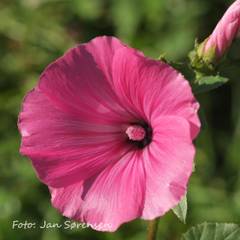
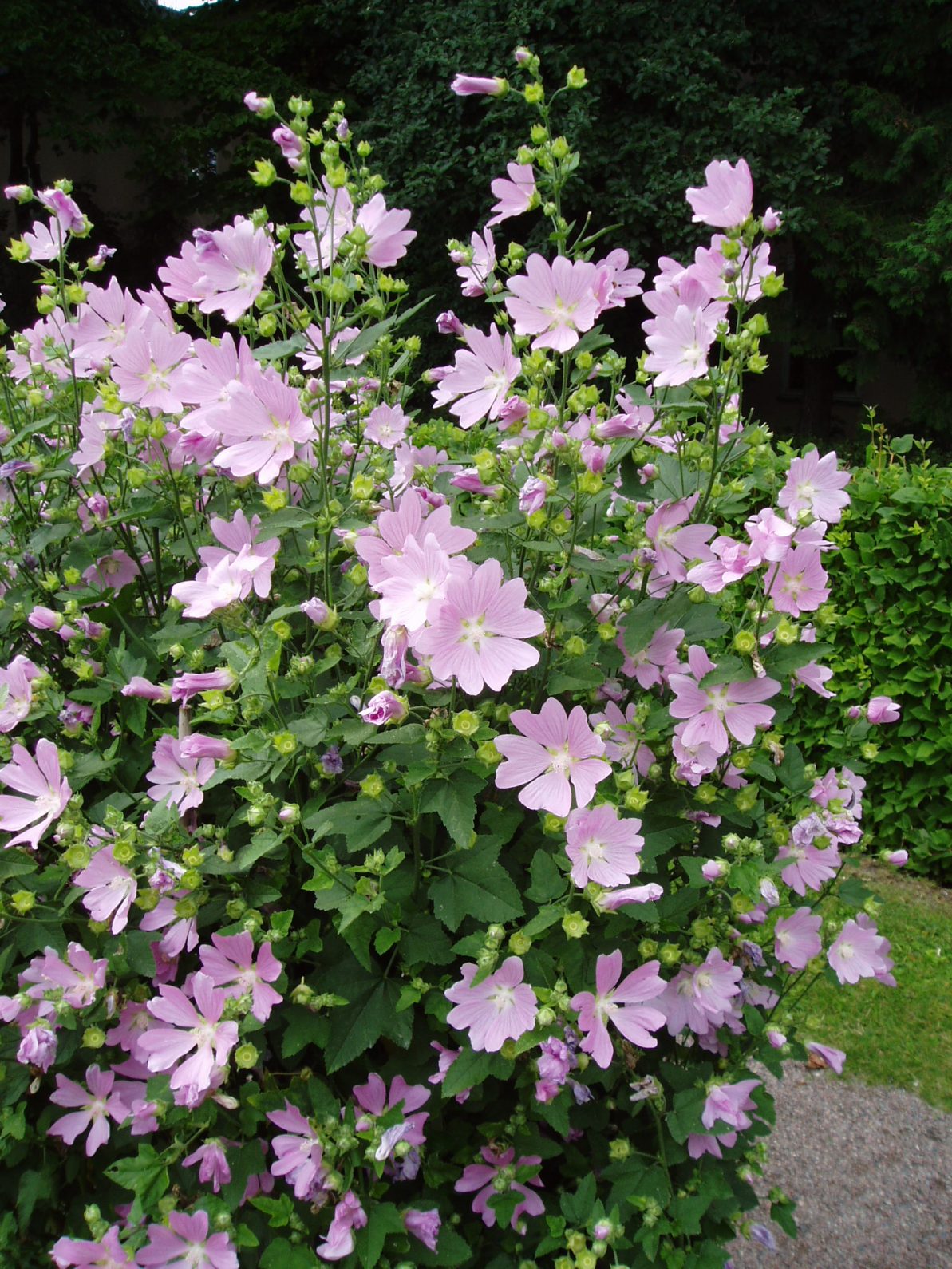
Lavatera thuringiaca is a vigorous woody-based perennial or subshrub in the mallow family (Malvaceae) native to central and southeastern Europe and central Asia. Plants form large bushy rounded clumps 3-6 feet (90-180 cm) tall and 3-5 feet (90-150 cm) wide of lobed softly downy maple-like leaves 2-4 inches (5-10 cm) across on gray-green stems. From early summer through hard frost, an almost uninterrupted succession of saucer-shaped five-petaled flowers 2-3 inches (5-8 cm) across in soft pink to rose-pink with darker pink veining opens along the upper stems across a 20-week bloom window. Individual flowers have silky petal texture and last 1-2 days, but the plant carries new buds continuously and the overall display reads as continuous rather than discrete flushes. Plants grow rapidly from overwintered crowns and often reach full size in a single season. Commonly sold under cultivar names including 'Barnsley' (white fading to pale pink with a pink eye) and 'Rosea' (rose-pink). The genus Lavatera has been revised taxonomically and many species moved to Malva; L. thuringiaca is sometimes listed as Malva thuringiaca in current taxonomic treatments. Hardy in zones 6-9; crown-hardy in zone 5 with mulch protection.
Native Range
Lavatera thuringiaca is native to central and southeastern Europe (Austria, Hungary, the Balkans) east through Ukraine to central Asia, growing in dry to moderately moist open habitats including roadsides, hedgerows, and disturbed ground in well-drained soils.Suggested Uses
Planted as a mid-border to back-of-border specimen in zones 5-9 at 36-48 inch (90-120 cm) spacing. The large bushy form and prolific pink bloom across a 20-week window give rapid summer impact in new gardens, where the first-year growth from overwintered crowns matches the size of slower-establishing shrub roses and other woody-based perennials. Suits informal screen or hedge use in warm climates. Formal or tightly controlled plantings fall outside the natural form of the species — the plant's habit is exuberant and spreading, which rules out clipped-hedge or structured-border positions.How to Identify
Appearance
Size & Dimensions
Height3' - 6'
Width/Spread3' - 5'
Bloom Information
Blooms June through October in zones 6-9 across a 20-week bloom window, with the main display running July-September. Individual flowers last 1-2 days but new buds open continuously, and the plant may carry hundreds of flowers across the course of the season. In mild climates the bloom extends until hard frost.
Detailed Descriptions
Flower Description
Soft pink to rose-pink saucer-shaped five-petaled flowers 2-3 inches (5-8 cm) across with darker pink veining; individual flowers have silky petal texture; 'Barnsley' is white fading to pale pink with a pink eye; 'Rosea' is rose-pinkFoliage Description
Gray-green softly downy maple-like lobed leaves 2-4 inches (5-10 cm) across carried on gray-green downy stemsGrowing Conditions
Sun Requirements
Requires 6-8 hours of direct sunlight daily
• Full Sun: 6+ hours of direct sunlight
• Partial Shade: 3-6 hours of direct sunlight
• Full Shade: Less than 3 hours of direct sunlight
Care & Maintenance
Care Guide
Grows in full sun in average to poor well-drained soil at pH 6.0-8.0. Rich or waterlogged conditions reduce flowering — excessive fertility produces coarse leafy growth with fewer flowers, and wet winter soil causes crown rot. Drought tolerant once established. Cut stems back to 12-18 inches (30-45 cm) in late winter or early spring before new growth, avoiding cuts into the main crown itself. In zones 5-6, mulch the crown deeply in fall to protect against cold damage. Plants are fast-growing and reach full size in a single season from overwintered crowns, which makes the species a good choice for rapid border-filling in new plantings.Pruning
Cut all stems back hard to 12-18 inches (30-45 cm) above ground level in late winter or early spring (February-March) before new buds break — this step is essential, and unpruned plants become woody and unproductive. The main crown itself should be left uncut. In zone 5, delay the cutback until after the risk of hard frost has passed. Take basal cuttings in spring for propagation; the species is short-lived and benefits from periodic renewal every 4-5 years.Pruning Schedule
Prune: February–March
early spring