Tecomaria, Genus, spp., Multiple species,
- Genus
- Multiple species
Cape honeysuckle
Overview
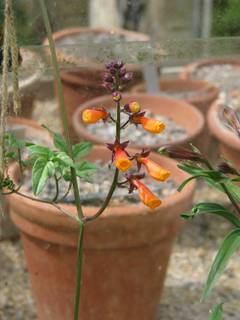
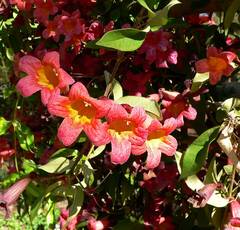
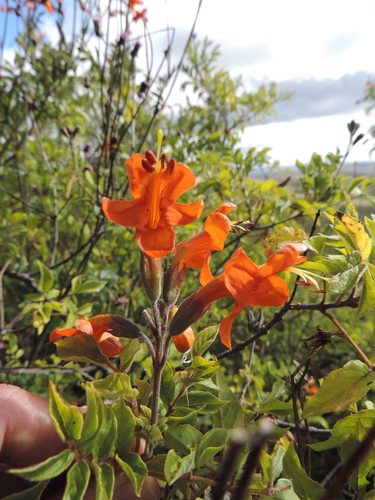
Tecomaria is a genus of evergreen scrambling shrubs in the trumpet-vine family (Bignoniaceae) from southern Africa, widely known through Tecomaria capensis, the Cape honeysuckle, which many botanists now place in Tecoma as T. capensis. Plants are vigorous, with arching, semi-climbing stems that reach 6-10 feet (1.8-3 m) tall as a free-standing shrub or 8-15 feet (2.4-4.5 m) when trained on a support. The glossy, dark green leaves are pinnate, divided into toothed leaflets. From late summer into winter, dense terminal clusters of curved, tubular flowers 1.5-2.5 inches (4-6 cm) long open in orange-red, with yellow and salmon forms in cultivation. The nectar-rich flowers are visited by sunbirds in their native range and by hummingbirds where grown in the Americas. Tecomaria grows in coastal scrub, bush, and rocky slopes and tolerates heat, drought, wind, and salt once established. It is frost-tender, hardy only in mild climates, and the rapid, suckering, scrambling growth needs regular cutting back to stay in bounds.
Native Range
Native to southern Africa, chiefly South Africa, Eswatini, and Mozambique, where it grows in coastal bush, scrub, and on rocky slopes. It has become naturalized in many warm regions worldwide and is widely planted in frost-free gardens.Suggested Uses
Used as an informal flowering hedge, screen, bank cover, and espalier in frost-free and coastal gardens, and as a fast groundcover on slopes for erosion control. Trained on a fence or wall it climbs with tying-in, and dwarf forms suit large containers. The nectar-rich flowers draw sunbirds, hummingbirds, and bees.How to Identify
Appearance
Size & Dimensions
Height6' - 15'
Width/Spread4' - 10'
Bloom Information
Flowering runs mainly from late summer through autumn and into winter in mild climates, and can occur in flushes much of the year where it is warm. The orange-red tubular flowers open in dense terminal heads over many weeks. Slender bean-like seed capsules follow in warm seasons.
Detailed Descriptions
Flower Description
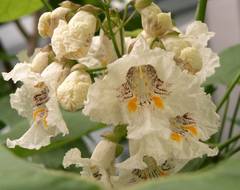
orange-red, also yellow or salmon formsFoliage Description
glossy dark greenGrowing Conditions
Sun Requirements
Requires 6-12 hours of direct sunlight daily
• Full Sun: 6+ hours of direct sunlight
• Partial Shade: 3-6 hours of direct sunlight
• Full Shade: Less than 3 hours of direct sunlight
Care & Maintenance
Care Guide
Tecomaria is grown in full sun to light shade in well-drained soil of almost any type, including sandy and rocky ground. It tolerates heat, drought, wind, and coastal salt once established, though flowering is heaviest with occasional water and full sun. The genus is frost-tender, hardy in roughly USDA zones 9b-11; light frost cuts the top growth, which usually resprouts from the base. Growth is fast and suckering, so plants need regular cutting back and root control to stay contained. Propagation is easy from cuttings, layers, or suckers. In cold regions it is grown in containers and overwintered under cover.Pruning
Plants are cut back hard in late winter or early spring to control size and shape and to remove old, tangled, or frosted stems, as flowers form on new growth. Through the season, wayward shoots and spent flower clusters are trimmed to keep the plant dense. Suckers are removed to limit spread.Container Growing
Suitable for container growing