Eccremocarpus, Genus, scaber, Species,
- Genus & species
Chilean glory vine
Chile and Argentina (scrub, forest edges, and rocky slopes at low to moderate elevations); naturalized in sheltered coastal positions in southwestern England and Ireland
Overview
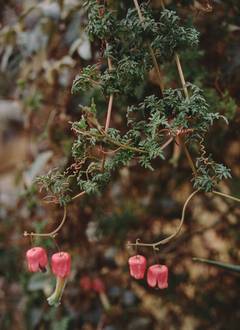
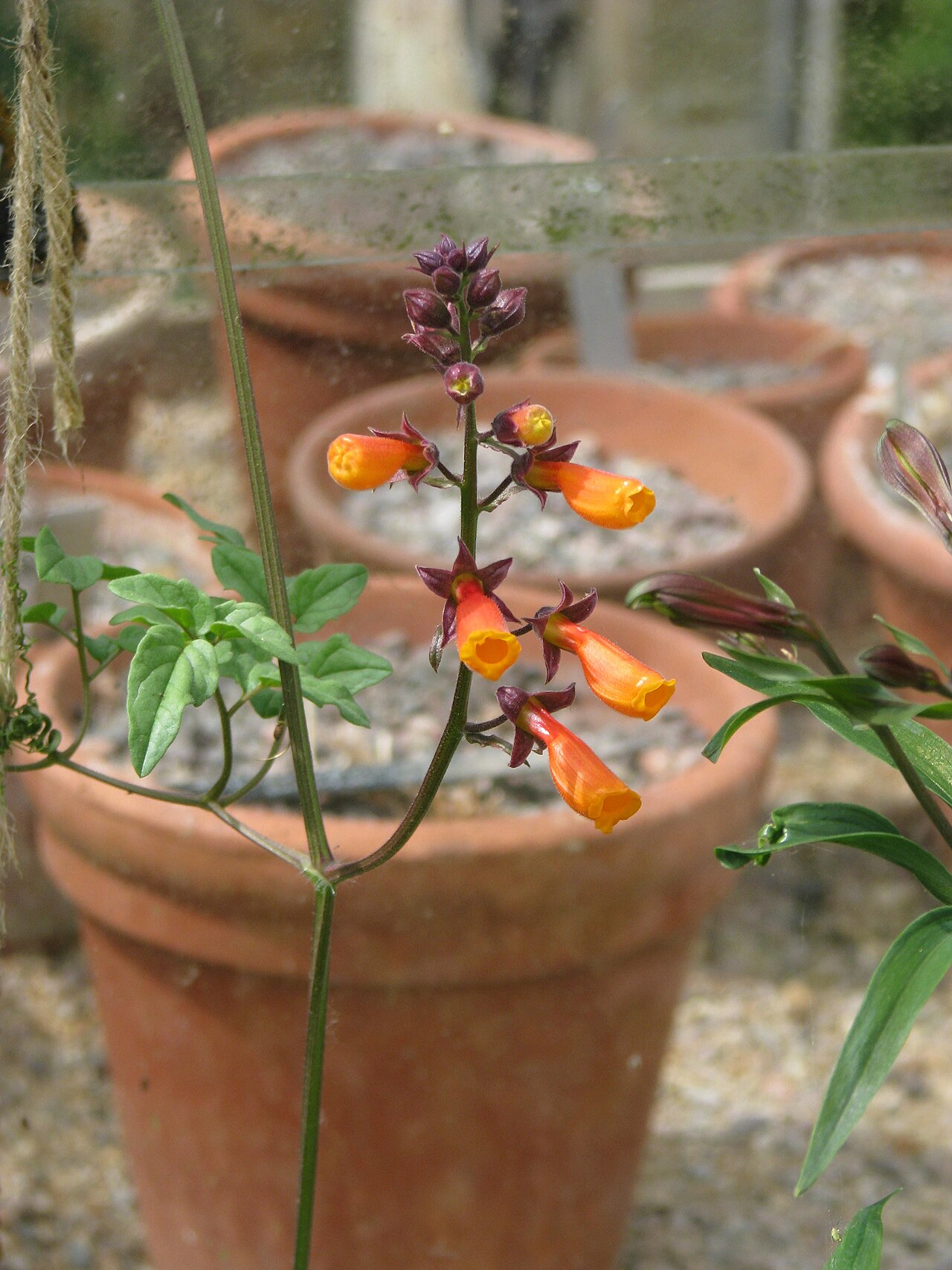
Eccremocarpus scaber is a fast-growing tendril-climbing vine in the trumpet-vine family (Bignoniaceae), native to Chile and Argentina. The plant climbs by branched leaf tendrils; bipinnate to tripinnate compound leaves with small neat leaflets carry a delicate dissected foliage texture. Stems reach 8–15 feet (2.4–4.5 m) in a single growing season from seed in cool-temperate climates. From early summer through frost, terminal clusters of tubular slightly inflated flowers 0.75–1 inch (2–2.5 cm) long appear continuously, orange-red in the species, with yellow, rose, and carmine cultivars available. The species is grown as a tender perennial in USDA zones 9–10 and as a fast-growing annual in zones 3–8; in frost-free climates it can develop into a perennial woody-based climber reaching 20+ feet (6 m). Growth speed, dissected foliage texture, and continuous bloom from June to October together make the species useful where a vine must cover structures quickly within a single season. All parts are reported mildly toxic to pets on ingestion.
Native Range
Eccremocarpus scaber is native to Chile and Argentina, growing in scrub, forest edges, and rocky slopes at low to moderate elevations. The species is naturalized in parts of the British Isles, particularly in mild coastal areas of southwest England and Ireland, where it persists as a perennial in sheltered positions.Suggested Uses
Grown on trellises, arches, fences, and pergolas in full sun for rapid screening and color from June through frost in USDA zones 3–10 (as annual) or 9–10 (as tender perennial). The dissected foliage texture contrasts with bold-leaved neighbors such as Canna or Ricinus communis in mixed annual plantings. The vine also trains up obelisks in mixed borders where a quick vertical accent is wanted within a single season. In mild-winter climates the species can be grown as a permanent perennial climber on sheltered walls where the woody base can persist year to year.How to Identify
Appearance
Size & Dimensions
Height8' - 15'
Width/Spread3' - 6'
Bloom Information
Produces terminal clusters of tubular slightly inflated flowers 0.75–1 inch (2–2.5 cm) long from June through October when sown in early spring under glass; bloom begins earlier on overwintered plants in USDA zones 9–10 and begins in July on spring-sown plants in zones 7–8. New flower clusters appear at the growing tips continuously once the vine is established.
Detailed Descriptions
Flower Description
Orange-red in the species type (cultivars in yellow, rose, and carmine); tubular slightly inflated 0.75–1 inch (2–2.5 cm) long; in terminal clusters; June–OctoberFoliage Description
Medium green; bipinnate to tripinnate compound with small neat leaflets; dissected texture; branched leaf tendrilsGrowing Conditions
Sun Requirements
Requires 6-8 hours of direct sunlight daily
• Full Sun: 6+ hours of direct sunlight
• Partial Shade: 3-6 hours of direct sunlight
• Full Shade: Less than 3 hours of direct sunlight
Care & Maintenance
Care Guide
Start seed indoors 10–12 weeks before the last frost date; sow on the surface of moist seed-starting mix at 65–70°F (18–21°C) and keep in bright light after germination. Transplant outdoors after all frost risk has passed into full sun in well-drained soil. Install a trellis, wire grid, or other support at planting so the tendrils have something to grasp as soon as stems begin to extend. Water during establishment and in extended dry spells; established plants carry moderate drought tolerance. In USDA zones 9–10, cut overwintered plants back by two-thirds in late winter to rejuvenate growth. Fertilization is not required in average garden soil; excess nitrogen drives foliage at the expense of flowers.Pruning
In annual culture no pruning is used — plants are removed after the first hard frost. In USDA zones 9–10 where plants overwinter, cut all stems back by two-thirds in February or March before new growth begins to keep the vine within its allotted footprint and to promote vigorous flowering wood. Deadheading is not practical given the volume of flowers produced.Pruning Schedule
Prune: February–March
early spring
Container Growing
Suitable for container growing
Minimum container size: 5 gallons
Toxicity Warning
Toxic to petsPlanting Guide
Planting Methods & Timing
Planting Method
transplant
Indoor Start
10 weeks before last frost
Direct Sow Timing
Not recommended; start indoors 10–12 weeks before last frost
Plant Spacing
24 inches