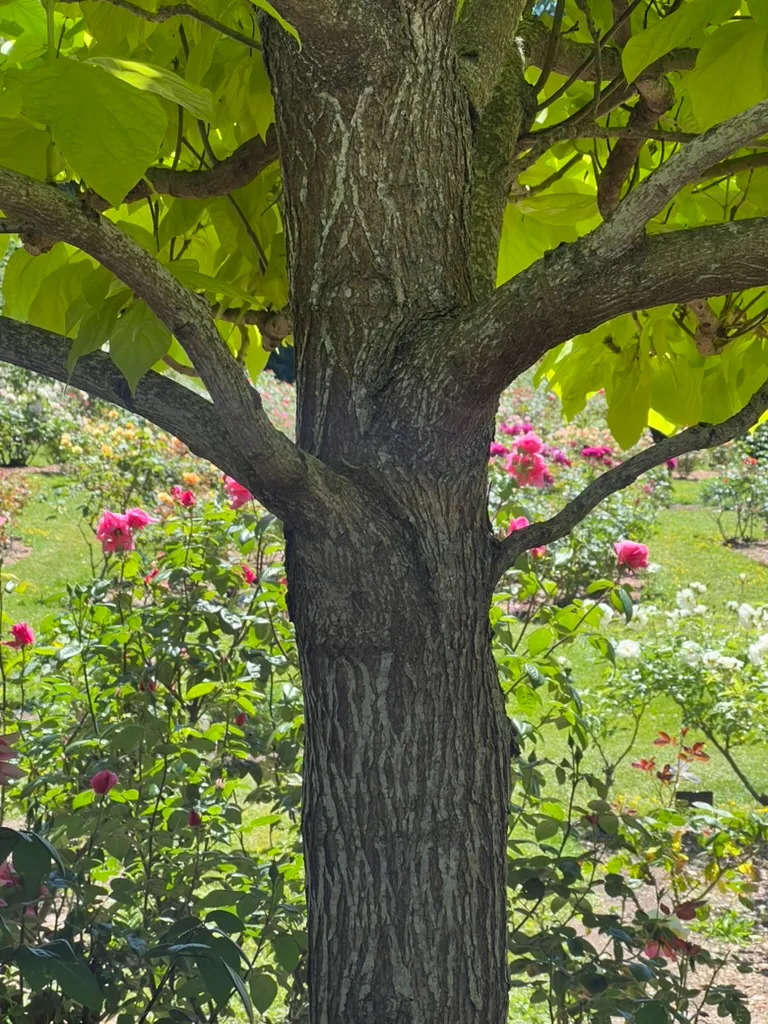
Image 1 of 14
1 / 14
Plant Reference
Catalpa, Genus, spp., Multiple species,
- Genus
- Multiple species
catalpa
Eastern and central United States; the two North American species are Catalpa speciosa (northern catalpa — Mississippi Valley) and C. bignonioides (southern catalpa — southeastern US)
Overview
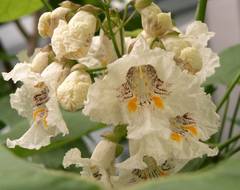
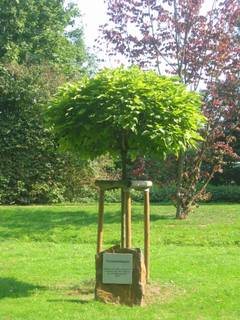
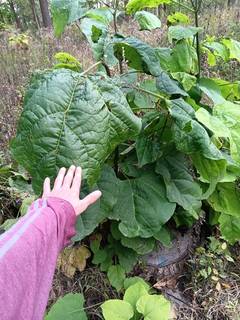
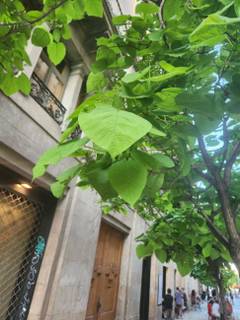
Catalpa spp. is catalpa (Indian bean tree), a genus of deciduous trees in Bignoniaceae growing 30-70 feet (9-21 m) tall and 20-40 feet (6-12 m) wide. Very large heart-shaped leaves 6-12 inches (15-30 cm) long and nearly as wide. White bell-shaped flowers 1.5-2 inches (4-5 cm) with yellow and purple markings in large upright panicles 8-12 inches (20-30 cm) in May-June. Long narrow bean-like seed pods 8-20 inches (20-50 cm) persist through winter. The two commonly cultivated North American species are C. speciosa (northern catalpa — to 70 feet / 21 m, Mississippi Valley) and C. bignonioides (southern catalpa — to 40 feet / 12 m, southeastern US). The tree is messy — large leaves, spent flower petals, and persistent seed pods create year-round litter. This messiness is the primary limitation. The leaves emerge late in spring and drop early in fall — leafless for a longer period than most deciduous trees. Brittle wood — branches break in storms. Catalpa sphinx moth caterpillars (Ceratomia catalpae) can defoliate the tree. The caterpillars are valued as fishing bait. Drought-tolerant once established. Non-toxic. Zones 4-9. Full sun. Growth rate is fast.
Native Range
Native to eastern and central United States. C. speciosa (northern catalpa) — Mississippi Valley. C. bignonioides (southern catalpa) — southeastern US.Suggested Uses
Grown as a shade tree in large landscapes, parks, and rural properties with 20-40 feet (6-12 m) of lateral space. Not for small lots or near patios (year-round litter). Fishing bait tree (sphinx moth caterpillars). Native to North America. Non-toxic. Zones 4-9.How to Identify
Appearance
Size & Dimensions
Height30' - 70'
Width/Spread20' - 40'
Bloom Information
Late spring to early summer (May-June). White bell-shaped flowers 1.5-2 inches (4-5 cm) with yellow and purple markings in large upright panicles 8-12 inches (20-30 cm). 3 weeks of bloom. Bee-, butterfly-, and hummingbird-pollinated. Long bean-like seed pods 8-20 inches (20-50 cm) follow.
Detailed Descriptions
Flower Description
White with yellow and purple markings, bell-shaped, 1.5-2 inches (4-5 cm), in large upright panicles 8-12 inches (20-30 cm) tallFoliage Description
Medium green, very large heart-shaped, 6-12 inches (15-30 cm) long and nearly as wide; the leaves emerge late in spring (May) and drop early in fall — the tree is leafless for a longer period than most deciduous treesGrowing Conditions
Sun Requirements
Requires 6-10 hours of direct sunlight daily
• Full Sun: 6+ hours of direct sunlight
• Partial Shade: 3-6 hours of direct sunlight
• Full Shade: Less than 3 hours of direct sunlight
Care & Maintenance
Care Guide
Full sun (6+ hours). Any well-drained soil pH 5.5-7.5. Drought-tolerant once established. Messy — plan for year-round litter (leaves, petals, pods). Brittle wood — remove weak branch attachments when young. Catalpa sphinx moth caterpillars may defoliate. Prune in early spring (February-March). Non-toxic. Zones 4-9.Pruning
Prune in early spring (February-March) before new growth. Remove dead, crossing, or weak-angled branches. Structural pruning when young to develop strong branch attachments (wide crotch angles). Brittle wood — thin the canopy to reduce wind resistance.Pruning Schedule
Prune: February–March
early spring