Catalpa, Genus, speciosa, Species,
- Genus & species
northern catalpa
Central United States (southern Indiana/Illinois south to Arkansas and western Tennessee)
Overview
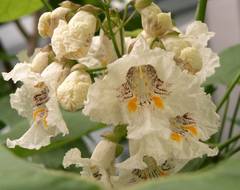
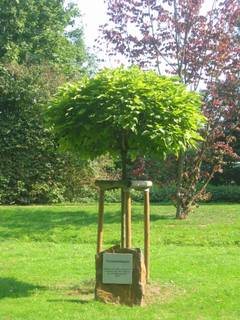
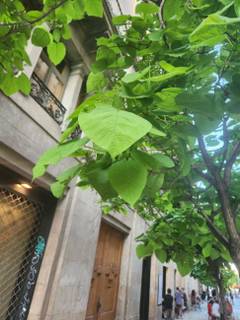
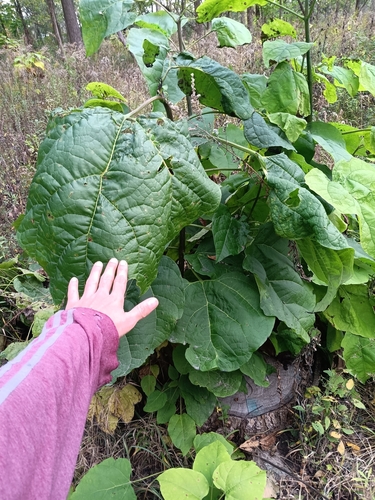
Catalpa speciosa is a large deciduous tree reaching 40–70 feet (12–21 m) tall with a spread of 25–40 feet (7.5–12 m). The crown is irregularly rounded to narrow-oval with a strong central leader, becoming more open and spreading with age. Leaves are large, heart-shaped, 6–12 inches (15–30 cm) long and 4–8 inches (10–20 cm) wide, medium to dark green, soft-textured, with an individual leaf area comparable to that of Paulownia tomentosa and larger than most hardwood trees grown in USDA zones 4–7. The leaves emerge later in spring (often May) and drop early in fall. White, orchid-like flowers 2–2.5 inches (5–6 cm) across with yellow and purple-brown throat markings open in upright, conical panicles 5–8 inches (13–20 cm) long in June. Long, cigar-shaped seed pods 10–20 inches (25–50 cm) hang from the branches from fall through spring—longer and thicker than those of C. bignonioides. Bark is thick, gray-brown, and deeply ridged and furrowed into scaly plates. Growth rate is fast at 12–24 inches (30–60 cm) per year. The wood is brittle; branches break in storms. Tolerates wet soils, drought, and urban pollution. Catalpa sphinx moth caterpillars can cause complete defoliation in outbreak years. Large leaves, pods, and broken branches create substantial litter from spring through winter.
Native Range
Catalpa speciosa is native to the central United States, from southern Indiana and Illinois south to Arkansas and western Tennessee. It occurs in bottomland forests and along rivers and streams in the Mississippi and Ohio River valleys. It has been widely planted and naturalized far beyond its native range in the eastern and midwestern United States.Suggested Uses
Planted as a large shade tree in parks, large properties, and rural landscapes at 25–40 foot (7.5–12 m) spacing. Adaptability to difficult sites suits the species to reclamation projects, bottomland plantings, and urban parks where litter is acceptable. The native range in central North America supports use in riparian restoration plantings. The large flowers attract ruby-throated hummingbirds. Small gardens and formal settings are unsuitable given the extensive litter and mature size. Historically planted across the Midwest for rot-resistant fence posts and railroad ties between 1870 and 1920.How to Identify
Appearance
Size & Dimensions
Height40' - 70'
Width/Spread25' - 40'
Bloom Information
White, orchid-like flowers 2–2.5 inches (5–6 cm) across with yellow and purple-brown throat markings open in upright panicles 5–8 inches (13–20 cm) long in June. Bloom duration is 2–3 weeks. Individual flowers are slightly larger than those of C. bignonioides, with fewer flowers per panicle. Long, cigar-shaped seed pods 10–20 inches (25–50 cm) develop after flowering and persist through winter into spring.
Detailed Descriptions
Flower Description
White with yellow and purple-brown throat markingsFoliage Description
Medium to dark green, large heart-shapedGrowing Conditions
Sun Requirements
Requires 6-12 hours of direct sunlight daily
• Full Sun: 6+ hours of direct sunlight
• Partial Shade: 3-6 hours of direct sunlight
• Full Shade: Less than 3 hours of direct sunlight
Care & Maintenance
Care Guide
Plant in average soil in full sun. Tolerates clay, alkaline, wet, dry, compacted, and urban-polluted soils. Establishes in 1–2 years and tolerates extended drought and flooding of 1–2 weeks once established. The fast growth and brittle wood create ongoing litter from broken branches, large leaves, and persistent pods, and falling limbs can damage structures, vehicles, and walkways beneath the canopy. Catalpa sphinx moth caterpillars may cause full defoliation in outbreak years; the tree typically releafs. Verticillium wilt and powdery mildew occur. The deep root system tolerates drought.Pruning
Prune in late winter to early spring. A strong central leader is maintained by removing competing vertical branches. Remove dead, damaged, and crossing branches. Structural pruning in youth reduces future storm-damage risk given the brittle wood. The species tolerates pollarding for oversized foliage effect, though it is rarely grown this way.Pruning Schedule
Prune: February–March
winterearly spring