Catalpa, Genus,
- Genus
catalpas
Eastern North America, the West Indies, and eastern Asia
Overview
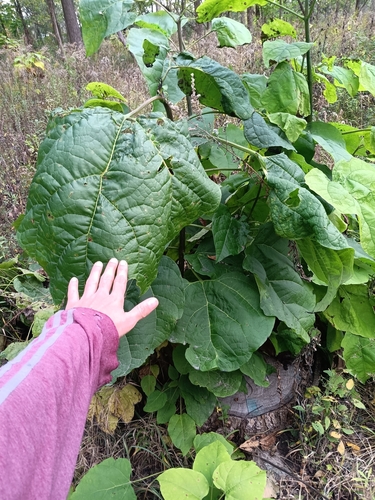
Catalpa is a genus of about 10 species of deciduous trees in the family Bignoniaceae, native to eastern North America, the West Indies, and eastern Asia. Trees reach 30 to 70 feet (9 to 21 m) tall with broad, rounded crowns and large, heart-shaped to three-lobed leaves 6 to 12 inches (15 to 30 cm) long, arranged in opposite pairs or whorls of three. In early summer the branch tips carry upright panicles of bell- to trumpet-shaped flowers, white or pale yellow with frilled lobes and inner spots and lines of yellow and purple. Each pollinated flower develops into a long, narrow, bean-like capsule 8 to 20 inches (20 to 50 cm) long that hangs through winter and splits to release winged seeds. C. bignonioides and C. speciosa are North American, while C. ovata and C. bungei come from China. The wood is light and rot-resistant and has been used for posts and rails. The large leaves cast dense shade but litter heavily, and the long pods drop over a long period.
Native Range
Native to two widely separated regions: eastern and central North America, including C. bignonioides and C. speciosa, and eastern Asia, including the Chinese C. ovata and C. bungei. A few species occur in the West Indies.Suggested Uses
Planted as a shade and specimen tree in parks, large gardens, and along streets, where the summer flowers and bold foliage are features. The rot-resistant wood is used for fence posts and rails. The trees are larval hosts for the catalpa sphinx moth, whose caterpillars are used as fishing bait.How to Identify
Appearance
Size & Dimensions
Height30' - 70'
Width/Spread20' - 50'
Bloom Information
Flowering occurs in early to midsummer, generally June to July, after the leaves are fully out. The white, spotted, trumpet-shaped flowers are carried in upright panicles for two to three weeks. Seed pods form by late summer and persist through winter.
Detailed Descriptions
Flower Description
white to pale yellow with yellow and purple markingsFoliage Description
green, turning yellow-green to yellow in autumnGrowing Conditions
Sun Requirements
Requires 6-12 hours of direct sunlight daily
• Full Sun: 6+ hours of direct sunlight
• Partial Shade: 3-6 hours of direct sunlight
• Full Shade: Less than 3 hours of direct sunlight
Care & Maintenance
Care Guide
Catalpa species grow in full sun to light shade on deep, moist, fertile soil but tolerate dry, poor, and alkaline ground and urban conditions once established. They withstand heat, wind, and occasional flooding, and grow at a fast rate when young. Soil pH from 5.5 to 8.0 is acceptable. The brittle wood and large leaves make the trees prone to storm and wind damage, and the dropping flowers, leaves, and long pods create steady litter. Young trees are staked and trained to a single leader to build a sound framework.Pruning
Pruning is carried out in the dormant season to remove dead, crossing, or weak branches and to develop a single strong leader on young trees. C. bignonioides 'Nana', the umbrella catalpa, is sometimes pollarded each year for a rounded head. Large wounds close slowly, so cuts are kept small where possible.Pruning Schedule
J
F
M
A
M
J
J
A
S
O
N
D
winter