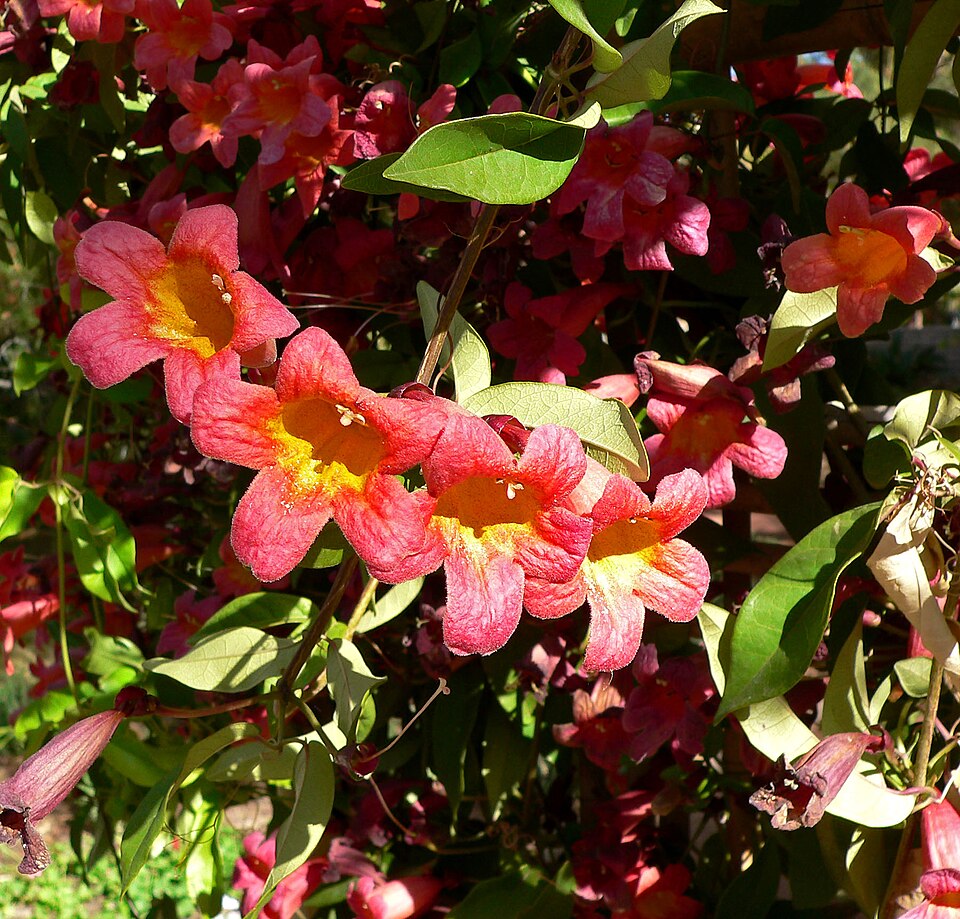
Bignonia, Genus, capreolata, Species, 'Tangerine Beauty', Cultivar,
- Genus & species
- Cultivar
tangerine beauty crossvine
Eastern North America — Virginia south to Florida and west to Texas
Overview
Bignonia capreolata 'Tangerine Beauty' is a native crossvine, climbing 180–360 inches (450–900 cm) by tendrils with adhesive discs that attach to walls, fences, and tree bark. Bright tangerine-orange trumpet-shaped flowers 2 inches (5 cm) long with yellow throats appear in late spring — pollinated by hummingbirds. The common name 'crossvine' refers to a diagnostic feature: when the stem is cut in cross-section, the pith forms a cross-shaped pattern. Native to eastern North America, from New Jersey south to Florida and west to Texas. Semi-evergreen — the foliage turns purple-bronze in winter in zones 6–7 and remains green in zones 8–9. Less aggressive than trumpet vine (Campsis radicans), which spreads by root suckers and can become invasive. Fragrant flowers. Deer-resistant. Drought-tolerant once established. Non-toxic. Zones 6–9. Full sun for maximum flowering; tolerates partial shade but with reduced bloom. The adhesive discs can damage painted surfaces and mortar when removed. Growth rate is fast — 10–15 feet (3–4.5 m) per year once established. Pruning after flowering controls size without removing next year's buds (blooms on old wood).
Native Range
Bignonia capreolata is native to eastern North America — Virginia to Florida and Texas.Suggested Uses
Grown on fences, arbors, trellises, and walls in zones 6–9, in full sun to partial shade. Native species — suited to native plant gardens and ecological landscapes. Plant as a single specimen per support structure. Adhesive damage to painted surfaces and mortar can occur when the vine is removed — choose support structures where this is acceptable.How to Identify
Appearance
Size & Dimensions
Height15' - 30'
Width/Spread4' - 8'
Bloom Information
Detailed Descriptions
Flower Description
Bright tangerine-orange with yellow throat, trumpet-shaped, in clustersFoliage Description
Dark green, compound (2 leaflets + tendril), semi-evergreen — turns purple-bronze in winterGrowing Conditions
Sun Requirements
Requires 4-8 hours of direct sunlight daily
• Full Sun: 6+ hours of direct sunlight
• Partial Shade: 3-6 hours of direct sunlight
• Full Shade: Less than 3 hours of direct sunlight
Care & Maintenance
Care Guide
Full sun for maximum flowering; tolerates partial shade. Drought-tolerant once established. Prune after flowering — blooms on old wood. The adhesive tendrils attach firmly and may damage surfaces on removal. Native. Deer-resistant. Non-toxic. Zones 6–9.Pruning
Prune immediately after flowering to control size and shape. Blooms on old wood — late pruning removes next year's buds. Can be cut back hard for rejuvenation, though flowering will be reduced the following season.Pruning Schedule
Prune: June–July
summer