Image 1 of 17
1 / 17
Plant Reference
Solanum, Genus, dulcamara, Species,
- Genus & species
bittersweet nightshade
Europe, western Asia, northern Africa
Overview
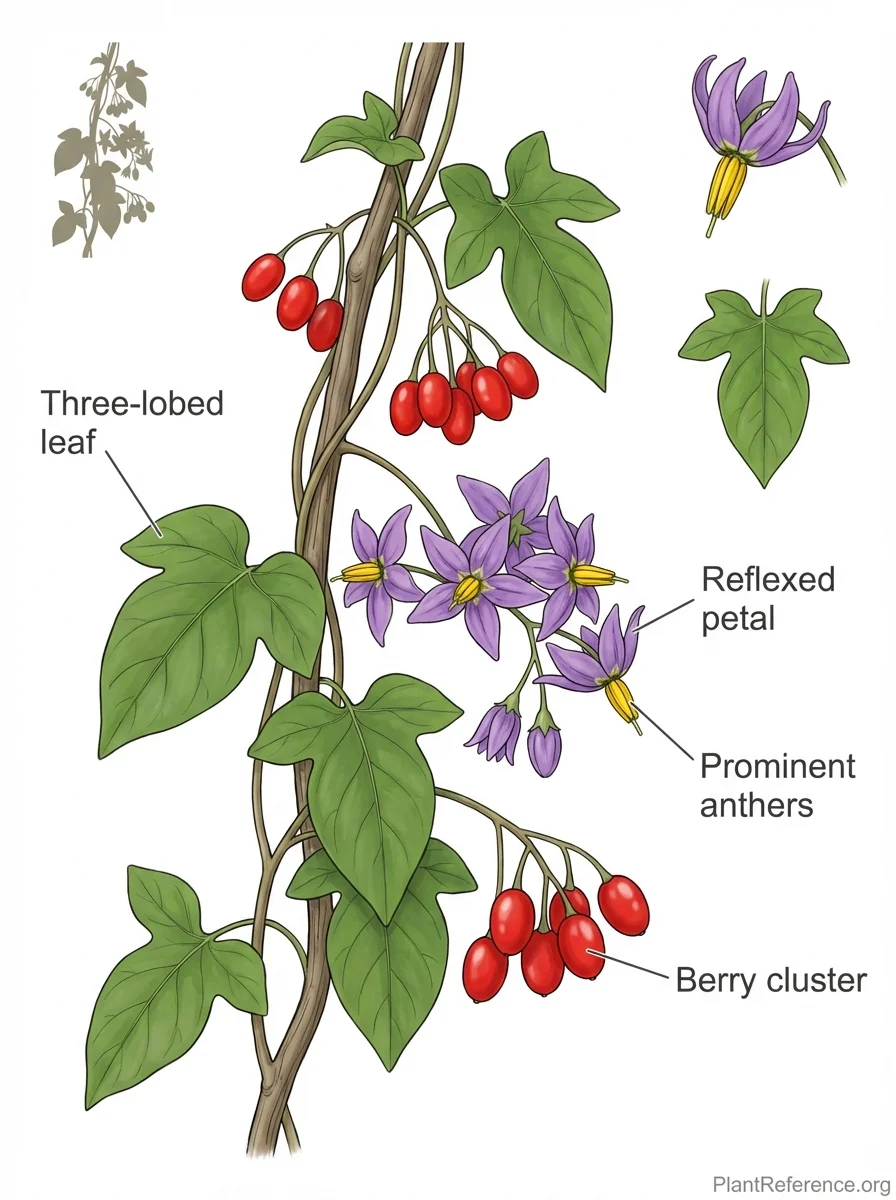
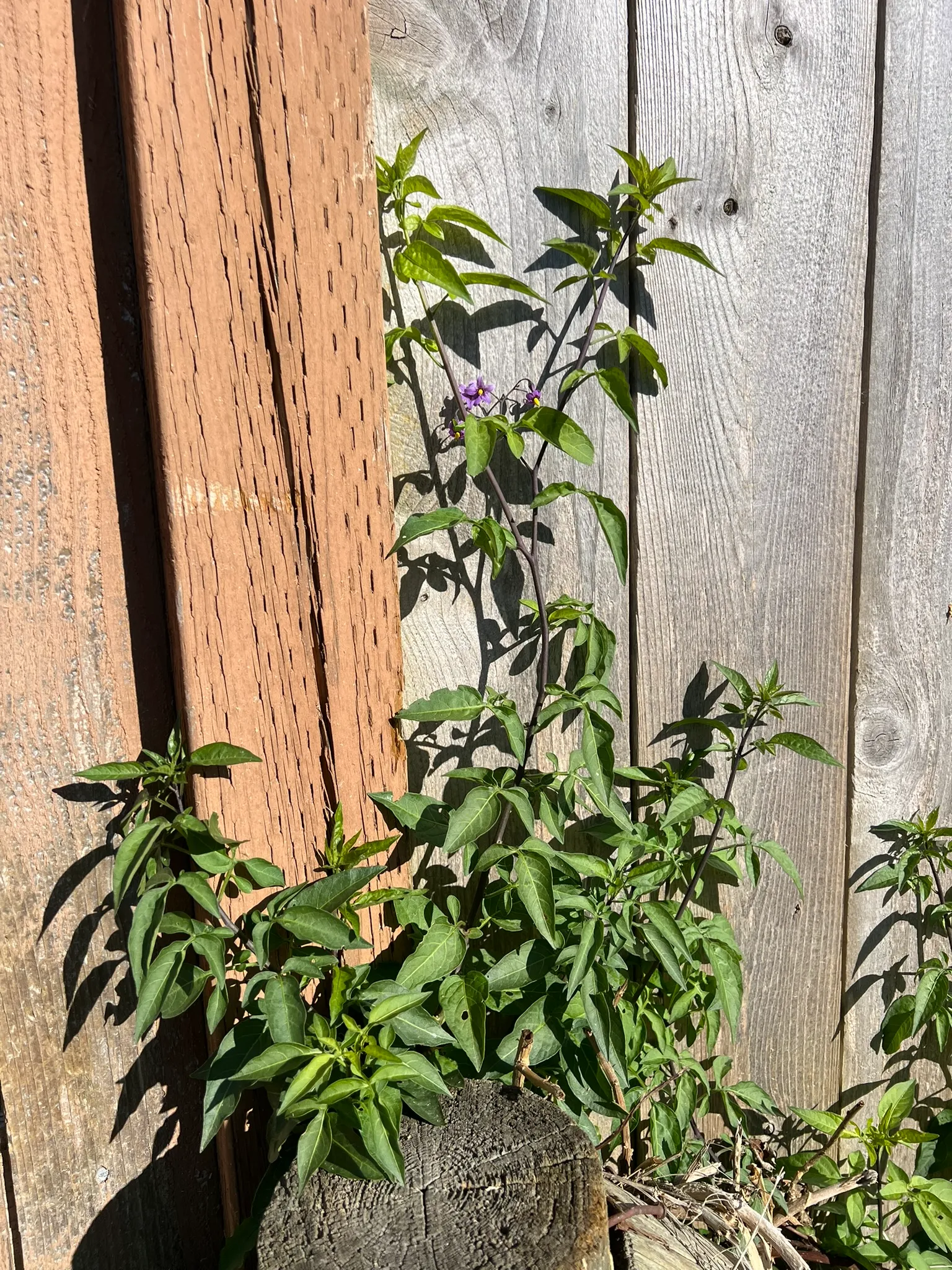
Solanum dulcamara is a scrambling, semi-woody, perennial vine in the nightshade family (Solanaceae) reaching 3–10 feet (0.9–3 m) in height, climbing over fences, shrubs, and other support structures. Stems are semi-woody at the base, herbaceous above, slender, branching, with a slightly woody older growth that persists through winter. Leaves are alternate, ovate with a cordate base, 1–4 inches (2.5–10 cm) long; upper leaves often have 1–2 basal lobes, giving a hastate or trilobed appearance — the lobed upper leaves are a key identification feature. Flowers are purple to violet, star-shaped, 0.4–0.6 inch (10–15 mm) across, with 5 reflexed (swept-back) petals and a protruding cone of 5 bright yellow stamens fused around the style — the reflexed purple petals with the yellow stamen cone are diagnostic for Solanum. Flowers are borne in branching, loose cymes of 10–25. Fruit is an ovoid berry 0.3–0.4 inch (8–10 mm), ripening from green through yellow and orange to bright red; all color stages are often present simultaneously on the same cluster. A single plant produces 1,000–4,000 berries. Contains solanine and solasodine glycoalkaloids; all parts are toxic, with highest concentrations in unripe green berries. Birds consume ripe berries and disperse seeds widely.
Native Range
Native to Europe, western Asia, and northern Africa, occurring in hedgerows, riparian areas, fencerows, woodland edges, and moist disturbed sites from sea level to approximately 6,000 feet (1,800 m). Widely naturalized across the Pacific Northwest, particularly in moist, partially shaded sites.Suggested Uses
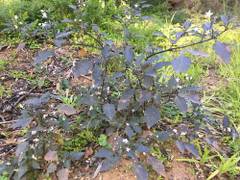
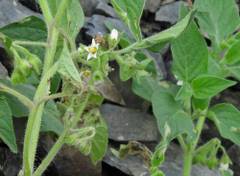
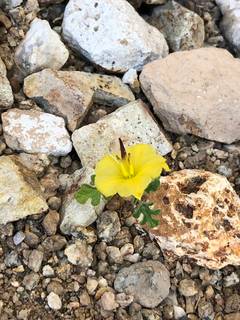
Used in Solanaceae identification courses for teaching the reflexed-petal flower with fused stamen cone (buzz pollination), the berry fruit type, and the glycoalkaloid toxicity. The four-species Solanum comparison (S. dulcamara purple vine red berries, S. nigrum white erect black berries, S. physalifolium white prostrate hairy, S. rostratum yellow spiny) is a standard identification teaching unit. The multicolored berry ripening sequence is studied in fruit pigmentation biology. Toxicity is taught in human and veterinary poisoning.How to Identify
Appearance
Size & Dimensions
Height3' - 10'
Width/Spread3' - 8'
Bloom Information
Flowers from May through September. Loose cymes bloom continuously over 10–14 weeks. Pollinated by bees (buzz pollination — bees vibrate the anthers to release pollen from the terminal pore). Berries ripen 6–8 weeks after pollination, with all color stages present simultaneously. In the Pacific Northwest, ripe red berries are conspicuous from July through October.
Detailed Descriptions
Flower Description
Purple with yellow stamen coneFoliage Description
Dark green, ovate with a cordate base; upper leaves often with 1-2 basal lobes (hastate to trilobed); alternateGrowing Conditions
Sun Requirements
Requires 2-8 hours of direct sunlight daily
• Full Sun: 6+ hours of direct sunlight
• Partial Shade: 3-6 hours of direct sunlight
• Full Shade: Less than 3 hours of direct sunlight
Care & Maintenance
Care Guide
Cutting stems at ground level removes above-ground growth, but the semi-woody base and root crown resprout. Digging the root crown and all lateral roots is necessary for permanent removal. The climbing habit means stems intertwine through fences, shrubs, and trees, complicating removal. Removing before fruiting prevents bird-dispersed seed spread. The berries are a poisoning concern for children due to the bright colors and accessible location on fences and hedges; removal from areas frequented by children is recommended. Gloves should be worn during handling.Pruning
No pruning applicable in a weed context. Stems are cut at ground level and the root crown is dug. Intertwined stems in fences and hedges are cut at the base and allowed to die before removal to avoid damaging the support structure.Toxicity Warning
Toxic to pets and humansBotanical Flashcard