Solanum, Genus, carolinense, Species,
- Genus & species
Carolina horsenettle
southeastern and central North America
Overview
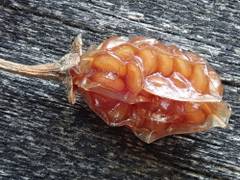
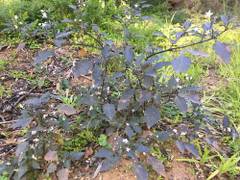
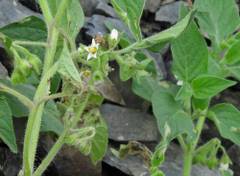
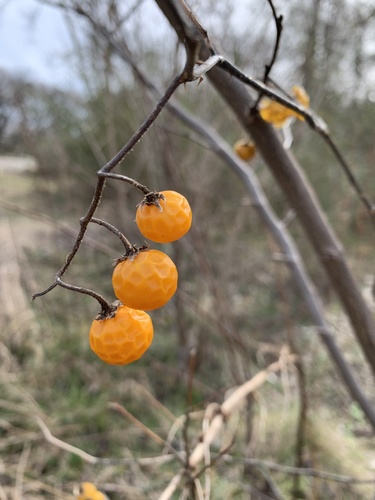
Solanum carolinense is a deep-rooted perennial in the nightshade family native to the southeastern and central United States, growing 1-3 feet (30-90 cm) tall on stems armed with sharp yellow spines. The oval to lobed leaves are 2-5 inches (5-12 cm) long and carry spines along the midrib and veins on both surfaces. From late spring into autumn it bears loose clusters of star-shaped flowers about 1 inch (2.5 cm) across, white to pale violet with a cone of bright yellow anthers at the center. The flowers ripen into smooth, round berries 0.4-0.6 inch (1-1.5 cm) wide that turn from green and mottled to yellow as they mature, resembling tiny tomatoes. All parts, and especially the berries, contain solanine and related alkaloids that are toxic to people and livestock. S. carolinense spreads by deep, creeping roots as well as by seed, and root fragments left in the soil regrow readily, which makes it persistent in fields, pastures, and gardens. It tolerates drought and poor soil and is treated as a noxious weed in many states.
Native Range
Solanum carolinense is native to the southeastern and central United States and has spread north and west across most of North America. It grows in pastures, crop fields, gardens, roadsides, and other open, disturbed ground on a wide range of soils.Suggested Uses
Solanum carolinense is a weed with no landscape or garden use, and it is managed for removal across its range. Where it grows in pastures and crop fields, the priority is control rather than cultivation. The flowers are visited by bees, and some wildlife eat the berries despite their toxicity to livestock.How to Identify
Appearance
Size & Dimensions
Height1' - 3'
Width/Spread1' - 3'
Bloom Information
Detailed Descriptions
Flower Description
white to pale violetFoliage Description
greenGrowing Conditions
Sun Requirements
Requires 6-10 hours of direct sunlight daily
• Full Sun: 6+ hours of direct sunlight
• Partial Shade: 3-6 hours of direct sunlight
• Full Shade: Less than 3 hours of direct sunlight