Serissa, Genus, japonica, Species,
- Genus & species
Snow rose
Southern Japan, southern China, Taiwan, Vietnam, India
Overview
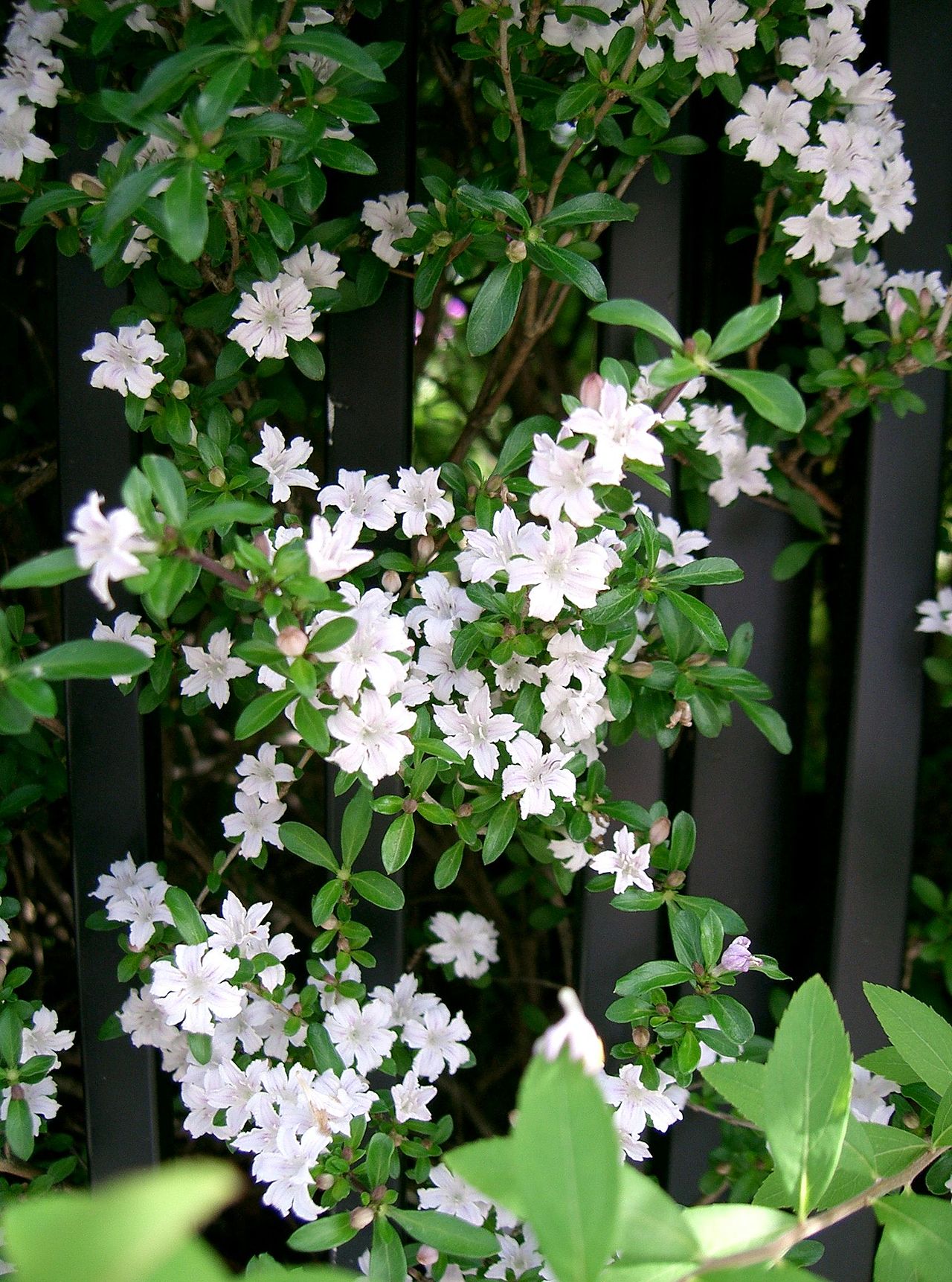
Serissa japonica is an evergreen shrub reaching 1-3 feet (30-90 cm) tall and wide, with dense twiggy growth and grey bark that fissures and turns corky within 5-8 years. Leaves are opposite, elliptic, 0.2-1 inch (5-25 mm) long, glossy dark green, and set in pairs along the whole length of the shoots; variegated forms carry cream or white leaf margins. Flowers are funnel-shaped, 0.3-0.5 inch (8-12 mm) across, white and sometimes flushed pink, with four to six frilled lobes, opening in flushes from April to October, which is the source of the name tree of a thousand stars. Double forms such as Flore Pleno carry 10-20 petals. Cut roots and bark give off a sour smell, recorded in the older name Serissa foetida. Growth is slow at 2-6 inches (5-15 cm) per year, and the small leaves and heavy branching make the species a common subject for bonsai. Plants drop their leaves within days of a move, a cold draft, or a change in watering, and refoliate over 3-4 weeks. Stems are killed at about 15F (-9C), which holds outdoor planting to USDA zones 7-11.
Native Range
Serissa japonica is native to southern Japan, southern China, Taiwan, Vietnam, and parts of India, where it grows on damp hillsides, in scrub, and along field margins in subtropical lowlands. It has been cultivated in Japan and China for centuries as a garden shrub and as bonsai material. The species is planted outdoors in USDA zones 7-11 and grown under glass or indoors elsewhere.Suggested Uses
Grown in containers from 3 gallons (11 L) down to bonsai pots on patios and windowsills, and planted at 18-24 inch (45-60 cm) spacing as a low edging or informal hedge in USDA zones 7-11. The long flowering season from spring through autumn places the species in courtyard and balcony plantings where a compact evergreen is wanted. Small leaves, dense branching, and the corky bark of older plants make it a common starting subject for bonsai.How to Identify
Appearance
Size & Dimensions
Height1' - 3'
Width/Spread1' - 3'
Bloom Information
Flowering runs April to October in flushes of 2-3 weeks, with the heaviest bloom in late spring. Each flower lasts 5-7 days, and the plant carries open flowers and buds together through the season. Bloom continues on indoor plants held in bright light at 60 to 75F (16-24C). Flower numbers fall in light below about 4 hours of direct sun or its equivalent.
Detailed Descriptions
Flower Description
White, sometimes flushed pinkFoliage Description
Glossy dark green, cream-margined on variegated formsGrowing Conditions
Sun Requirements
Requires 4-8 hours of direct sunlight daily
• Full Sun: 6+ hours of direct sunlight
• Partial Shade: 3-6 hours of direct sunlight
• Full Shade: Less than 3 hours of direct sunlight
Care & Maintenance
Care Guide
Bright light with 4-8 hours of sun supports flowering, and indoor plants sit within 3 feet (0.9 m) of an east or south window. Soil is held evenly moist at pH 5.5-7.0 in a free-draining mix; the roots are thin and fibrous and die back within days in a mix that dries out fully, while standing water brings on root rot. Water when the surface 0.5 inch (13 mm) of the mix dries, which in summer runs to every 1-2 days for a small container. Leaf drop follows a move, a draft below 50F (10C), or a change in the watering pattern, with new leaves pushing within 3-4 weeks. Balanced liquid fertilizer at half strength every 2-3 weeks from April to September covers the season's growth. Aphids and scale colonise the crowded shoots, and spider mites build up on indoor plants in dry winter air.Pruning
Pruning is carried out in early spring before growth starts and again after each flowering flush, cutting shoots back to 2-3 leaf pairs. The species buds freely from old wood, so cuts into bare stems regrow within 4-6 weeks during the growing season. Bonsai work uses pinching of the shoot tips through summer rather than hard cuts, which holds the small leaf size. Wired branches set within 6-8 weeks, and the thin bark marks where wire is left beyond one season.Pruning Schedule
Prune: March–April & June
early springsummer
Container Growing
Suitable for container growing
Minimum container size: 3 gallons