Coffea, Genus, arabica, Species,
- Genus & species
coffee plant
Southwestern Ethiopian highlands at 4,500-6,500 ft (1,400-2,000 m); cultivated in Yemen since the 15th century and now grown commercially across tropical highlands worldwide
Overview
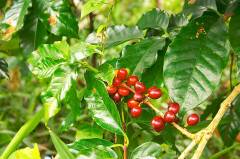
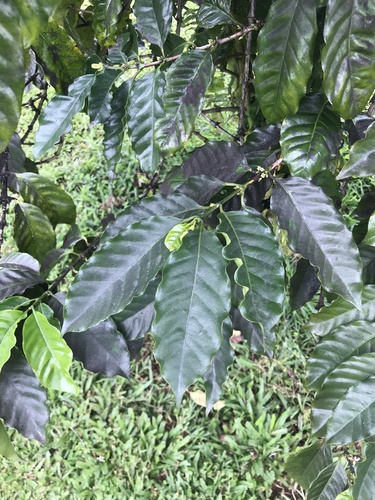
Coffea arabica is the coffee plant — the species that produces about 60 percent of world coffee production — grown indoors as a glossy-foliaged evergreen shrub reaching 36–96 inches (90–240 cm) tall and 24–48 inches (60–120 cm) wide in container culture; outdoors in tropical highlands the species reaches 15–30 ft (4.5–9 m) as a small tree. The species was first cultivated in Yemen around the 15th century from wild populations native to the Ethiopian highlands, and the genus name Coffea traces to the Arabic 'qahwa' through Turkish 'kahve'. Foliage is composed of elliptic glossy dark green leaves 4–6 inches (10–15 cm) long and 1.5–2.5 inches (4–6 cm) wide arranged in opposite pairs along woody stems, with a wavy leaf margin and a sharp leaf tip. Container-grown plants 3–5 years old in 7-gallon (26-liter) pots may produce small fragrant white star-shaped flowers in clusters at leaf axils, followed by red drupes (the coffee cherries) containing two seeds (the coffee beans); fruit production indoors is limited and yields 50–200 grams of green beans per plant per year compared with 1–5 kg per outdoor tree. Cultural failure modes are well-documented: leaf drop from cold air or temperature swings (the species is intolerant of temperatures below 55°F / 13°C), leaf scorch from direct sun above 4 hours, and chlorosis from chronic over-watering or alkaline soil above pH 7.0. All parts contain caffeine and theobromine that are toxic to dogs and cats on ingestion; humans consume the roasted ground seeds without harm, but raw plant material is not for direct consumption.
Native Range
Coffea arabica is native to the southwestern Ethiopian highlands, with wild populations in the Boma Plateau and Bale Mountains regions at 4,500–6,500 ft (1,400–2,000 m) elevation. The species has been cultivated in Yemen since the 15th century and is now grown commercially across tropical highlands worldwide.Suggested Uses
Used as a glossy-foliaged indoor specimen for sunrooms, conservatories, and bright living rooms in containers of 5–10 gallons (19–38 liters). The dark green wavy leaves and occasional fragrant flowers and red fruit suit indoor coffee enthusiasts who want to grow the plant that produces their drink. Combines with smaller foliage houseplants such as Calathea cultivars and Maranta leuconeura for layered tropical indoor plantings. Less suited to households with cats and dogs that browse foliage due to caffeine toxicity. Outdoors hardy only in USDA zones 10–12.How to Identify
Appearance
Size & Dimensions
Height3' - 8'
Width/Spread2' - 4'
Colors
Bloom Information
Container-grown plants 3–5 years old in larger pots may produce small fragrant white star-shaped flowers in clusters at leaf axils in spring or early summer, followed by red coffee-cherry drupes that ripen over 6–9 months. Indoor flowering is irregular and yields 50–200 grams of green beans per plant per year. Carries a sweet jasmine-like fragrance from the flowers when produced.
Detailed Descriptions
Flower Description
Small fragrant white star-shaped flowers in clusters at leaf axils; red drupes (coffee cherries) followFoliage Description
Elliptic glossy dark green leaves 4-6 inches (10-15 cm) long and 1.5-2.5 inches (4-6 cm) wide in opposite pairs along woody stems, with a wavy leaf margin and a sharp leaf tipGrowing Conditions
Sun Requirements
Requires 4-6 hours of direct sunlight daily
• Full Sun: 6+ hours of direct sunlight
• Partial Shade: 3-6 hours of direct sunlight
• Full Shade: Less than 3 hours of direct sunlight
Care & Maintenance
Care Guide
Place in bright indirect light at 200–500 foot-candles; direct sun above 4 hours scorches the foliage. Water when the top one-third of the soil volume has dried; the plant prefers consistently moist soil and tolerates short dry periods less well than most foliage houseplants. Soil mix should be free-draining and slightly acidic (peat-based potting mix amended with 25–30 percent perlite at pH 5.5–6.5). Maintain temperatures above 55°F (13°C) at all times; cold damage shows as leaf drop and lower-leaf yellowing. Indoor humidity above 50 percent reduces leaf-tip browning. Feed at half the label rate with an acidic fertilizer (the formulations sold for azaleas and rhododendrons) monthly during active growth (spring through early autumn) and skip feeding in winter. Repot every 2–3 years.Pruning
Prune to shape in early spring before active growth resumes; the species responds well to pinching back stem tips for branching, and to harder cutbacks if a smaller specimen is wanted. Cuttings root in moist potting mix in 6–10 weeks for new plants. Mature plants can be coppiced (cut back to 12–18 inches / 30–45 cm) every 5–8 years to refresh aging stems.Pruning Schedule
Prune: March
early spring
Container Growing
Suitable for container growing
Minimum container size: 5 gallons