Cephalanthus, Genus, occidentalis, Species,
- Genus & species
buttonbush
Eastern and central North America (Nova Scotia and Ontario south through the eastern United States to Florida and Texas, with disjunct populations into Mexico and Central America)
Overview
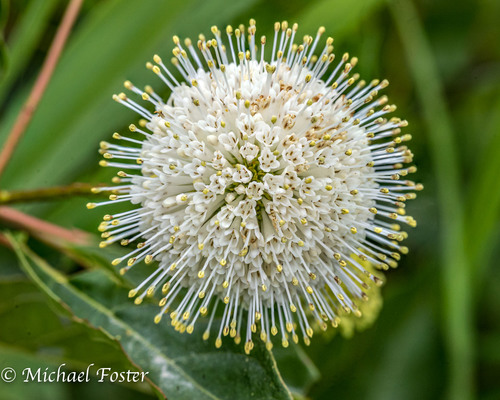
Cephalanthus occidentalis is a deciduous shrub in the coffee family (Rubiaceae), reaching 6-12 feet (1.8-3.7 m) tall and 6-10 feet (1.8-3 m) wide with a rounded, multi-stemmed habit. The species is a rare native North American member of the coffee family, which is otherwise dominated by tropical genera. Leaves are opposite or whorled (in threes), ovate to elliptic, 3-6 inches (8-15 cm) long, glossy dark green, emerging late in spring (mid to late May in the Pacific Northwest) — the delayed leaf-out is normal and not a sign of dieback. Flowers are borne in spherical heads 1-1.5 inches (2.5-4 cm) in diameter, densely packed with tubular, white to cream, protruding-stamened individual flowers that create a pincushion effect. Flower heads are highly fragrant — sweet, honey-like — and are visited by large numbers of bees, butterflies, and hummingbirds, making buttonbush a high-value native pollinator plant. Flowering occurs in July-August, a period when few other native shrubs are in bloom. Fruit are spherical nutlet clusters (achene balls) that persist through winter, turning reddish-brown and resembling small sycamore balls. The species is characteristically found in wet habitats — swamps, stream margins, lake edges, and floodplains — and tolerates prolonged flooding and standing water to 12 inches (30 cm) deep. All parts contain the glycoside cephalanthin, which is toxic if ingested.
Native Range
Cephalanthus occidentalis is native to eastern and central North America, from Nova Scotia and Ontario south through the eastern United States to Florida and Texas, with disjunct populations in the Southwest and into Mexico and Central America, where the species occurs in swamps, wet meadows, stream banks, lake margins, and floodplain forests on wet, often inundated soils.Suggested Uses
Planted in rain gardens, bioswales, pond margins, and wet meadow restorations, spaced 6-8 feet (1.8-2.4 m) apart. A high-value native shrub for pollinator habitat — the July-August bloom period fills a gap when few other shrubs flower. The persistent winter fruit clusters supply structural interest. The species stabilises stream banks owing to flood tolerance. In the Pacific Northwest, native east of the Cascades; suited to wet sites west of the Cascades.How to Identify
Appearance
Size & Dimensions
Height6' - 12'
Width/Spread6' - 10'
Bloom Information
Spherical flower heads open from July through August — among the latest-flowering native shrubs in the eastern North American flora. Each head contains 100-200 individual tubular flowers opening from the outside inward over 1-2 weeks. Bloom period is 4-6 weeks total. The flowers are intensely fragrant. Pollination is by bees (especially bumblebees), butterflies (painted ladies, swallowtails), and ruby-throated hummingbirds. Spherical fruit clusters persist through winter.
Detailed Descriptions
Flower Description
White to creamFoliage Description
Glossy dark greenGrowing Conditions
Sun Requirements
Requires 4-10 hours of direct sunlight daily
• Full Sun: 6+ hours of direct sunlight
• Partial Shade: 3-6 hours of direct sunlight
• Full Shade: Less than 3 hours of direct sunlight
Care & Maintenance
Care Guide
Plants grow in full sun to partial shade in wet to moist soil with a pH of 5.0-7.5. The species tolerates standing water to 12 inches (30 cm) deep, seasonal flooding, and clay soil. Plants are spaced 6-8 feet (1.8-2.4 m) apart. Watering is regular when the species is not planted in a naturally wet site. No fertilising is needed in wet, organically rich soils. In the Pacific Northwest, siting in rain gardens, pond margins, and low-lying wet areas suits the species' habitat preference. The late spring leaf-out (mid to late May) is normal — apparently dead stems are not pruned in early spring, since buds break late.Pruning
Pruning takes place in late winter (February-March) before leaf emergence. Dead, damaged, and crossing stems are removed. Older stems are thinned at the base to maintain an open, multi-stemmed structure. The species tolerates hard renewal pruning to 12 inches (30 cm) — the shrub regenerates from the base. Flowers form on new growth, so spring pruning does not sacrifice bloom.Pruning Schedule
Prune: February–March
late spring