Overview
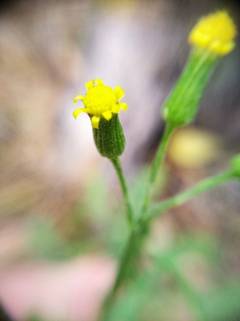
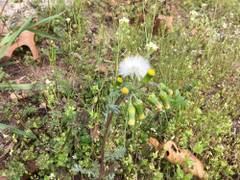
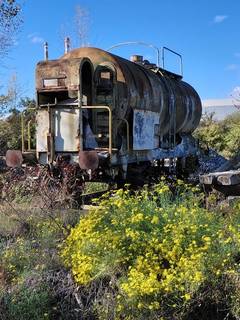
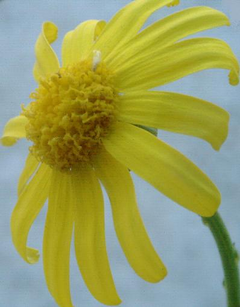
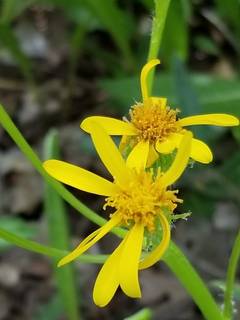
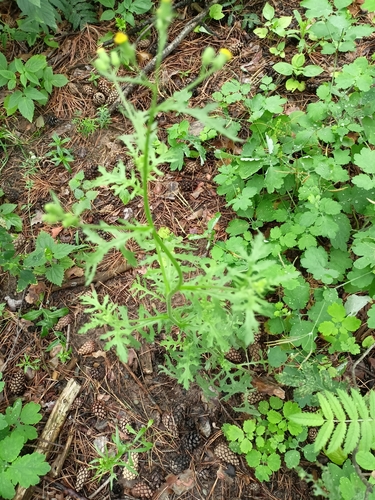
Senecio viscosus is an annual herb in the daisy family (Asteraceae), growing 4–24 inches (10–60 cm) tall and covered throughout in sticky glandular hairs that give it a clammy feel and a strong, unpleasant smell. The greyish-green leaves are deeply pinnately lobed, 1–4 inches (2.5–10 cm) long, and stalked. The flower heads are 0.4–0.6 inch (10–15 mm) across with yellow disc florets and short outer ray florets that curl back and outward; they are held in a loose, branched cluster from July to September. Below each head the bracts are tipped black and backed by short spreading scales. The seed is a ribbed achene with a white pappus that carries it on the wind. It grows on dry, open, disturbed ground such as railway ballast, shingle, walls, waste places, and gravelly roadsides, on sharply drained, often stony soils. As an annual it sets abundant seed and needs bare ground, and it disappears once the surface closes over with grass or perennial cover.
Native Range
Native to Europe and western Asia. It has spread widely as an introduced weed of bare and disturbed ground, including parts of North America, often along railways and ports.Suggested Uses
Senecio viscosus is not grown ornamentally or as a crop and is regarded as a weed of railways, waste ground, and gravel. It has minor value as a late-season nectar source for small pollinators on otherwise bare sites.How to Identify
Appearance
Size & Dimensions
Height4" - 2'
Width/Spread6" - 1'
Colors
Bloom Information
Flower heads open from July to September, sometimes into October. Pollination is mainly by small flies and bees, though the flowers also self-pollinate. Wind-borne seed with white pappus is shed from late summer onward, allowing several overlapping generations in a warm season.
Detailed Descriptions
Foliage Description
greyish-greenGrowing Conditions
Sun Requirements
Requires 6-12 hours of direct sunlight daily
• Full Sun: 6+ hours of direct sunlight
• Partial Shade: 3-6 hours of direct sunlight
• Full Shade: Less than 3 hours of direct sunlight
Water & Climate
Water Needs
Drought Tolerance
Drought tolerant when established