Senecio, Genus, ampullaceus, Species,
- Genus & species
Texas ragwort
Overview
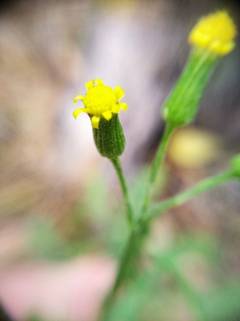
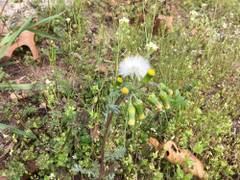
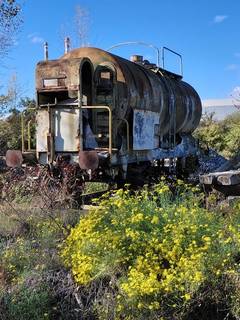
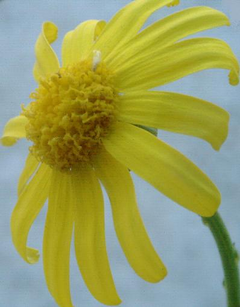
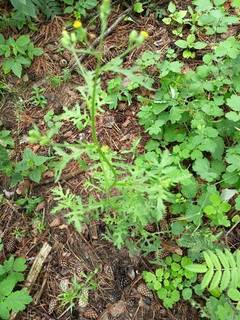
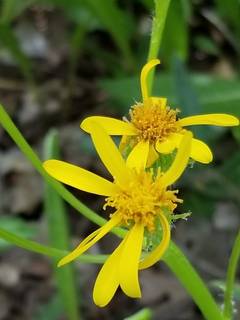
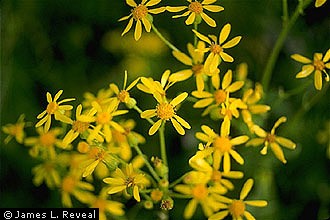
Senecio ampullaceus is an annual forb in the aster family that grows 12–30 inches (30–75 cm) tall and 6–14 inches (15–35 cm) wide on a single erect, branching stem. The lower leaves are oblong to lance-shaped, 2–5 inches (5–13 cm) long, clasping the stem with rounded basal lobes, and become smaller upward. Young foliage carries loose, cobwebby hairs that are shed as the plant matures, leaving the surface nearly smooth. From March to May the stems bear flat-topped clusters of yellow flower heads, each head 0.8–1.2 inches (2–3 cm) across with 8–13 ray florets surrounding a yellow disc. Bloom is followed by wind-dispersed seeds carried on white pappus, after which the annual root dies. The plant germinates with autumn and winter moisture and grows through spring on sandy soils. All parts contain pyrrolizidine alkaloids that damage the liver of cattle, horses, and other grazing animals, and the same compounds are toxic to humans if ingested. Senecio ampullaceus grows in open fields, pastures, roadsides, and sandy disturbed ground, and increases on overgrazed range where competing grasses are thin. It does not persist in shade or in heavy, poorly drained soils.
Native Range
Endemic to Texas and adjacent areas of the south-central United States, where it grows on sandy soils of the coastal plain, blackland prairie, and post oak savanna. It occurs on open, disturbed, and sandy ground.Suggested Uses
Senecio ampullaceus appears in native wildflower stands and naturalized plantings on sandy soils, where its spring flowers supply nectar to bees and other insects. It is excluded from pastures and paddocks grazed by livestock because of its toxicity.How to Identify
Appearance
Size & Dimensions
Height1' - 2'6"
Width/Spread6" - 1'2"
Bloom Information
Yellow flower heads open from March to May, peaking in April across most of the Texas range. Each plant flowers for three to five weeks before setting seed. The white-tufted seeds disperse on wind as the annual stems dry.
Detailed Descriptions
Foliage Description
greenGrowing Conditions
Sun Requirements
Requires 6-12 hours of direct sunlight daily
• Full Sun: 6+ hours of direct sunlight
• Partial Shade: 3-6 hours of direct sunlight
• Full Shade: Less than 3 hours of direct sunlight
Water & Climate
Water Needs
Drought Tolerance
Drought tolerant when established
Care & Maintenance
Care Guide
Senecio ampullaceus grows in full sun on dry, sandy, well-drained soils and tolerates poor, low-fertility ground. It needs no supplemental water and completes its life cycle on seasonal rainfall. Seed germinates in autumn and winter without pretreatment and grows through spring. The plant self-sows on bare or disturbed soil. It does not tolerate shade, heavy clay, or waterlogged sites. Because all parts contain pyrrolizidine alkaloids toxic to grazing animals, it is managed as a weed in pastures and rangeland.Pruning
As a single-season annual, Senecio ampullaceus requires no pruning. Plants can be pulled or cut before seed matures to limit self-seeding. Dead stems break down over winter.Toxicity Warning
Toxic to pets and humansPlanting Guide
Planting Methods & Timing
Planting Method
direct sow