Senecio, Genus, sylvaticus, Species,
- Genus & species
wood groundsel
Overview
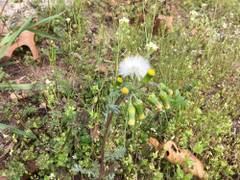
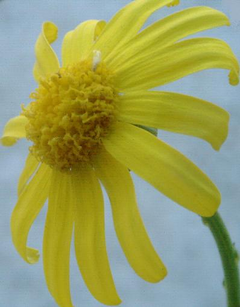
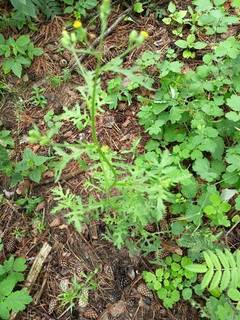
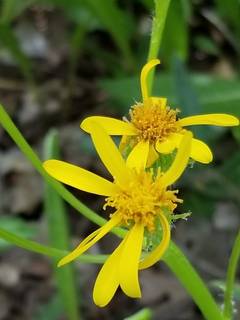
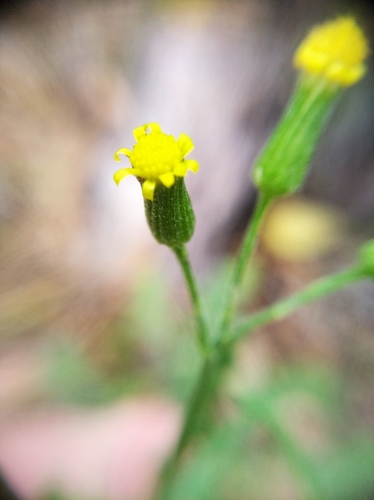
Senecio sylvaticus is a slender, erect annual in the daisy family (Asteraceae) reaching 8-30 inches (20-75 cm) tall with a 6-12 inch (15-30 cm) spread. Stems are erect, branching in the upper half, sparsely hairy to glandular-sticky, often with a sticky feel. Leaves are alternate, deeply pinnately lobed with irregularly toothed segments, 1-4 inches (2.5-10 cm) long, grayish-green, glandular-hairy, with an unpleasant odor when crushed. Flower heads are small, cylindrical, 0.3-0.4 inch (8-10 mm) long, with yellow disc florets and very short ray florets that curl back tightly against the involucre — the curled-back rays separate S. sylvaticus from the rayless S. vulgaris. Phyllaries (involucral bracts) have black tips. Fruit is an achene with a white pappus (dandelion-like). A single plant produces 1,000-10,000 seeds, dispersed by wind. Contains pyrrolizidine alkaloids that cause liver damage in livestock and in humans if consumed in quantity. The species colonizes recently disturbed, acidic soils, particularly clear-cut forests, burned areas, and gravel disturbed sites in the Pacific Northwest.
Native Range
Senecio sylvaticus is native to Europe, occurring in clear-cut forests, burned areas, gravel roads, and acidic disturbed ground from sea level to approximately 5,000 feet (1,500 m). Naturalized in the Pacific Northwest, particularly west of the Cascades, the species is most often encountered on recently disturbed acidic forest soils.Suggested Uses
Used in Asteraceae identification for comparing ray presence: S. sylvaticus (short curled-back rays) versus S. vulgaris (rayless) versus Jacobaea vulgaris (prominently spreading rays). The pyrrolizidine alkaloid toxicity is taught alongside Jacobaea vulgaris in livestock toxicology. Studied in forest disturbance ecology as an early-successional colonizer of acidic soils. The black-tipped phyllaries are a shared Senecio identification feature.How to Identify
Appearance
Size & Dimensions
Height8" - 2'6"
Width/Spread6" - 1'
Bloom Information
Flowers appear June through September. Small cylindrical heads bloom over 6-8 weeks. The species is self-pollinating. Seeds mature 2-3 weeks after flowering and disperse by wind via the pappus. In the Pacific Northwest, peak bloom occurs in July through August on recently disturbed sites.
Detailed Descriptions
Flower Description
Yellow cylindrical heads 0.3-0.4 inch (8-10 mm) with very short curled-back rays; phyllaries with black tipsFoliage Description
Medium green to grayish-green, deeply pinnately lobed with irregularly toothed segments; sparsely hairy to glandular-stickyGrowing Conditions
Sun Requirements
Requires 3-8 hours of direct sunlight daily
• Full Sun: 6+ hours of direct sunlight
• Partial Shade: 3-6 hours of direct sunlight
• Full Shade: Less than 3 hours of direct sunlight