Senecio, Genus, elegans, Species,
- Genus & species
red-purple ragwort
Overview
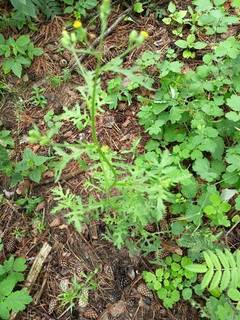
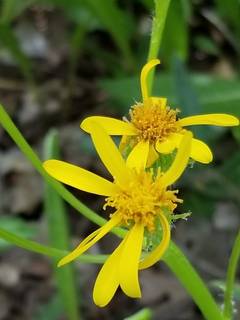
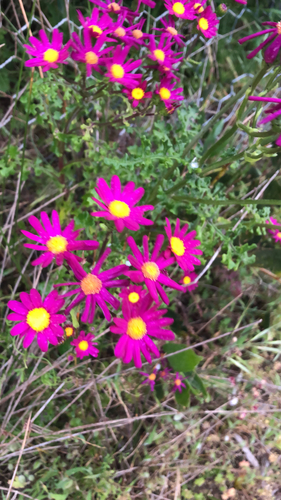
Senecio elegans is an upright annual or short-lived herb that grows 12-28 inches (30-70 cm) tall, with branching stems and somewhat fleshy, deeply lobed leaves 1-4 inches (2.5-10 cm) long. Daisy-like flower heads about 0.8-1.2 inches (20-30 mm) across have purple to magenta ray florets around a yellow central disc, carried in loose clusters at the stem tips. Flowering runs through late winter and spring, followed by fluffy seed heads that release many wind-borne seeds. Native to coastal South Africa, it has naturalised on sand dunes and disturbed coastal ground in southern Australia and other temperate regions, where it can form dense patches. The leaves and stems contain pyrrolizidine alkaloids, which damage the liver and make the plant poisonous to livestock and people. It grows fast from seed in cool, moist conditions and dies after setting seed, relying on the seed bank to return each year. Its short life and heavy seeding let it colonise bare sand quickly but also make it a weed of dunes and roadsides.
Native Range
Senecio elegans is native to coastal South Africa. It has naturalised on sand dunes and disturbed coastal ground in southern Australia, New Zealand, and other temperate regions.Suggested Uses
Senecio elegans is grown in some gardens as a fast cool-season annual for its purple-and-yellow flowers, though its weediness limits this use. Where it has naturalised on dunes and roadsides it is managed as an environmental weed rather than planted.How to Identify
Appearance
Size & Dimensions
Height1' - 2'4"
Width/Spread8" - 1'4"
Bloom Information
Detailed Descriptions
Flower Description
purple to magenta with yellow centreFoliage Description
greenGrowing Conditions
Sun Requirements
Requires 6-10 hours of direct sunlight daily
• Full Sun: 6+ hours of direct sunlight
• Partial Shade: 3-6 hours of direct sunlight
• Full Shade: Less than 3 hours of direct sunlight
Water & Climate
Water Needs
Care & Maintenance
Care Guide
Senecio elegans grows in full sun on light, sandy, free-draining soils and tolerates salt spray and wind on the coast. It grows fast from seed in cool, moist conditions and completes its life cycle in a single season, dying after setting seed. It tolerates light frost but is mostly grown as a cool-season annual. In regions where it has naturalised it is treated as an environmental weed of dunes and managed by removal before seed set. The foliage contains pyrrolizidine alkaloids and is poisonous to livestock and people. Plants return each year from the seed bank rather than from persistent roots.Pruning
Removing flower heads before the fluffy seed forms reduces self-seeding, which is the main way the plant spreads. Cutting or pulling plants before they seed is used to control patches. There is no perennial framework to prune, as plants die after seeding.Pruning Schedule
Prune: October–November
spring
Container Growing
Suitable for container growing
Minimum container size: 2 gallons
Toxicity Warning
Toxic to pets and humansPlanting Guide
Planting Methods & Timing
Planting Method
direct sow
Direct Sow Timing
autumn to early winter
Days to Maturity
90–120 days
Plant Spacing
8 inches