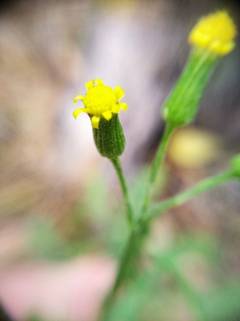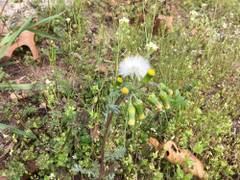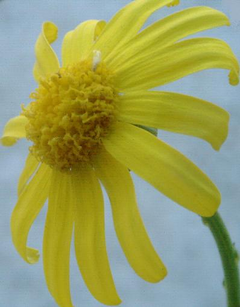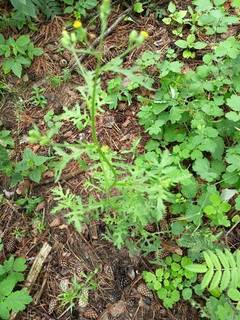
Senecio, Genus, inaequidens, Species,
- Genus & species
narrow-leaved ragwort
Overview
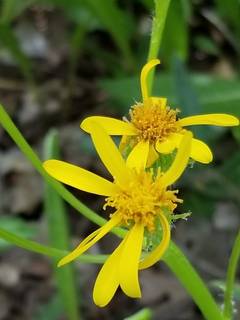
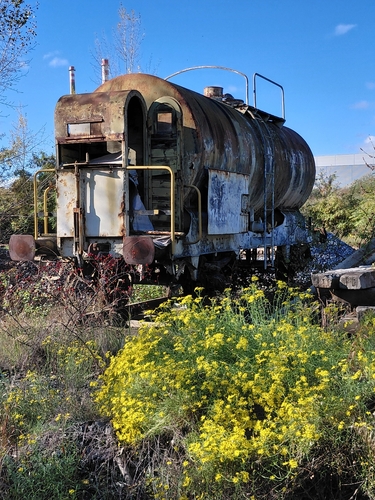
Senecio inaequidens is an evergreen to semi-evergreen perennial of the daisy family, forming a bushy mound 1-3 feet (30-90 cm) tall and wide on many slender, branching stems. The narrow, almost grass-like leaves are 1.5-2.5 inches (4-6 cm) long, untoothed, and crowded along the stems. From late spring well into autumn, and nearly year-round in mild areas, the branch tips carry yellow daisy flower heads about 0.6-1 inch (15-25 mm) across, each with 10-15 ray florets. A single plant can produce thousands of small, parachute-tipped seeds that blow long distances on the wind. It grows fast from a woody base, tolerates drought, poor soil, and salt, and spreads readily along roads and railways. All parts contain pyrrolizidine alkaloids that are toxic to grazing livestock and to people, and it is treated as an invasive weed across much of Europe. Frost cuts back the top in colder zones, though the woody base often resprouts.
Native Range
Native to southern Africa, mainly South Africa and Lesotho, where it grows in grassland and disturbed ground at higher elevations. It has spread widely as an invasive plant across Europe, South America, Australia, and parts of North America, largely along transport corridors.Suggested Uses
Rarely planted by choice and banned or discouraged in many regions; where present it occurs on dry banks, gravel, and waste ground. Its long flowering and drought tolerance have led to limited ornamental use on poor, sunny sites in frost-free climates.How to Identify
Appearance
Size & Dimensions
Height1' - 3'
Width/Spread1' - 3'
Bloom Information
Flowers over a long season, from late spring into autumn and nearly year-round in mild climates. The yellow daisy heads open in steady succession at the branch tips. Seed follows quickly and disperses on the wind throughout the flowering period.
Detailed Descriptions
Foliage Description
greenGrowing Conditions
Sun Requirements
Requires 6-12 hours of direct sunlight daily
• Full Sun: 6+ hours of direct sunlight
• Partial Shade: 3-6 hours of direct sunlight
• Full Shade: Less than 3 hours of direct sunlight
Care & Maintenance
Care Guide
Grows in full sun on well-drained soil of low fertility, from sand to gravel and rubble, across a pH of 5.5-7.5. It tolerates drought, heat, salt, and poor ground once established and needs little or no water. Rich, moist soil and shade reduce flowering and shorten its life. It grows easily from seed and self-sows heavily, so removing flower heads before they set seed limits its rapid spread. The plant is toxic to livestock and is a regulated invasive in several countries. Cutting back the woody base in late winter renews compact growth.Pruning
Cut plants back hard in late winter or early spring to keep them compact, as they resprout from the woody base. Shearing off spent flower heads through the season reduces the heavy seed set and self-sowing. Remove whole plants where they spread beyond the intended area.Pruning Schedule
Prune: February
winter