Senecio, Genus, squalidus, Species,
- Genus & species
oxford ragwort
Overview
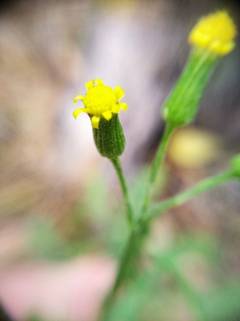
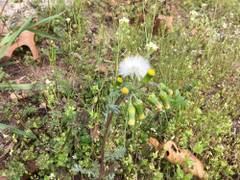
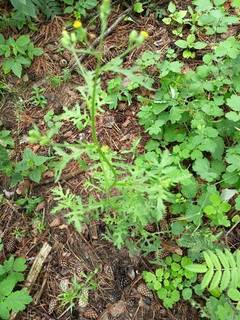
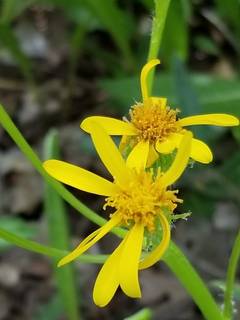
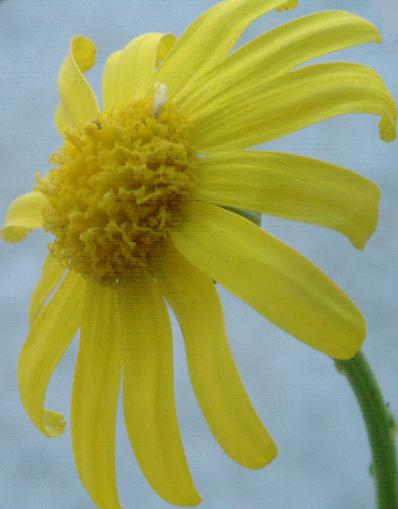
Senecio squalidus is a short-lived, much-branched perennial, often grown or behaving as an annual or biennial, forming a bushy plant 20-40 cm (8-16 in) tall. The hairless stems carry deeply and irregularly pinnately lobed leaves with narrow, pointed segments. Over a very long season it produces loose clusters of bright yellow daisy flowerheads 1.5-2.5 cm (0.6-1 in) across, each with around thirteen spreading ray florets surrounding a yellow disc, and small black-tipped bracts at the base. It sets abundant wind-borne seed carried on a parachute of white hairs, colonising open and disturbed ground rapidly. All parts contain pyrrolizidine alkaloids that are toxic to the liver of grazing animals and of people if eaten. It self-sows freely and behaves as a weed on walls, paving, railways, and waste ground. Plants flower within months of germinating and can bloom in almost any month in mild climates. It grows in poor, dry, free-draining ground in full sun and is short-lived, fading after heavy seeding.
Native Range
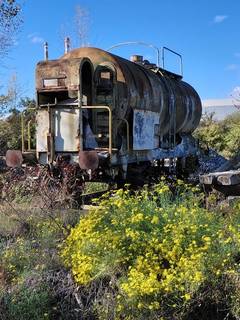
Senecio squalidus is native to the volcanic slopes of southern Italy and Sicily, including the flanks of Mount Etna. It escaped from cultivation at the Oxford Botanic Garden and spread along railway lines across Britain, and is now naturalised through much of western Europe on walls, paving, and waste ground. It is not native to North America.Suggested Uses
Rarely grown deliberately; it appears mostly as a self-sown colonist of walls, paving, gravel, and waste ground. Where tolerated, it gives long-lasting yellow colour on poor, dry sites. Because of its weediness and toxicity to livestock, it is managed as a weed in most settings rather than planted.How to Identify
Appearance
Size & Dimensions
Height8" - 1'4"
Width/Spread8" - 1'4"
Bloom Information
Flowering can occur in almost any month, peaking from May to October. The yellow heads open in succession over a very long season on continually branching stems. Fluffy parachute seeds follow within weeks of each flush, allowing several generations a year in mild climates.
Detailed Descriptions
Foliage Description
GreenGrowing Conditions
Sun Requirements
Requires 6-12 hours of direct sunlight daily
• Full Sun: 6+ hours of direct sunlight
• Partial Shade: 3-6 hours of direct sunlight
• Full Shade: Less than 3 hours of direct sunlight
Care & Maintenance
Care Guide
Senecio squalidus grows in poor, dry, free-draining ground in full sun, including gravel, walls, and rubble, and needs no encouragement. It tolerates drought and low fertility and declines on rich or wet soils. The plant is short-lived but renews itself constantly from self-sown seed. All parts contain pyrrolizidine alkaloids that damage the liver of livestock and people, so it is cleared from pasture and grazing land. Pull or hoe seedlings before they flower to limit the heavy seeding. It needs no feeding or watering and is usually managed as a weed rather than cultivated.Pruning
No ornamental pruning is needed. Cut or pull the plant back before the flowerheads set seed to reduce its rapid spread. Remove whole plants once they decline after heavy seeding.Container Growing
Suitable for container growing
Minimum container size: 2 gallons