Overview
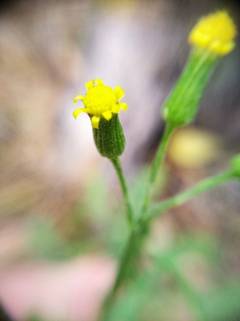
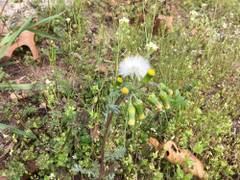
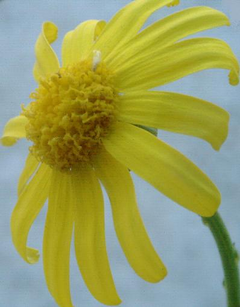
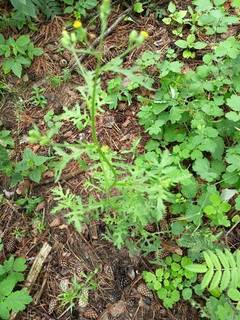
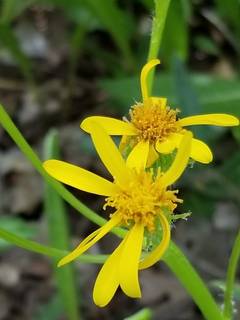
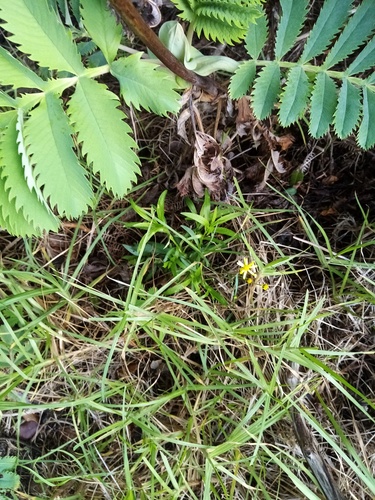
Senecio madagascariensis is an annual to short-lived perennial herb reaching 4-24 inches (10-60 cm) tall, branching from the base into a rounded form. Stems are slender, ribbed, and mostly hairless. Leaves are alternate, narrow, 1-2.8 inches (2.5-7 cm) long and up to 0.4 inch (1 cm) wide, with toothed or smooth margins and a stem-clasping base. Flower heads are yellow and daisy-like, about 0.8 inch (2 cm) across, typically carrying 13 ray florets around a central disc and subtended by about 21 narrow green bracts in a single row. Heads are borne singly or in loose clusters at the stem tips and appear through much of the year, with peak flowering in winter and spring in temperate Australia. Seeds are cylindrical, 0.06-0.1 inch (1.5-2.5 mm) long, each tipped with a white pappus that carries it on the wind, and a single plant can set several thousand seeds in a season. All parts contain pyrrolizidine alkaloids that are toxic to cattle and horses and accumulate in the liver. The species establishes quickly on disturbed and overgrazed ground and is regulated as an invasive weed across eastern Australia.
Native Range
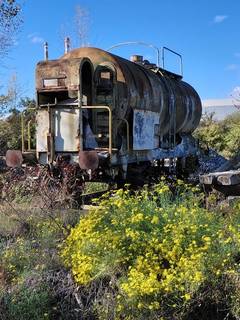
Senecio madagascariensis is native to southern Africa and Madagascar, where it grows in grassland, open woodland, and disturbed sites. It has naturalised widely in Australia, South America, Japan, and Hawaii. In Australia it occupies coastal and tableland pastures, roadsides, and cultivated ground from Queensland to Victoria.Suggested Uses
Senecio madagascariensis is not cultivated and has no horticultural use. It is listed as a noxious or restricted weed in New South Wales, Queensland, and other Australian jurisdictions, where its sale and movement are regulated. Land managers track it in grazing pasture because of its toxicity to cattle and horses.How to Identify
Appearance
Size & Dimensions
Height4" - 2'
Width/Spread8" - 1'8"
Bloom Information
Flowers appear through much of the year in frost-free areas, with peak bloom from winter into spring (June to November) in temperate eastern Australia. Individual heads last about 1-2 weeks before forming wind-borne seed. Flowering slows in hot, dry summer conditions and resumes after rain.
Detailed Descriptions
Foliage Description
greenGrowing Conditions
Sun Requirements
Requires 6-8 hours of direct sunlight daily
• Full Sun: 6+ hours of direct sunlight
• Partial Shade: 3-6 hours of direct sunlight
• Full Shade: Less than 3 hours of direct sunlight
Water & Climate
Water Needs
Drought Tolerance
Drought tolerant when established