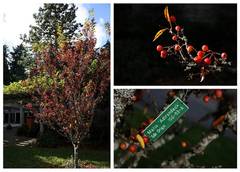
Malus, Genus, sargentii, Species,
- Genus & species
Sargent crabapple tree
Overview
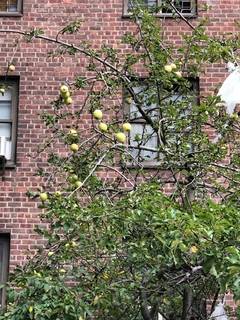
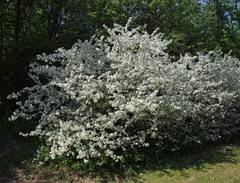
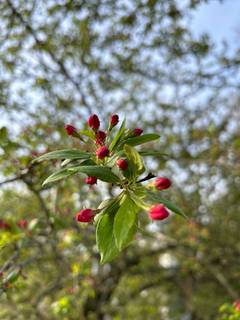
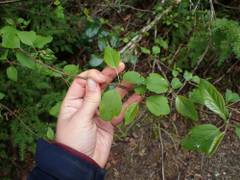
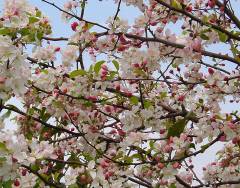
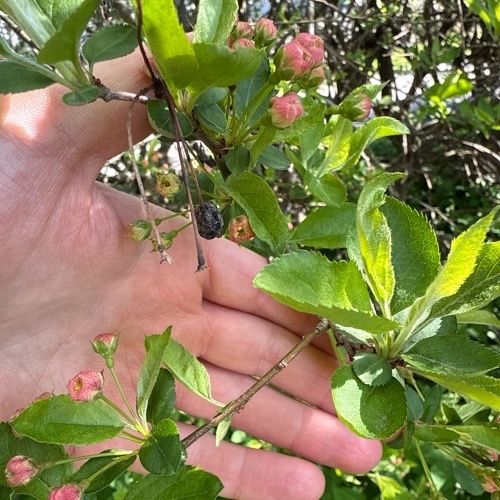
Malus sargentii (Sargent crabapple) is a deciduous shrub or small tree in the Rosaceae family, named for Charles Sprague Sargent of the Arnold Arboretum and introduced from Japan in 1892. Mature size is 6-10 feet (1.8-3 m) tall and 9-12 feet (2.7-3.7 m) wide, broadly horizontal-spreading and densely twiggy. Single white flowers 0.5-0.75 inch (1.3-2 cm) across, fading to pure white, open from light pink buds in mid-spring (April to May in Zone 4-7) along the previous year's twigs in clusters of 4-8, lasting 7-10 days. Foliage is dark green, with leaves 1-3 inches (2.5-7.5 cm) long, ovate to ovate-elliptic with serrated and sometimes three-lobed margins on vigorous shoots, fading to yellow in autumn. Small dark red fruits 0.3-0.4 inch (8-10 mm) develop in late summer and hold on the bare twigs through winter, eaten by overwintering songbirds. Hardy to USDA Zone 4. Bloom is biennial in unmanaged plants, with a heavy flowering year followed by a lighter year. Resistant to apple scab, fire blight, and cedar-apple rust. All parts of Malus contain cyanogenic glycosides concentrated in seeds; ingestion of seeds is toxic to dogs, cats, livestock, and humans.
Native Range
Malus sargentii is native to coastal northern Japan, particularly the Hokkaido and Honshu regions, where it grows in temperate broadleaf forest and along forest margins. The species was introduced to Western horticulture in 1892 by Charles Sprague Sargent, the founding director of the Arnold Arboretum, who described it from collections made in Japan.Suggested Uses
Used as a small specimen, mass planting, or large shrub in residential gardens, parks, and lawn settings spaced 9-12 feet (2.7-3.7 m) apart, suited to USDA Zones 4-8. Planted in wildlife habitat plantings and naturalized borders where the persistent fruit feeds birds through winter.How to Identify
Appearance
Size & Dimensions
Height6' - 10'
Width/Spread9' - 12'
Bloom Information
Mid-spring bloom typically opens mid-April in USDA Zone 6-7, late April to early May in Zone 5, and early May in Zone 4. Single white flowers from light pink buds persist 7-10 days under cool conditions, with bloom shortening to 5-6 days when temperatures rise above 75°F (24°C). Bloom is biennial in unmanaged plants, with heavy bloom in alternating years.
Detailed Descriptions
Flower Description
white from light pink budsFoliage Description
dark green fading to yellow in autumnGrowing Conditions
Sun Requirements
Requires 6-12 hours of direct sunlight daily
• Full Sun: 6+ hours of direct sunlight
• Partial Shade: 3-6 hours of direct sunlight
• Full Shade: Less than 3 hours of direct sunlight
Care & Maintenance
Care Guide
Full sun (6 or more hours direct light) on well-drained loam, sandy loam, or clay loam with pH 5.5-7.5 supports steady growth and consistent flowering; partial shade reduces flower density. Deep watering once weekly during the first two growing seasons supports establishment; established plants tolerate moderate drought. A balanced fertilizer applied at the dripline in early spring, or 2-3 inches (5-7.5 cm) of compost top-dressing, supports steady growth. Mulch 2-3 inches (5-7.5 cm) deep is held 2 inches (5 cm) away from the trunk to reduce crown rot risk. The species shows high resistance to apple scab, fire blight, and cedar-apple rust, reducing the fungicide regimen often needed for older crabapple cultivars.Pruning
Pruning takes place in late winter (February to early March in Zone 4-7) before bud break. Crossing branches, watersprouts, and basal suckers are removed; the densely twiggy habit responds to selective thinning of older branches every 3-5 years to maintain bloom production. Heavy renewal pruning is restricted; thinning rather than heading cuts preserves the broadly horizontal-spreading form.Pruning Schedule
Prune: February–March
winterearly spring