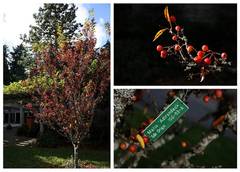
Malus, Genus, toringo, Species, 'Tina', Cultivar,
- Genus & species
- Cultivar
tina crabapple
Japan, Korea, China (mountain thickets/forest margins; selected from seedlings at Arnold Arboretum, Boston)
Overview
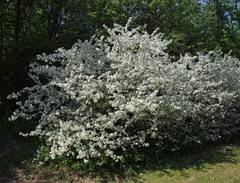
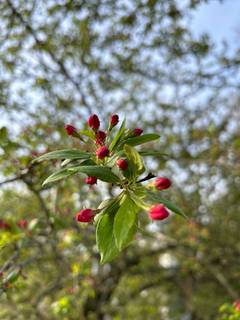
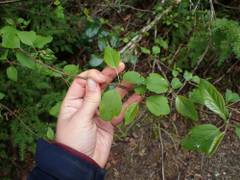
Malus toringo 'Tina' (syn. M. sargentii 'Tina') is a dwarf, deciduous shrub or small tree reaching 5-8 feet (1.5-2.4 m) tall with a spread of 6-10 feet (1.8-3 m) and a dense, mounding to spreading habit—one of the smallest crabapples in cultivation. This cultivar produces white flowers 0.8-1 inch (2-2.5 cm) across opening from red buds in dense clusters in April-May. The alternate, ovate leaves are 1-2 inches (2.5-5 cm) long, dark green, sometimes with 3 lobes. The fruit is very small, 0.2-0.3 inch (5-8 mm), bright red, persistent. Disease resistance is high: resistant to apple scab, fire blight, and powdery mildew. Growth rate is slow. Hardy to zone 4. Selected from seedlings at the Arnold Arboretum.
Native Range
Malus toringo is native to Japan, Korea, and China in mountain thickets and forest margins. 'Tina' was selected from seedlings at the Arnold Arboretum, Boston, Massachusetts.Suggested Uses
Planted as a specimen, foundation plant, or mass planting at 6-8 foot (1.8-2.4 m) spacing. The dwarf size (5-8 feet) suits very small gardens, containers (minimum 15-gallon), and positions where standard crabapples are too large. The dense mounding habit functions as a low hedge or screen. Very small fruit (0.2-0.3 inch) creates minimal litter. The flowers and fruit are proportionally small. Not suitable for shade or poorly drained soils.How to Identify
Appearance
Size & Dimensions
Height5' - 8'
Width/Spread6' - 10'
Bloom Information
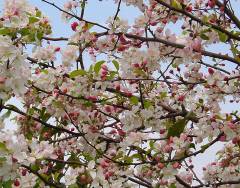
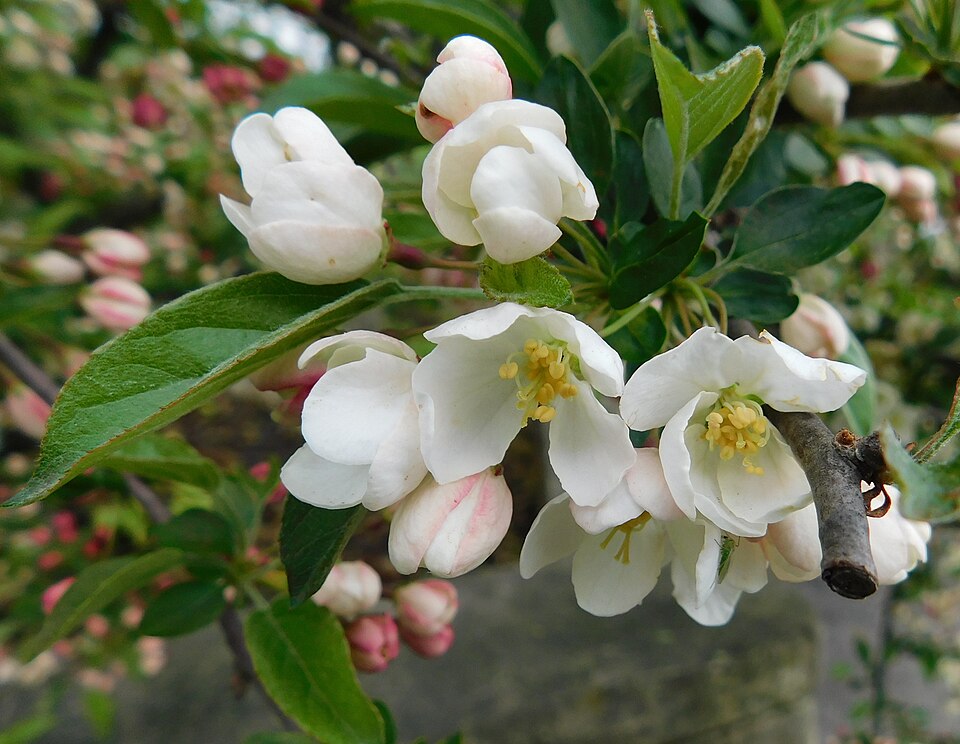
White flowers 0.8-1 inch (2-2.5 cm) across opening from red buds in dense clusters, April-May. Light fragrance. Bloom duration is 2-3 weeks. Fruit very small, 0.2-0.3 inch (5-8 mm), bright red, persistent into winter.
Detailed Descriptions
Flower Description
White opening from red buds; 0.8-1 inch; dense clusters; Apr-MayFoliage Description
Dark green; alternate ovate 1-2 inches; sometimes 3-lobedGrowing Conditions
Sun Requirements
Requires 6-10 hours of direct sunlight daily
• Full Sun: 6+ hours of direct sunlight
• Partial Shade: 3-6 hours of direct sunlight
• Full Shade: Less than 3 hours of direct sunlight
Care & Maintenance
Care Guide
Plant in full sun in well-drained, acidic to slightly alkaline soil (pH 5.5-7.5). Hardy to zone 4. Full sun essential for bloom and dense habit. Tolerates a range of soils. High disease resistance. Slow growth rate. Drought tolerant once established. The low, spreading habit may require staking when young if a tree form is desired.Pruning
Prune in late winter while dormant. The naturally dense mounding form requires minimal shaping. Remove crossing, dead, or damaged branches. Can be trained to a small single-trunk tree by selecting and maintaining a central leader.Pruning Schedule
Prune: February–March
late spring
Container Growing
Suitable for container growing
Minimum container size: 15 gallons