© No machine-readable author provided. JoJan assumed (based on copyright claims)., some rights reserved (CC-BY-SA) · Wikimedia Commons
Malus, Genus, hupehensis, Species,
- Genus & species
tea crabapple
Central and western China (Hubei, Sichuan, Yunnan, Shaanxi provinces)
Overview
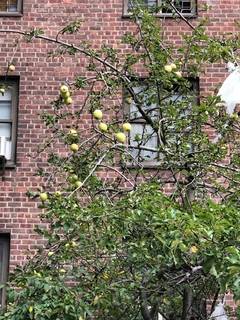
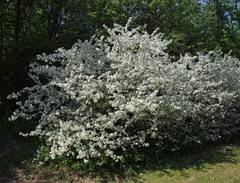
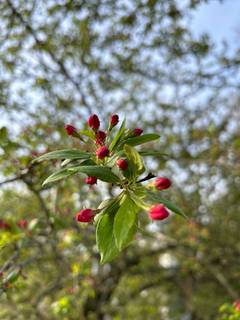
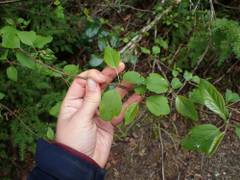
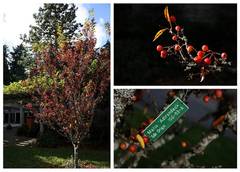
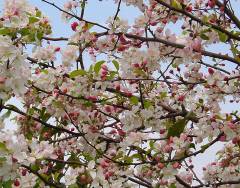
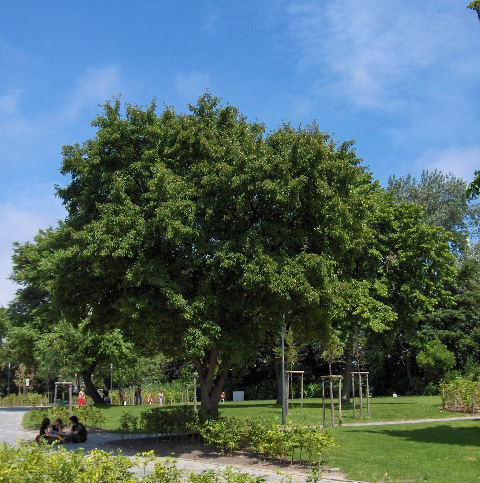
Malus hupehensis is a small to medium deciduous tree reaching 15–25 feet (4.5–7.5 m) tall and 15–25 feet (4.5–7.5 m) wide, with a broadly vase-shaped to rounded crown and lateral branches that arch outward and downward at 30–45 degrees from horizontal. Flowers are 1–1.5 inches (2.5–4 cm) across, white, opening from pink buds in dense clusters of 6–10 along the branches in April–May; mature specimens carry flowers across most of the canopy rather than concentrated at branch tips, producing a layered cloud-like effect visible from 30–50 feet (9–15 m) away. Leaves are alternate, ovate to elliptic, 2–4 inches (5–10 cm) long, dark green, with serrate margins. Fruit is small at 0.3–0.4 inch (8–10 mm), greenish-yellow ripening to red, borne in clusters of 4–8 and persistent on the branches into winter. Disease resistance to apple scab, fire blight, cedar-apple rust, and powdery mildew is high. The species is triploid and largely apomictic, which means seedlings are genetically near-identical to the mother tree rather than segregating into variable offspring; as a result, many nurseries propagate this species from seed rather than relying on grafted stock. Growth rate is moderate to rapid at 18–24 inches (45–60 cm) per year, reaching mature size in 10 years. Hardy to USDA zone 4. Not known to be toxic to pets or humans. The species was used in parts of central China to brew tea from the young leaves, which is the origin of the common name.
Native Range
Malus hupehensis is native to central and western China — Hubei, Sichuan, Yunnan, Shaanxi, and neighboring provinces — occurring in mountain forests and thickets at 3,000–8,500 feet (900–2,600 m) elevation.Suggested Uses
Used as a specimen tree or lawn focal tree in medium to large gardens, parks, and estates at 18–22 foot (5.5–6.7 m) spacing. The broadly vase-shaped arching canopy and the layered spring-bloom coverage across most branches function at medium-lawn and medium-garden scale where the 15–25 foot (4.5–7.5 m) mature crown fits without crowding. The small 0.3–0.4 inch (8–10 mm) fruit produces less paved-surface litter than the larger-fruited crabapples and feeds birds from September through January. The crown does not fit narrow sites under 15 feet (4.5 m) wide, shaded positions, or waterlogged soils.How to Identify
Appearance
Size & Dimensions
Height15' - 25'
Width/Spread15' - 25'
Bloom Information
White flowers 1–1.5 inches (2.5–4 cm) across open from pink buds in dense clusters of 6–10 along most of the canopy from mid-April through early May over a 2–3 week window. Fragrance is light. Fruit 0.3–0.4 inch (8–10 mm) ripens from greenish-yellow to red in September and persists on the branches into January, giving a 4–5 month display window before drop or bird consumption.
Detailed Descriptions
Flower Description
White flowers 1-1.5 inches across opening from pink buds; in dense clusters of 6-10 covering most of the canopy; April-MayFoliage Description
Dark green; alternate ovate to elliptic 2-4 inches long; serrate marginsGrowing Conditions
Sun Requirements
Requires 6-10 hours of direct sunlight daily
• Full Sun: 6+ hours of direct sunlight
• Partial Shade: 3-6 hours of direct sunlight
• Full Shade: Less than 3 hours of direct sunlight
Care & Maintenance
Care Guide
Grow in full sun with 6 or more hours of direct light in well-drained loam, clay, or silt at pH 5.5–7.5. Full sun is required for flower bud formation and for the disease-resistance traits to perform. The species tolerates urban conditions, compacted soils, and air pollution more than most crabapples. Water deeply once per week during the first two growing seasons, then reduce to supplemental irrigation during extended drought; the species is drought-tolerant once established. Apply a balanced fertilizer in early spring at 1 tablespoon per square foot (30 g/m²) of root zone. The triploid and apomictic reproductive biology means seed-grown specimens carry the same ornamental traits as the parent tree, allowing nurseries to produce stock from seed rather than grafting. Hardy to USDA zone 4.Pruning
Prune in late winter (February–March) while the tree is fully dormant. The arching branch structure carries the visual character of the tree — heavy shaping cuts that force upright regrowth disturb this silhouette and should be avoided. Remove crossing, dead, or damaged branches, plus water sprouts and basal suckers; thin to open the interior canopy if branches become congested after 8–10 years.Pruning Schedule
Prune: February–March
winter