Malus, Genus, ×, Hybrid, floribunda, Species,
- Genus & species
- Hybrid
crabapple
Japanese garden origin; introduced from Japan by Philipp Franz von Siebold; parentage uncertain
Overview
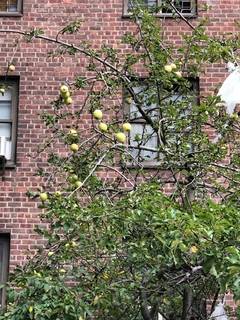
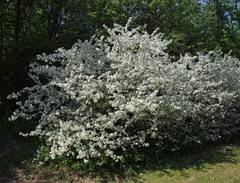
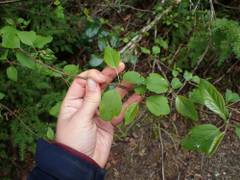
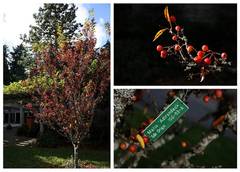
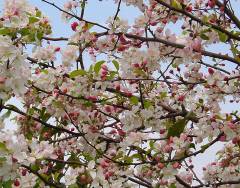
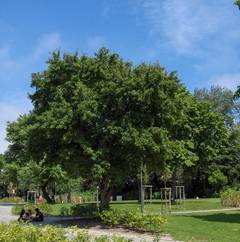
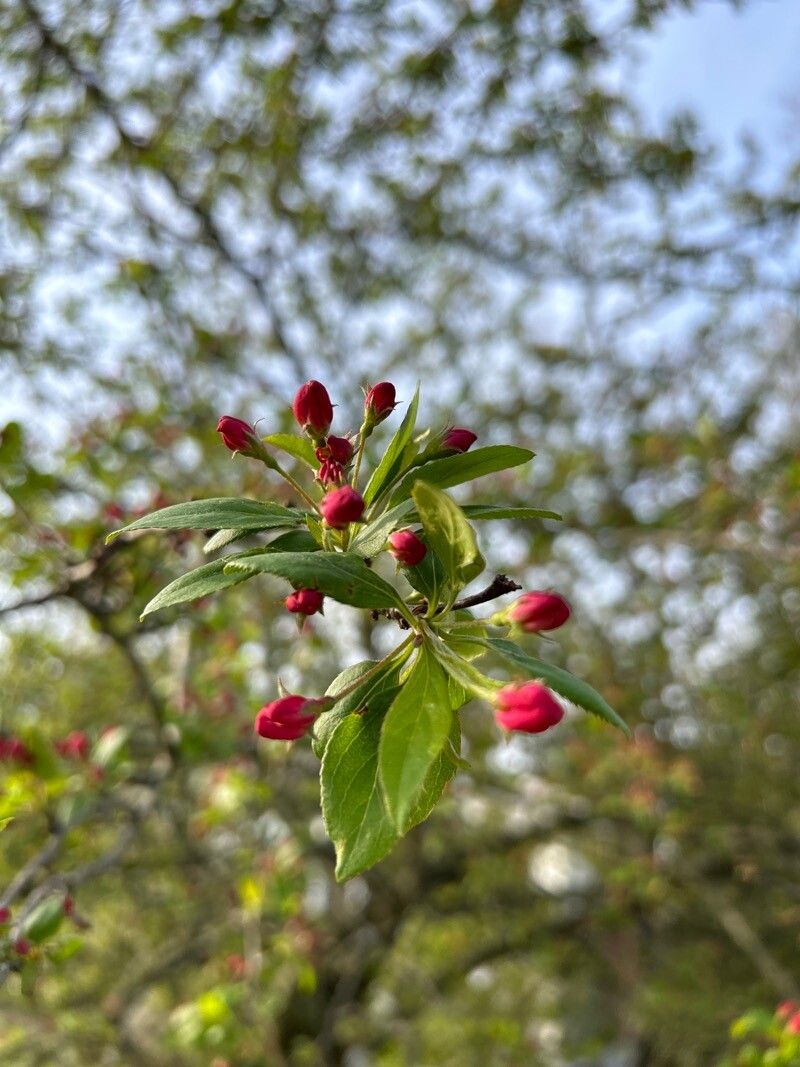
Malus floribunda is the Japanese crabapple (Japanese flowering crabapple), a deciduous tree growing 180–300 inches (450–750 cm / 15–25 feet) tall and 240–360 inches (600–900 cm / 20–30 feet) wide — wider than tall, with a dense rounded to spreading crown. Profuse flowers in mid-spring: buds are deep carmine-pink, opening to pink and fading to white — the bicolor transition from pink buds to white open flowers on the same branch is the species identifier. The species name 'floribunda' means 'abundantly flowering.' Small yellow to red fruit 0.3 inch (8 mm) in fall — consumed by cedar waxwings, robins, and other songbirds. Dark green oval to oblong finely serrated leaves 1.5–3 inches (4–7 cm). In the rose family (Rosaceae). Introduced from Japan by Philipp Franz von Siebold in the early 19th century — exact parentage uncertain (likely a hybrid of Japanese origin, long cultivated). Moderate susceptibility to apple scab (Venturia inaequalis) — the foliage may develop olive-brown spots and defoliate by late summer in wet years. Fire blight (Erwinia amylovora) kills branches — prune only in summer (winter or spring pruning stimulates fire blight entry through the cuts). A pollinator tree for apple orchards. Lightly fragrant flowers. Non-toxic — fruit edible (tart). Full sun (6+ hours). Consistent moisture. Deer are not deterred. Zones 4–8. Growth rate is moderate.
Native Range
Japanese garden origin — introduced from Japan by Philipp Franz von Siebold in the early 19th century. Exact parentage uncertain; long cultivated in Japan.Suggested Uses
Grown as a specimen and pollinator for apple orchards in zones 4–8. The profuse pink-to-white bicolor spring bloom and the fall fruit (bird food) are the seasonal features. Fire blight: prune only in summer. Apple scab in wet years. Non-toxic.How to Identify
Appearance
Size & Dimensions
Height15' - 25'
Width/Spread20' - 30'
Bloom Information
Mid-spring (April–May), lasting 1–2 weeks. Buds deep carmine-pink; open flowers fade from pink to white. Small fruit 0.3 inch (8 mm) in fall consumed by birds.
Detailed Descriptions
Flower Description
Buds deep carmine-pink; open flowers fade from pink to white; 1-1.5 inches (2.5-4 cm); profuseFoliage Description
Dark green, oval to oblong, finely serrated, 1.5-3 inches (4-7 cm); no purple pigmentation (unlike hybrid purple-leaved crabapples)Growing Conditions
Sun Requirements
Requires 6-10 hours of direct sunlight daily
• Full Sun: 6+ hours of direct sunlight
• Partial Shade: 3-6 hours of direct sunlight
• Full Shade: Less than 3 hours of direct sunlight
Care & Maintenance
Care Guide
Full sun (6+ hours). Well-drained soil. Apple scab: olive-brown leaf spots in wet years. Fire blight kills branches — prune only in summer (not winter/spring). Fruit consumed by birds. Non-toxic — fruit edible (tart). Zones 4–8.Pruning
Prune only in summer (June–July) — winter or spring pruning stimulates fire blight entry through the cuts. Remove dead, crossing, or fire-blight-affected branches (cut 12 inches / 30 cm below visible infection, sterilize tools between cuts). The dense spreading form develops naturally.Pruning Schedule
Prune: June–July
summer