Samanea, Genus, saman, Species,
- Genus & species
Monkeypod
Overview
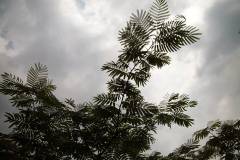
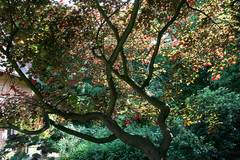
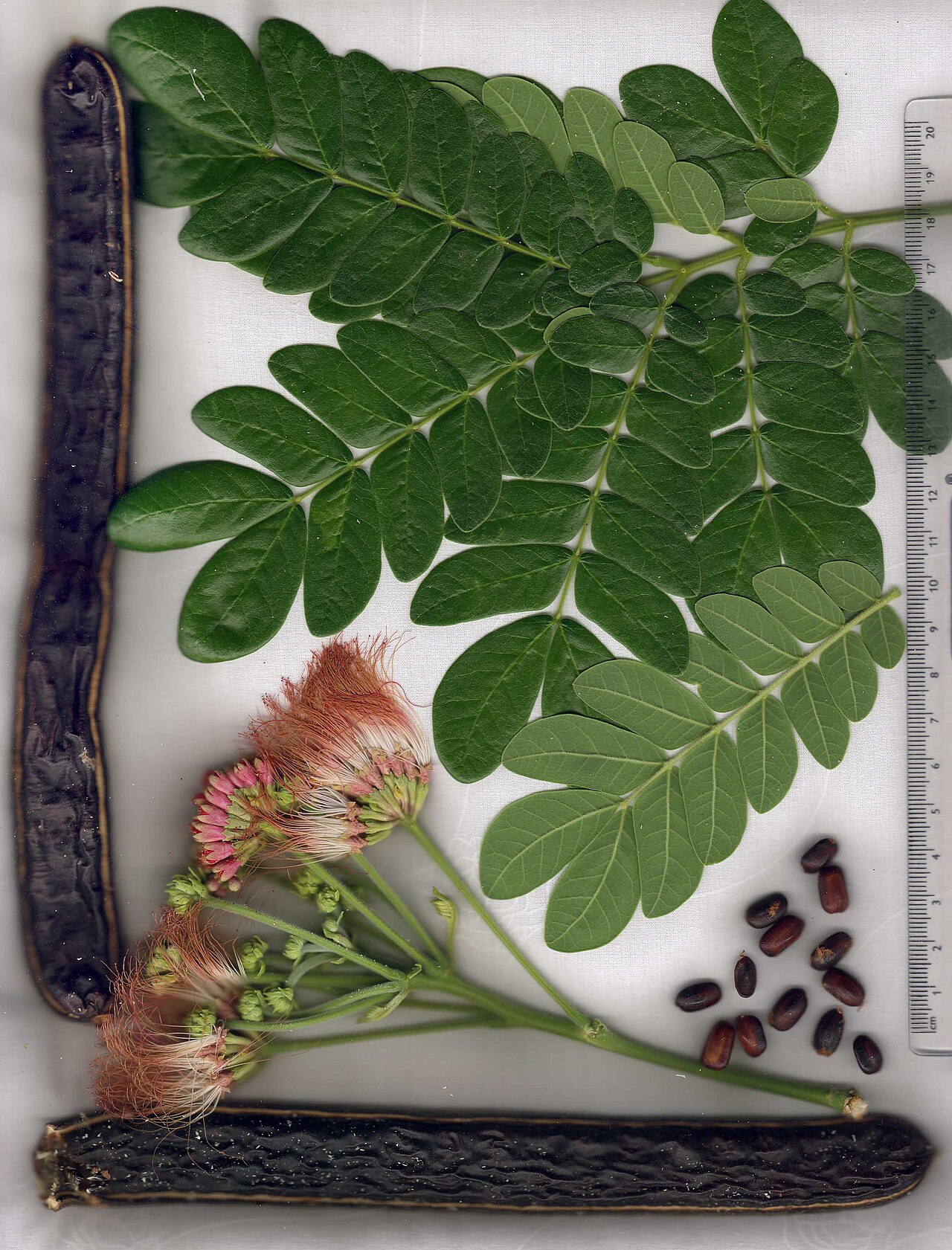
Samanea saman is a large legume tree 50-80 feet (15-25 m) tall carrying an umbrella-shaped crown 100-200 feet (30-60 m) wide, so mature specimens measure two to three times wider than tall. The trunk is short and thick at 3-6 feet (0.9-1.8 m) in diameter, dividing into heavy horizontal limbs within 10-15 feet (3-4.5 m) of the ground. Leaves are bipinnate, 8-16 inches (20-40 cm) long, with 2-6 pairs of pinnae each bearing 6-16 leaflets, and the leaflets fold shut at dusk and under heavy cloud or rain, which lets light and rainfall reach the ground beneath the canopy. Flower heads are powder-puff clusters 2-2.5 inches (5-6 cm) across formed from long stamens, white at the base and pink at the tips. Pods are straight, black-brown, 4-8 inches (10-20 cm) long, and packed with sticky sweet pulp that cattle and pigs eat. Root nodules fix atmospheric nitrogen and young trees add 3-5 feet (0.9-1.5 m) a year. Limbs are brittle and shed in storms, surface roots lift paving within 20 feet (6 m) of the trunk, and self-sown seedlings appear in quantity, so the species is listed as invasive in Fiji, Vanuatu, and parts of the Pacific.
Native Range
Samanea saman is native to seasonally dry tropical forest from southern Mexico through Central America to Peru, Bolivia, and northern Brazil. It was moved through the tropics from the 19th century onward as a shade and pasture tree and is now naturalized across the Caribbean, West Africa, South and Southeast Asia, and the Pacific islands including Hawaii. Within its native range it occupies lowland sites below 2,000 feet (600 m) that carry a pronounced dry season.Suggested Uses
Planted as a shade tree in parks, pastures, campuses, and roadside plantings at spacings of 60-100 feet (18-30 m). Used over coffee and cacao and in silvopasture, where the pods supplement livestock feed and nitrogen fixation raises understorey grass yields. The timber is milled into bowls, furniture, and carvings sold as monkeypod, and the species is planted on degraded land for rapid canopy cover.How to Identify
Appearance
Size & Dimensions
Height50' - 80'
Width/Spread100' - 200'
Bloom Information
Flowering runs March through August across most of the introduced range, following the onset of warm wet weather. Individual heads open over 1-2 days and a tree carries overlapping flushes across roughly 20 weeks. Pods take 8-10 months to ripen from black-green to dark brown and drop through the following dry season. Trees begin flowering at 5-8 years old.
Detailed Descriptions
Flower Description
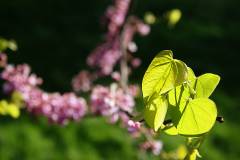
White at the base grading to pink at the stamen tipsFoliage Description
Medium greenGrowing Conditions
Sun Requirements
Requires 6-12 hours of direct sunlight daily
• Full Sun: 6+ hours of direct sunlight
• Partial Shade: 3-6 hours of direct sunlight
• Full Shade: Less than 3 hours of direct sunlight
Care & Maintenance
Care Guide
Samanea saman grows in full sun on almost any free-draining soil at pH 5.5-7.5, including compacted clay and shallow coral, and tolerates 4-6 dry months once established. Rainfall of 24-100 inches (600-2,500 mm) a year supports growth, and seasonal drought triggers partial leaf drop rather than lasting damage. Hardiness is limited to USDA zones 10-12, with temperatures below 32F (0C) killing young wood and prolonged cold killing the tree. Nitrogen fixation removes any need for nitrogen feeding. Space is the governing constraint: a crown reaching 200 feet (60 m) across, with surface roots extending past the drip line, rules the tree out of anything smaller than a large park or pasture. Pink mealybug, powdery mildew on young foliage, and heart rot entering old pruning wounds are the recurring problems in cultivation.Pruning
Formative pruning through the first 10 years raises the crown and takes out narrow forks that later split under limb weight. Cuts are made in the dry season, between January and February, when decay fungi are least active. Branches over 6 inches (15 cm) in diameter compartmentalize poorly and large wounds frequently develop heart rot, so reduction cuts back to a lateral are used in place of whole-limb removal. Storm-broken limbs are cut back to the branch collar once weather allows.Pruning Schedule
Prune: January–February
winter