Image 1 of 15
1 / 15
Plant Reference
Cytisus, Genus, scoparius, Species,
- Genus & species
Scotch broom
Western and central Europe; the species is naturalized worldwide in temperate maritime climates and is regulated as a noxious weed across much of its introduced range
Overview
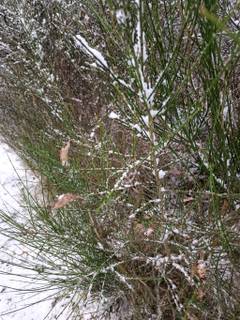
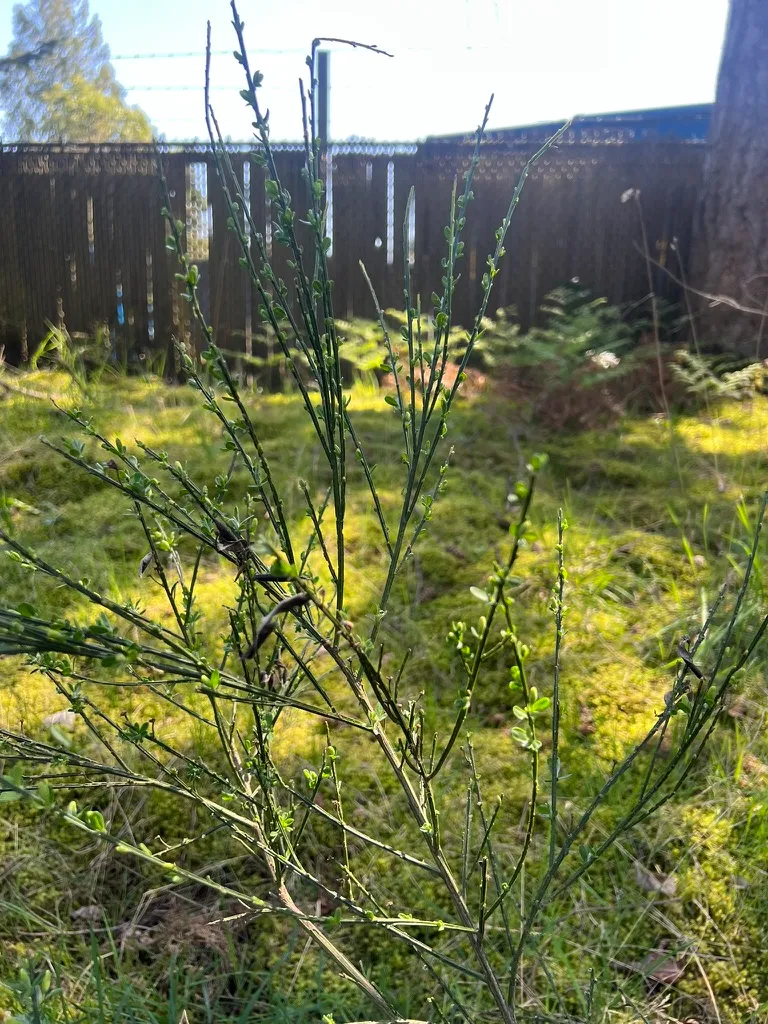
Cytisus scoparius is an upright deciduous shrub in the family Fabaceae (the legume family, nitrogen-fixing via root-nodule symbiosis), reaching 5-10 feet (1.5-3 m) tall and 3-6 feet (0.9-1.8 m) wide with green angular photosynthetic stems that carry most of the photosynthesis. Leaves are small trifoliate leaflets 0.25-0.5 inch (6-13 mm) long, sparse on the stems, and the green stems remain photosynthetically active year-round even after the small leaves drop. Bright yellow pea-shaped flowers 0.75 inch (2 cm) across open along the stems in April and May; some cultivated forms carry bicolor yellow-and-red or cream flowers. Black seed pods 1-2 inches (2.5-5 cm) long ripen in summer and split explosively when dry, ejecting seeds up to 10 feet (3 m) from the parent plant. Native to western and central Europe, the species has been planted as an ornamental and erosion-control shrub across temperate climates worldwide and has naturalized aggressively in maritime regions on three continents. The species is regulated as a noxious weed in Washington, Oregon, California, and several other U.S. states, in much of Australia and New Zealand, in Chile, and in Hawaii — bans on sale, propagation, and intentional planting are in force across most of these jurisdictions. A single mature plant produces 10,000-18,000 seeds per year and seeds remain viable in the soil for 30 or more years, which makes the seed bank the central management challenge for invaded sites. The shrub thrives in poor sandy soil and excess fertility actually reduces flowering. Plants are short-lived at 10-15 years and do not regenerate from old bare wood — hard pruning into woody stems kills the plant rather than rejuvenating it. All parts of the plant are toxic to pets and humans because of cytisine, a nicotinic alkaloid that causes vomiting, ataxia, tremors, and convulsions on ingestion.
Native Range
Cytisus scoparius is native to western and central Europe, where it grows on heaths, open woodlands, sandy slopes, and disturbed ground. The species was introduced to North America, Australia, New Zealand, Chile, and Hawaii as an ornamental and erosion-control shrub during the 19th century and has since naturalized aggressively in temperate maritime climates worldwide. Populations in the Pacific Northwest of North America cover hundreds of thousands of acres and dominate disturbed roadsides, clearcut timber lands, and abandoned pasture from northern California through southern British Columbia.Suggested Uses
The species is regulated as a noxious weed in the Pacific Northwest, California, much of Australia and New Zealand, Chile, and Hawaii, and sale, propagation, and intentional planting are prohibited across most of the introduced range. The species is included in the database for identification and management reference rather than as a planting recommendation. In jurisdictions where cultivation remains legal, planting is restricted to dry sandy slopes, poor-soil reclamation sites, and contained ornamental gardens at 3-6 foot (0.9-1.8 m) spacing well away from natural areas. Local invasive-species regulations are consulted before any intentional planting, and removal protocols are followed where existing populations are present. Not suited to any landscape position in invasive-range jurisdictions, sites adjacent to natural areas in any region, pet-accessible landscapes where the toxic flowers and seeds pose an ingestion risk, or rich fertile garden soils where excess nutrients reduce flowering and shorten plant life.How to Identify
Appearance
Size & Dimensions
Height5' - 10'
Width/Spread3' - 6'
Bloom Information
Bright yellow pea-shaped flowers 0.75 inch (2 cm) across open along the green stems in April and May, averaging 4 weeks of bloom. Flowers are bee- and butterfly-pollinated and moderately fragrant with a coconut-like scent. Black seed pods 1-2 inches (2.5-5 cm) long ripen in summer and split explosively when dry, ejecting seeds up to 10 feet (3 m) from the parent plant; the explosive dispersal accounts for rapid local spread of the species in invaded sites.
Detailed Descriptions
Flower Description
bright yellow (species form); pea-shaped; 0.75 inch (2 cm) across; some cultivars carry bicolor yellow-and-red or cream flowersFoliage Description
small trifoliate leaflets 0.25-0.5 inch (6-13 mm) long on green angular photosynthetic stems; the stems carry most of the photosynthesis because the leaves are small and sparseGrowing Conditions
Sun Requirements
Requires 6-10 hours of direct sunlight daily
• Full Sun: 6+ hours of direct sunlight
• Partial Shade: 3-6 hours of direct sunlight
• Full Shade: Less than 3 hours of direct sunlight
Care & Maintenance
Care Guide
The species is regulated as a noxious weed in Washington, Oregon, California, and several other U.S. states, much of Australia and New Zealand, Chile, and Hawaii — sale, propagation, and intentional planting are prohibited in most of these jurisdictions, and removal rather than planting is the operating recommendation. The species tolerates well-drained poor sandy soil with a pH of 5.0-7.0 in full sun; excess fertility actually reduces flowering because the plant is adapted to nutrient-poor sites and fixes its own nitrogen via root-nodule symbiosis. Plants are short-lived at 10-15 years and do not regenerate from old bare wood, so hard pruning into woody stems kills the plant. All parts are toxic to pets and humans because of cytisine, a nicotinic alkaloid that causes vomiting, ataxia, tremors, and convulsions on ingestion. In invaded landscapes the management priority is preventing seed set through cutting before pod formation, repeated cutting over multiple seasons to exhaust the root system, and depletion of the long-lived soil seed bank through ongoing seedling removal over decades.Pruning
Routine pruning of cultivated specimens is light and is done after flowering (May through June) — spent flowers are removed to limit seed production, and the current season's growth is shortened by one-third to maintain shape. Cuts into old bare wood kill the plant because the species cannot regenerate from woody stems. The shrub becomes leggy and bare at the base with age regardless of pruning. Plants are short-lived at 10-15 years even with attentive care, and replacement is the routine end-of-life response rather than rejuvenation pruning. In invaded landscapes where management rather than cultivation is the goal, cutting just before flowering and repeated cutting of regrowth over multiple seasons exhausts the root system, and any remaining stumps are treated with a cut-stump herbicide application following local invasive-species protocols.Pruning Schedule
Prune: May–June
late spring