Image 1 of 7
1 / 7
Plant Reference
Albizia, Genus, julibrissin, Species,
- Genus & species
silk tree
Iran and the Caucasus east through China, Korea, and Japan; naturalized and classified as invasive in the southeastern United States
Overview
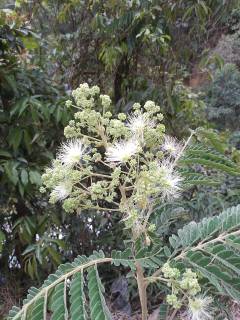
Albizia julibrissin is a deciduous tree in the family Fabaceae (the legume family, nitrogen-fixing via root-nodule symbiosis) native to Iran and the Caucasus east through China, Korea, and Japan, reaching 20-40 feet (6-12 m) tall and wide with a broad vase-shaped spreading canopy. Leaves are bipinnately compound and fern-like, 10-20 inches (25-50 cm) long, with many small leaflets 0.4 inch (1 cm) long that fold closed at night (nyctinastic movement) and during rain. Pink fluffy globular flower heads 1.5-2 inches (4-5 cm) across — composed of long silky stamens that give the species its common name — open from June through September. Flat brown seed pods 5-8 inches (13-20 cm) long mature in fall and persist on the tree through winter. Growth is fast. The species is classified as invasive in the southeastern United States and self-sows aggressively in disturbed areas, roadsides, and forest edges from abundant viable seed; planting is regulated or discouraged in those jurisdictions. Mimosa wilt (Fusarium oxysporum f. sp. perniciosum) is a lethal vascular disease with no cure and kills established trees throughout the southeastern U.S. where the pathogen is now widespread — the combination of invasive spread and mimosa wilt defines the two main limitations of the species in cultivation. Trees are short-lived at 15-25 years even where wilt is absent. Wood is brittle and breaks in storms, and spent flowers, petals, leaf litter, and persistent seed pods create year-round debris under the canopy. All parts of the plant are toxic to pets because of saponins concentrated in the bark and seeds.
Native Range
Albizia julibrissin is native to Iran and the Caucasus east through China, Korea, and Japan, where it grows in open woodlands, forest margins, and disturbed slopes on well-drained soils. The species was introduced to North America in the 18th century as an ornamental shade tree and has since naturalized and become classified as invasive across the southeastern United States from Virginia south through Florida and west to Texas.Suggested Uses
Planted as a small-to-medium shade or specimen tree in residential gardens where invasive status and mimosa wilt risk allow. Fern-like foliage, long summer bloom, and tolerance of heat and drought are the main ornamental attributes. The species is classified as invasive across the southeastern U.S. and planting is regulated or discouraged there; local invasive-species regulations are consulted before planting. Not suited to positions near forest edges or natural areas where seedling escape is a concern, pet-accessible landscapes where fallen seed pods and bark debris pose an ingestion risk, sites within known mimosa-wilt infection zones, or any residential yard where the short 15-25 year lifespan and year-round debris load are not acceptable.How to Identify
Appearance
Size & Dimensions
Height20' - 40'
Width/Spread20' - 40'
Bloom Information
Pink fluffy globular flower heads 1.5-2 inches (4-5 cm) across open from June through September in zones 6-9, averaging 10 weeks of bloom overall with sequential flushes across the summer. Flowers are bee-, butterfly-, and hummingbird-pollinated and carry a light sweet fragrance. Flat brown seed pods 5-8 inches (13-20 cm) long mature in fall and persist on the tree through winter.
Detailed Descriptions
Flower Description
pink; fluffy globular flower heads 1.5-2 inches (4-5 cm) across composed of long silky stamensFoliage Description
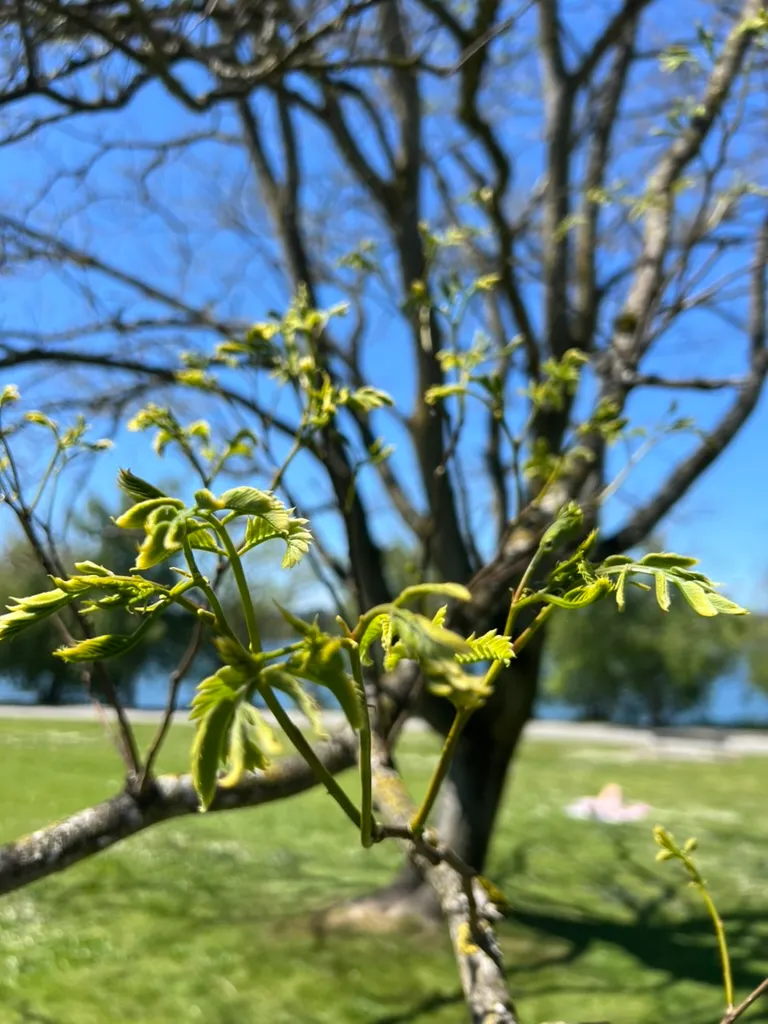
medium green; bipinnately compound fern-like leaves 10-20 inches (25-50 cm) long with many small leaflets 0.4 inch (1 cm) long; leaflets fold closed at night (nyctinastic movement) and during rain; yellow in fall before dropping late in the seasonGrowing Conditions
Sun Requirements
Requires 6-10 hours of direct sunlight daily
• Full Sun: 6+ hours of direct sunlight
• Partial Shade: 3-6 hours of direct sunlight
• Full Shade: Less than 3 hours of direct sunlight
Care & Maintenance
Care Guide
Plant in well-drained soil with a pH of 5.5-7.5 in full sun; tolerated soil types include loam, clay, sand, and silt. Water weekly for the first 1-2 growing seasons. Established trees are drought-tolerant and tolerate heat, reflected heat from pavement, and poor soils through nitrogen-fixation via root-nodule symbiosis in Fabaceae. Mimosa wilt (Fusarium oxysporum) is lethal and has no cure; once symptoms appear — sudden yellowing and wilting of foliage on individual branches followed by rapid whole-tree decline — removal is the only option and re-planting on the same site is discouraged because the pathogen persists in soil. Seedlings in adjacent gardens and natural areas are removed to limit spread because the species self-sows abundantly. The species is classified as invasive across the southeastern U.S. and planting is regulated or discouraged in those jurisdictions; local invasive-species regulations govern whether the species is legal to plant in a given area. All parts of the plant are toxic to pets because of saponins.Pruning
Pruning is done during winter dormancy (November through February). Dead, crossing, or storm-damaged branches are removed at the branch collar. The natural broad vase-shaped canopy requires minimal shaping, and the brittle wood calls for structural pruning of young trees in years 3-10 to develop strong branch attachments that resist later storm breakage. Self-sown seedlings in the surrounding garden are removed when encountered to limit unwanted spread.Pruning Schedule
Prune: November–February
winter