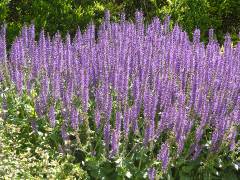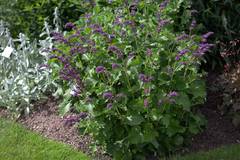
Salvia, Genus, officinalis, Species,
- Genus & species
garden sage
Mediterranean and southern Europe; limestone hillsides, garrigue, and dry open ground from sea level to approximately 5,000 feet (1,500 m).
Overview
Salvia officinalis is a woody-based mounding evergreen sub-shrub in the mint family (Lamiaceae) reaching 12-24 inches (30-60 cm) tall and 18-30 inches (45-75 cm) wide. Stems are square at the base (the diagnostic Lamiaceae stem cross-section), become woody with age, gray-green, and softly pubescent. Leaves are opposite, oblong to elliptic, 1-3 inches (2.5-8 cm) long, gray-green with a finely pebbly (rugose) surface texture and soft pubescence. The strong camphor-sage aroma comes from thujone, camphor, and 1,8-cineole, three monoterpenes in the essential oil that together give the species its culinary signature; thujone in particular is responsible for the pungent quality and is also the compound regulated in absinthe production. Tubular two-lipped blue-violet to lavender flowers 0.5-0.8 inch (12-20 mm) long open in terminal racemes 4-8 inches (10-20 cm) long from May through July, with a total bloom span of 2-3 weeks. The two-lipped corolla with a hooded upper lip and the staminal lever mechanism are the genus-typical Salvia floral architecture: a visiting bee pushing into the lower lip levers the upper anthers down onto its back, depositing pollen in a precise location that the next flower will pick up via the stigma in the same position. Plants become woody and leggy after 3-5 years, and replacement planting from stem cuttings or layering renews the planting at that point. Winter wet is the primary cause of premature death, and well-drained soil under Mediterranean-style growing conditions produces the most durable plants. In the Pacific Northwest, sage thrives west of the Cascades in well-drained raised beds and on south-facing slopes with sharp drainage. Hardy in USDA zones 4-9 (-30°F / -34°C). Non-toxic.
Native Range
Salvia officinalis is native to the Mediterranean and southern Europe, where it grows on limestone hillsides, in garrigue scrubland, and on dry open ground from sea level to approximately 5,000 feet (1,500 m). The species has been cultivated for at least 2,000 years as a medicinal and culinary herb across the Mediterranean basin and northern Europe, with the genus name Salvia derived from the Latin salvere (to save or be in good health), reflecting the long medicinal tradition.Suggested Uses
Planted in herb gardens, Mediterranean-style gardens, balcony container plantings, and kitchen windowsill herb cultivation. Sage is the standard culinary herb for poultry, stuffing, sausage, butter-sage pasta, and bean dishes, with fresh or dried leaves used through the year. The gray-green evergreen foliage gives a textural contrast in mixed herb gardens and in Mediterranean-style perennial borders. The two-lipped Salvia flower with the staminal lever mechanism is a teaching feature for flower morphology coursework, and the woody sub-shrub habit demonstrates the semi-woody growth form that bridges herbaceous perennials and true shrubs in Lamiaceae. Container culture is straightforward in 3-gallon (11 liter) or larger pots for patio use.How to Identify
Appearance
Size & Dimensions
Height1' - 2'
Width/Spread1'6" - 2'6"
Bloom Information
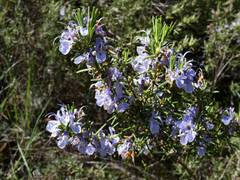
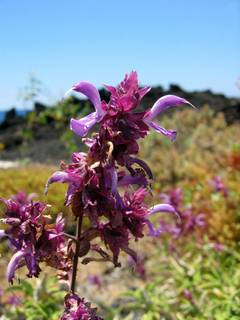
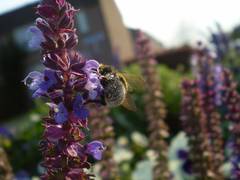
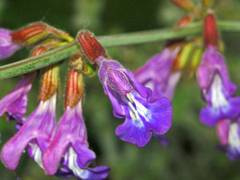
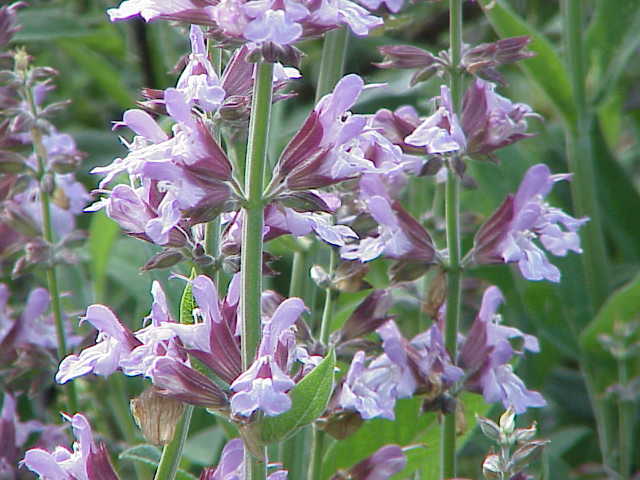
Tubular two-lipped blue-violet to lavender flowers 0.5-0.8 inch (12-20 mm) long open in terminal racemes 4-8 inches (10-20 cm) long from May through July, with the total bloom span of 2-3 weeks progressing from the base of each raceme upward. Pollination is by bees (especially bumblebees with the body mass to operate the staminal lever), butterflies, and hummingbirds drawn to the flower color and tubular nectar source. The Salvia genus staminal lever mechanism is the floral feature visible at this stage: a bee pushing into the lower lip pivots the connective of each stamen and presses the anther downward onto the bee's back, leaving pollen in a precise location that the stigma of the next flower visited will contact in the same position. Deadheading spent flower stalks encourages compact regrowth.
Detailed Descriptions
Flower Description
Blue-violet to lavender; tubular two-lipped flowers 0.5-0.8 inch (12-20 mm) long with a hooded upper lip carried in terminal racemes 4-8 inches (10-20 cm) long from May through JulyFoliage Description
Gray-green; oblong to elliptic 1-3 inches (2.5-8 cm) long, with a finely pebbly (rugose) leaf surface texture and soft pubescence; strongly aromatic with the camphor-sage scent characteristic of the speciesGrowing Conditions
Sun Requirements
Requires 6-10 hours of direct sunlight daily
• Full Sun: 6+ hours of direct sunlight
• Partial Shade: 3-6 hours of direct sunlight
• Full Shade: Less than 3 hours of direct sunlight
Care & Maintenance
Care Guide
Plant nursery starts or rooted cuttings in spring, spacing 18-24 inches (45-60 cm) apart in full sun with well-drained soil. Raised beds, gravel mulch, or mound planting on south-facing slopes improves drainage and extends plant life in Pacific Northwest winters when soil saturation is the primary cause of premature death. Drought-tolerant once established; overwatering and winter wet cause root rot and the loss of plants. Stems are harvested through the growing season by cutting 4-6 inches (10-15 cm) of stem tips, and frequent harvest maintains compact bushy growth. In Pacific Northwest mild-winter lowland gardens, the species is evergreen and carries year-round culinary harvest. Plants become woody and unproductive after 3-5 years, at which point replacement plants propagated from stem cuttings (which root easily in spring under mist) or layering carry the planting forward. Container culture (3 gallons / 11 liters or larger) is standard for balcony and windowsill herb gardens and reduces winter wet exposure compared to in-ground plantings.Pruning
Cut back by one-third in early spring (March through April) to stimulate bushy new growth from the base. Cut into green wood only; the species does not regenerate from cuts into bare old wood without green leaf attachment, so pruning is kept above the green-leafed portion of each stem. Remove spent flower stalks after bloom. Light harvest-pruning through the growing season maintains compact form and continuous tender growth for culinary use.Pruning Schedule
Prune: March–April
early spring
Container Growing
Suitable for container growing
Minimum container size: 3 gallons