Salix, Genus, purpurea, Species,
- Genus & species
purple willow
Overview
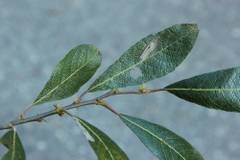
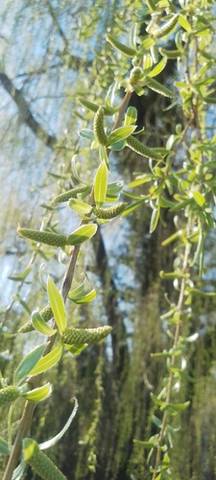
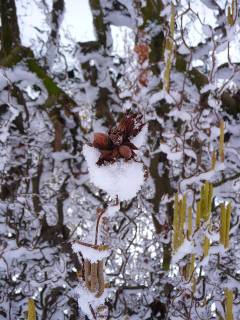
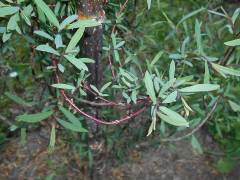
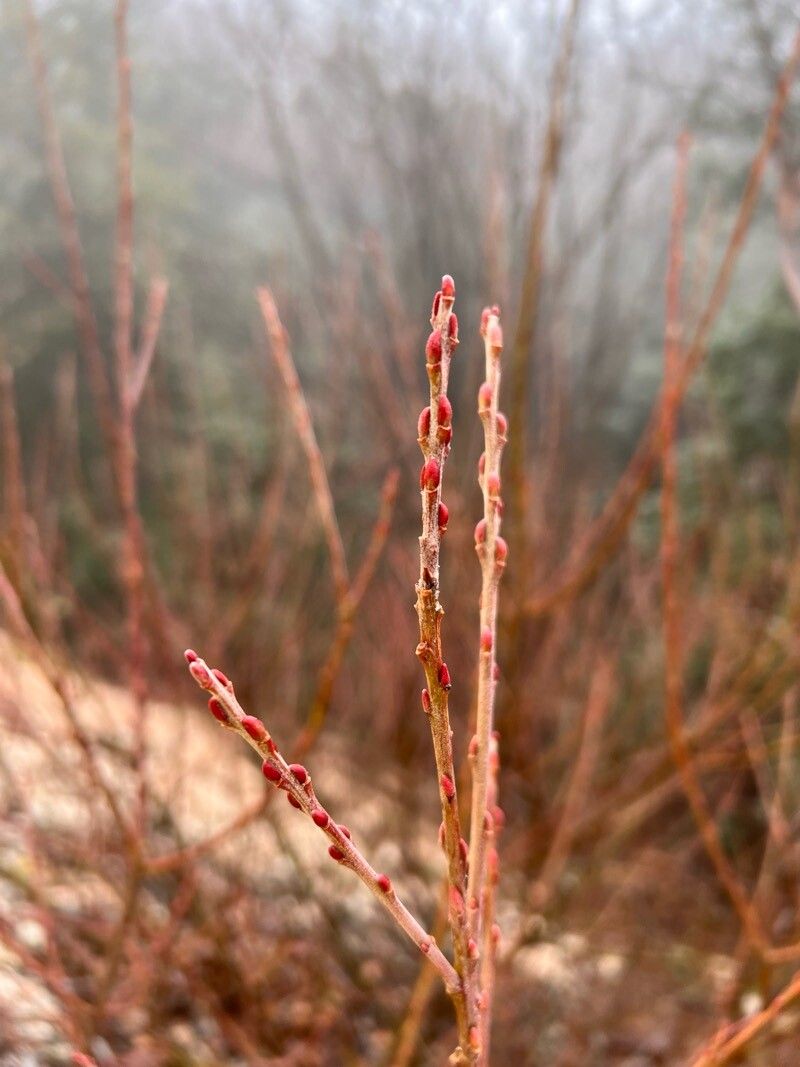
Salix purpurea is a deciduous shrub reaching 6-15 feet (1.8-4.5 m) tall and 6-12 feet (1.8-3.6 m) wide at maturity, with slender, flexible stems arising from the base in dense clumps. Stems are reddish-purple in winter on first-year growth, fading to gray-brown on older wood. Leaves are alternate to sub-opposite (a leaf arrangement uncommon among other willows in the genus), narrowly oblong to lance-shaped, 1.5-4 inches (3.8-10 cm) long, dark green above and glaucous-blue below. Catkins emerge before leaves in March and April; male catkins 0.5-1 inch (1.3-2.5 cm) long display dark purple bracts and red anthers that turn yellow with pollen — the trait reflected in the species epithet. Plants are dioecious. Stems reach harvestable basket-weaving length (4-7 feet / 1.2-2.1 m) within 2 years of coppice and have been cultivated as basket osier in Europe since the medieval period. Spreads slowly by basal sprouting; mature clumps reach 8-12 feet (2.4-3.6 m) wide after 10 years. Lifespan is 30-50 years on suitable sites.
Native Range
Native to Europe, North Africa, and central Asia, found along streambanks, in damp meadows, and at the edges of marshes from sea level to 5,000 feet (1,500 m) elevation. Naturalized in scattered locations across the eastern and northwestern United States and Canada, where it has escaped cultivation along stream corridors. Considered invasive in some midwestern and northeastern wetlands.Suggested Uses
Used in basket-willow production, streambank restoration, and ornamental winter-color plantings in zones 4-8 at 18-24 inch (45-60 cm) spacing for stool beds or 4-6 feet (1.2-1.8 m) for ornamental specimens. Reddish-purple winter stems on coppiced clumps are the basis for ornamental use in colder zones where stem color holds from November through March. Not used adjacent to native wetland restoration sites due to escape risk.How to Identify
Appearance
Size & Dimensions
Height6' - 15'
Width/Spread6' - 12'
Bloom Information
Catkins emerge before leaves in March and April in zones 4-8. Male catkins shed pollen for 7-10 days; female catkins are receptive for 5-7 days. Bloom timing is 1-2 weeks earlier in southern zones and 1-2 weeks later above 4,000 feet (1,200 m) elevation. Native solitary bees and honeybees use catkins as an early-season pollen source.
Detailed Descriptions
Flower Description
purple bracts with red-and-yellow anthersFoliage Description
dark green above, glaucous-blue belowGrowing Conditions
Sun Requirements
Requires 6-12 hours of direct sunlight daily
• Full Sun: 6+ hours of direct sunlight
• Partial Shade: 3-6 hours of direct sunlight
• Full Shade: Less than 3 hours of direct sunlight
Care & Maintenance
Care Guide
Grows in full sun on consistently moist to wet soils at neutral to slightly acid pH; tolerates flooded soils for 4-6 weeks per year. Water weekly during the first growing season; established plants survive drought of 3-4 weeks but produce fewer and shorter stems for harvest. Stems become brittle and shorter in zone 4 winters; resprouts from the base after dieback. Plants spread slowly within a clump rather than runner-spreading, so cultivated plantings stay where placed. Basket willow plantings (stool beds) are usually replaced after 25-30 years as productivity declines. Plants escape cultivation along streams in some regions and are listed as invasive in midwestern wetlands; placement is restricted under some state nursery laws.Pruning
Coppice annually in January or February for basket-weaving stems; one-year-old shoots are cut at 1-2 inches (2.5-5 cm) above the previous coppice point. For ornamental use, every 3-5 years cut all stems to within 6 inches (15 cm) of the ground in winter to maintain dense clumps and red winter stem color on new wood. Older, gray, less colorful stems are removed first when thinning.Pruning Schedule
Prune: January–February
winter