Salix, Genus, hookeriana, Species,
- Genus & species
coastal willow
Overview
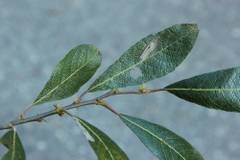
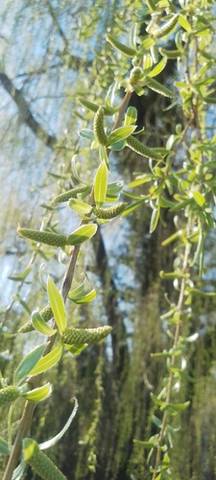
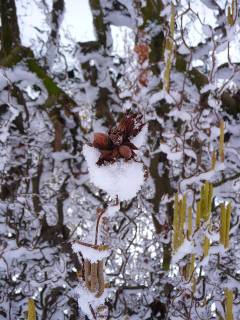
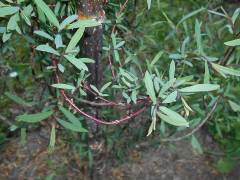
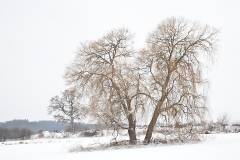
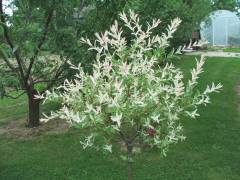
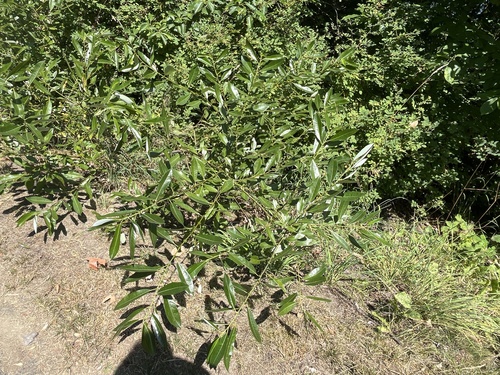
Salix hookeriana is a deciduous shrub or small tree reaching 6-25 feet (1.8-7.5 m) tall and 8-15 feet (2.4-4.5 m) wide at maturity, with multiple stems rising from the base. Bark is gray-brown, smooth on young stems and developing shallow furrows on older trunks 4-8 inches (10-20 cm) in diameter. Leaves are alternate, broadly elliptic to oval, 1.5-4 inches (3.8-10 cm) long with dark green upper surfaces and densely white-tomentose undersides. Catkins emerge before leaves in February through April; male catkins are 1-2 inches (2.5-5 cm) long and yellow with pollen, while female catkins on separate plants are similar in size, green, and develop into capsules releasing cottony seeds in May and June. Plants are dioecious (separate male and female individuals). Roots are shallow but extensive; cut stems readily root in moist soil, allowing propagation by hardwood cuttings stuck directly into the ground in winter. Plants tolerate brackish water and salt spray, separating them from inland willow species. Lifespan is 30-50 years on suitable sites; aging plants tend to break apart from the base into multi-stemmed clumps.
Native Range
Native to the Pacific Coast of North America from southeast Alaska south through British Columbia, Washington, Oregon, and northern California. Found in coastal dunes, salt marshes, freshwater wetlands within 30 miles (48 km) of the ocean, and along low-elevation streams below 1,500 feet (450 m). Most common on poorly drained, sandy or peaty soils where the water table remains within 24 inches (60 cm) of the surface most of the year.Suggested Uses
Used in coastal restoration, salt marsh edge plantings, and erosion control on dunes and stream banks in zones 7-9, spaced 6-10 feet (1.8-3 m) apart in single rows or 4-6 feet (1.2-1.8 m) for dense thicket. Live stakes (winter cuttings stuck in wet ground) establish at 70-90% rates without root preparation, the basis for low-cost streambank revegetation in coastal Oregon and Washington. Catkins are an early-season pollen source for native bees emerging from dormancy in February and March.How to Identify
Appearance
Size & Dimensions
Height6' - 25'
Width/Spread8' - 15'
Bloom Information
Catkins emerge before leaves from late February through April in zones 7-9, depending on coastal latitude. Male catkins shed pollen for 7-10 days; female catkins are receptive for 5-7 days. Capsules ripen and release cottony seeds in May and June, with seeds remaining viable only 1-2 weeks after dispersal — willows must germinate quickly on wet, bare mineral soil.
Detailed Descriptions
Flower Description
yellow male catkins, green female catkinsFoliage Description
dark green above, densely white-tomentose belowGrowing Conditions
Sun Requirements
Requires 6-12 hours of direct sunlight daily
• Full Sun: 6+ hours of direct sunlight
• Partial Shade: 3-6 hours of direct sunlight
• Full Shade: Less than 3 hours of direct sunlight
Care & Maintenance
Care Guide
Grows in full sun on consistently wet to moist soils at neutral to slightly acid pH; tolerates flooded soils, brackish water, and salt spray that exclude most other woody plants. Water deeply during the first growing season; established plants require no supplemental water in zones 7-9 where rainfall exceeds 30 inches (76 cm) annually. Plants decline rapidly on dry, well-drained sites where water tables fall below 36 inches (90 cm) in summer. Wood is brittle and breaks under wind or ice load; broken branches can be cut at the trunk and the tree resprouts from the base. Aphids, leaf beetles, and willow leaf gall mites occur but rarely cause significant damage. Plants are short-lived (30-50 years) compared to other native trees.Pruning
Coppice or pollard every 5-10 years in late winter (January-February) before catkin emergence; cut stems regenerate within 2-3 seasons. Removed branches root readily and can be stuck directly into wet ground for new plants. Dead wood is cut at the trunk after each major storm to limit fungal entry.Pruning Schedule
Prune: January–February
winter