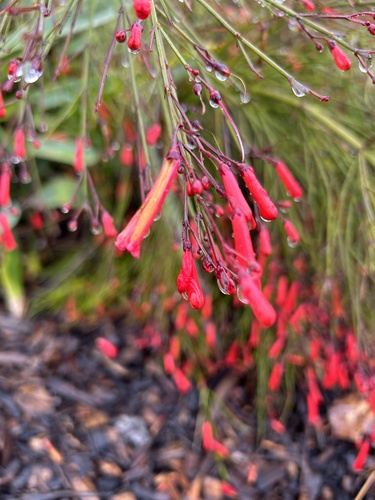
Russelia, Genus, spp., Multiple species,
- Genus
- Multiple species
firecracker plant
Mexico and tropical Central and South America
Overview
Russelia is a genus of about 50 species of evergreen subshrubs and shrubs in the family Plantaginaceae, native to Mexico and tropical Central and South America. The species most often grown, R. equisetiformis, the firecracker plant or coral fountain, forms a cascading mound 2-4 ft (60-120 cm) tall and as wide of thin, arching, rush-like green stems that weep toward the ground. The leaves are reduced to small scales along the wiry stems, so the green stems themselves carry out most photosynthesis. From spring into autumn the stems are hung with many narrow, tubular flowers about 1 in (2.5 cm) long, usually bright red, though cream, coral, and pink forms exist. The tubular flowers and the fountain-like form draw hummingbirds. Russelia grows in warm, frost-free climates in full sun and sharply drained soil, and tolerates heat, drought, and coastal salt once established. It is frost-tender, hardy only in USDA zones 9-11, and is grown in containers or as an annual elsewhere. The weeping stems trail over walls and edges but can look untidy without occasional trimming, and the plant spreads by suckers and rooting stems to form wider clumps over time.
Native Range
Russelia is native to Mexico and tropical Central and South America, with R. equisetiformis originating in Mexico. Plants grow on rocky slopes, cliffs, and open scrub in warm, seasonally dry country, often in poor, fast-draining soils.Suggested Uses
Russelia is grown in hanging baskets, over walls and raised beds, and on banks and slopes where the weeping stems cascade. The red tubular flowers are used in hummingbird and pollinator plantings in warm climates. It is grown as a container and conservatory plant in regions with frost.How to Identify
Appearance
Size & Dimensions
Height2' - 4'
Width/Spread2' - 5'
Bloom Information
Russelia flowers over a long warm season, from spring into autumn in frost-free climates and nearly year-round in the tropics. The narrow red tubular flowers open in flushes along the arching stems. Bloom slows in cool weather and stops where frost cuts the top growth.
Detailed Descriptions
Flower Description
bright red, sometimes coral, pink, or creamFoliage Description
greenGrowing Conditions
Sun Requirements
Requires 6-12 hours of direct sunlight daily
• Full Sun: 6+ hours of direct sunlight
• Partial Shade: 3-6 hours of direct sunlight
• Full Shade: Less than 3 hours of direct sunlight
Care & Maintenance
Care Guide
Grow Russelia in full sun in light, sharply drained soil, including poor, sandy, and rocky ground. Plants take heat, drought, wind, and coastal salt once established, but waterlogged soil and deep shade cause weak growth and root rot. They are frost-tender, hardy only in USDA zones 9-11, and are grown in hanging baskets or containers and moved indoors in cooler regions. Water regularly while young, then only in long dry spells once the roots are deep. A light feeding in spring supports the long flowering season. The weeping stems spill well over walls, raised beds, and basket edges.Pruning
Cut Russelia back hard in late winter or early spring to renew the clump and remove frost-damaged or tangled stems. Trimming the arching stems through the season keeps the fountain shape dense and tidy. Plants resprout readily from the base after a hard cutback.Container Growing
Suitable for container growing
Minimum container size: 3 gallons