Rubus, Genus, leucodermis, Species,
- Genus & species
blackcap raspberry
Overview
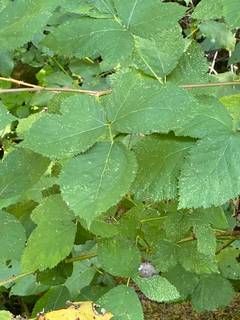
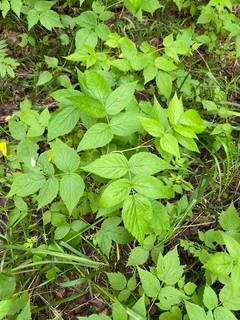
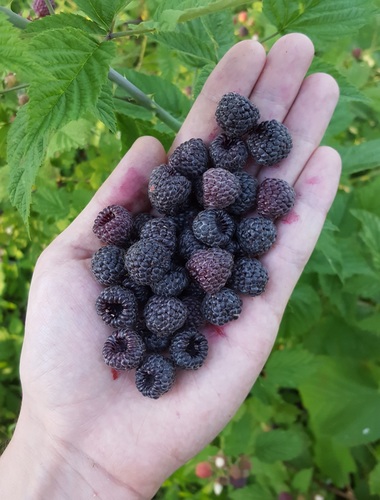
Rubus leucodermis is a deciduous shrub reaching 3-8 feet (90-240 cm) tall with arching primary canes (primocanes) that root at the tips. Canes are stout, glaucous (covered in white waxy bloom), and armed with stout, recurved prickles 3-6 mm long. First-year canes (primocanes) are blue-white in color; second-year canes (floricanes) bear flowers and fruit before dying. Leaves are alternate, pinnately compound with 3-5 leaflets, each leaflet 1-3 inches (2.5-7.5 cm) long, ovate to lance-shaped, with toothed margins; upper surface is medium green, underside is white-tomentose. White flowers 0.5-0.8 inches (12-20 mm) across appear in clusters of 2-7 in May and June on second-year canes. Aggregate fruit ripens from purple-red to deep purple-black 0.4-0.6 inches (10-15 mm) across in July and August; fruit detaches cleanly from the receptacle. Plants form colonies by tip-rooting and underground rhizomes; an unmanaged colony can spread 2-3 feet (60-90 cm) per year on moist sites. Canes live 2 years; the colony persists 15-25 years.
Native Range
Native to western North America from southeast Alaska south through British Columbia, Washington, Oregon, and California, east to Idaho, western Montana, and Utah. Found in clearings, burned areas, riparian margins, and forest edges from sea level to 7,000 feet (2,100 m). Most common in early-successional habitats opened by fire, logging, or windthrow.Suggested Uses
Used in native restoration projects, edible landscapes, and wildlife plantings in zones 5-8 at 4-6 foot (1.2-1.8 m) spacing within rows. Berries are eaten by birds, bears, and humans; the fruit is a primary commercial source of natural blue-purple food coloring in the western United States. Not used in formal beds or near manicured paths due to spreading habit and prickly canes.How to Identify
Appearance
Size & Dimensions
Height3' - 8'
Width/Spread5' - 10'
Bloom Information
Mid May through late June in zones 5-8, with white five-petaled flowers in clusters of 2-7 on second-year canes. Bloom lasts 2-3 weeks at any single site; bumblebees and native solitary bees are the primary pollinators. Cool weather extends bloom by 7-10 days.
Detailed Descriptions
Foliage Description
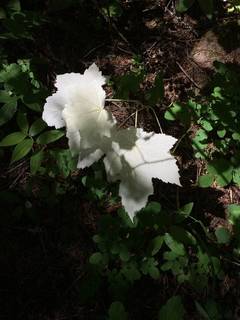
medium green above, white-tomentose belowGrowing Conditions
Sun Requirements
Requires 4-12 hours of direct sunlight daily
• Full Sun: 6+ hours of direct sunlight
• Partial Shade: 3-6 hours of direct sunlight
• Full Shade: Less than 3 hours of direct sunlight
Care & Maintenance
Care Guide
Grows in full sun to partial shade in moist, well-drained loam to sandy loam at neutral to slightly acid pH. Water deeply once weekly during the first season; established plants tolerate moderate drought but produce smaller, fewer fruit in dry years. Anthracnose can spot canes and leaves in wet springs; affected canes are cut at the base. Spider mites occur in hot, dry conditions and dehydrate leaves. Plants are tolerant of brief flooding (2-7 days) but root rot occurs in soils with standing water for longer. The colony spreads aggressively by tip-rooting where canes touch soil; unmanaged plantings can dominate a 100-square-foot area within 5 years.Pruning
Cut floricanes (second-year canes that have fruited) at ground level after harvest in late summer or fall; primocanes are left to fruit the following year. Thin remaining primocanes to 5-7 of the most vigorous stems per crown to maintain air movement and reduce anthracnose. Tip-rooted runner canes are cut where they touch soil to limit colony spread.Pruning Schedule
Prune: August–October
summerfall