Rhus, Genus, ×, Hybrid, pulvinata, Species,
- Genus & species
- Hybrid
northern sumac
Northern United States and southern Canada
Overview
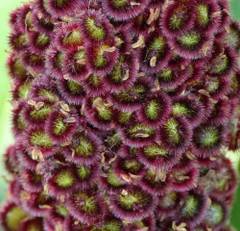
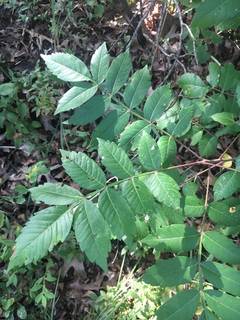
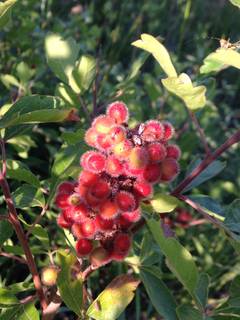
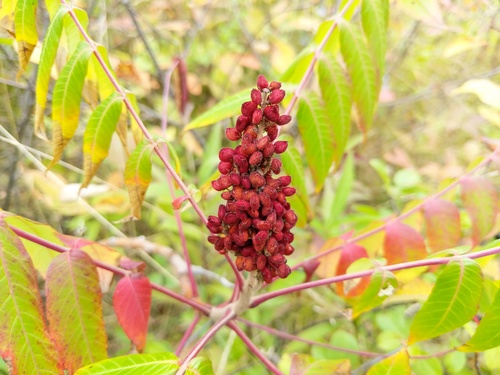
Rhus × pulvinata is a deciduous suckering shrub of hybrid origin between R. glabra and R. typhina, intermediate in form between its smooth-stemmed and velvety-stemmed parents. Plants grow 6–20 feet (1.8–6 m) tall and spread by root suckers into broad colonies of equal or greater width. The pinnately compound leaves measure 12–20 inches (30–50 cm) long with 11–31 lance-shaped leaflets, each 2–5 inches (5–13 cm) long with toothed margins; they turn red to orange-red before dropping in autumn. Young twigs carry scattered short hairs, fewer than the dense velvet of R. typhina but more than the smooth surface of R. glabra. Small greenish-yellow flowers open in dense upright panicles 4–8 inches (10–20 cm) long in early summer; plants are usually single-sexed, and female clusters ripen to cone-shaped masses of red, hairy drupes that persist through winter. The shrub tolerates poor, dry soils and full exposure but suckers aggressively and can spread beyond the area where it was planted. Individual stems are short-lived, dying back after a few years as new suckers replace them, which produces an uneven, thicket-like stand over time.
Native Range
The hybrid arises in the wild where the ranges of R. glabra and R. typhina overlap across the northern United States and southern Canada. It occurs on roadsides, forest edges, old fields, and other open disturbed sites within that region.Suggested Uses
Planted on banks, in naturalized areas, and along property edges where suckering spread and red autumn foliage suit large informal spaces. Used for erosion control on dry slopes and disturbed soil.How to Identify
Appearance
Size & Dimensions
Height6' - 20'
Width/Spread6' - 20'
Bloom Information
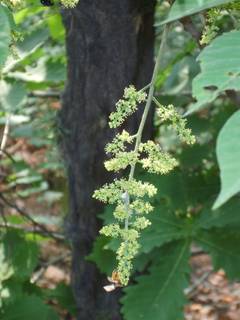
Greenish-yellow flowers open in dense upright panicles in early summer, usually June to July. Male and female flowers occur on separate plants, so only female plants set fruit. The fruit clusters ripen to deep red by late summer and persist on bare branches through winter.
Detailed Descriptions
Foliage Description
Green, turning red to orange-red in autumnGrowing Conditions
Sun Requirements
Requires 6-10 hours of direct sunlight daily
• Full Sun: 6+ hours of direct sunlight
• Partial Shade: 3-6 hours of direct sunlight
• Full Shade: Less than 3 hours of direct sunlight
Care & Maintenance
Care Guide
Grows in full sun on a wide range of soils, including poor, dry, and rocky ground, with a pH from 5.5 to 7.5. Tolerates drought once established and needs no supplemental water in most temperate climates. Spreads by root suckers, forming colonies that widen each year and may require a root barrier to contain. Individual stems live only a few years before dying back and being replaced by new suckers. Cutting to the ground in late winter renews a colony and controls height. Hardy through USDA zones 3–8.Pruning
Stems cut to ground level in late winter renew crowded colonies and limit height. Root suckers removed at the colony edge restrict lateral spread. Dead stems can be cleared in any season.Pruning Schedule
Prune: February–March
winterearly spring