Image 1 of 9
1 / 9
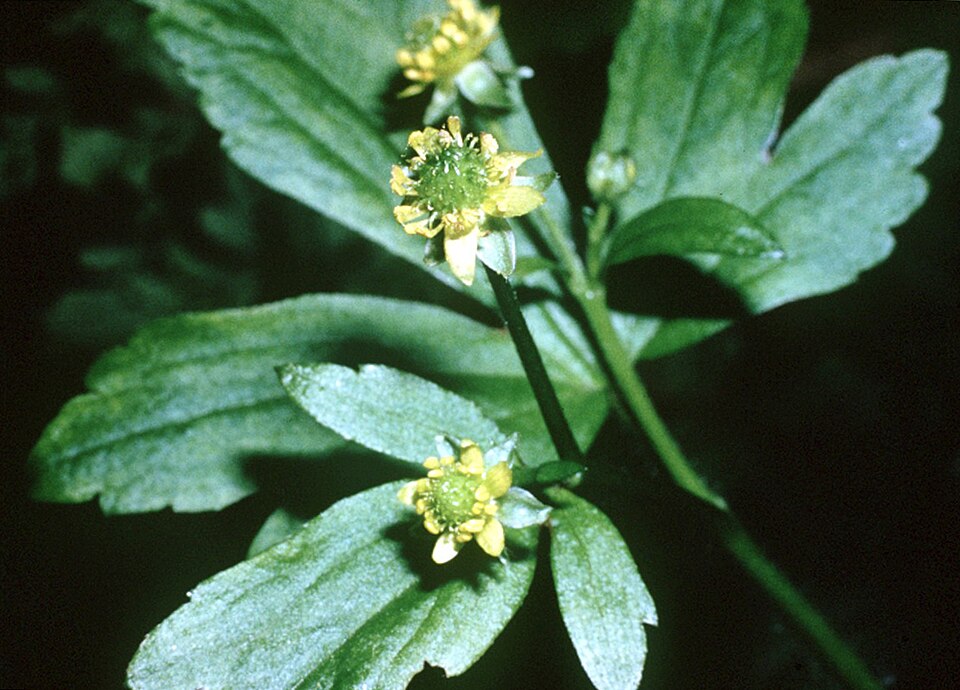
Robert H. Mohlenbrock. USDA SCS. 1989. Midwest wetland flora: Field office illustrated guide to plant species. Midwest National Technical Center, Lincoln. Courtesy of USDA NRCS Wetland Science Institute., no rights reserved (CC0) · Wikimedia Commons
Ranunculus, Genus, recurvatus, Species,
- Genus & species
hooked buttercup
Overview
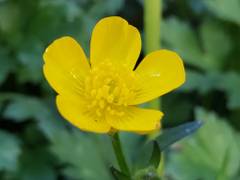
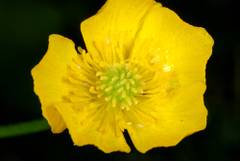
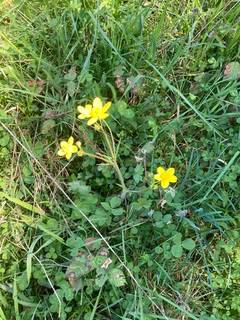
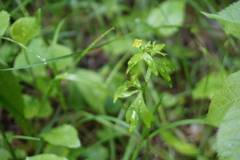
Ranunculus recurvatus is an upright, hairy perennial of the buttercup family, native to eastern North America, growing 6-24 inches (15-60 cm) tall from a short fibrous-rooted crown. The long-stalked basal and lower leaves are 1.5-4 inches (4-10 cm) wide and deeply cut into three broad, toothed lobes, covered like the stems in spreading hairs. From mid-spring into summer it bears small flowers about 0.4 inch (1 cm) across with five narrow, pale-yellow petals that are shorter than the reflexed green sepals, so the bloom looks modest rather than full. Each flower develops into a rounded head of small dry achenes, each tipped with a slender beak that curves back into a distinct hook. It grows in moist, shaded deciduous woods, floodplains, and stream banks on rich soils. Like other buttercups it contains protoanemonin, an irritant compound that makes the fresh foliage acrid and mildly toxic to grazing animals and people.
Native Range
Native to eastern North America, from eastern Canada south through the eastern and central United States to Georgia and Texas. It grows in moist hardwood forests, ravines, floodplains, and along shaded streams.Suggested Uses
Used in shaded native and woodland gardens, along stream and pond margins, and in naturalized groundcover plantings on moist, rich soil. Its modest flowers suit informal, naturalistic settings rather than formal beds.How to Identify
Appearance
Size & Dimensions
Height6" - 2'
Width/Spread6" - 1'
Bloom Information
Detailed Descriptions
Foliage Description
greenGrowing Conditions
Sun Requirements
Requires 2-6 hours of direct sunlight daily
• Full Sun: 6+ hours of direct sunlight
• Partial Shade: 3-6 hours of direct sunlight
• Full Shade: Less than 3 hours of direct sunlight