Pyrostegia, Genus, venusta, Species,
- Genus & species
Flame vine
Southern Brazil, Paraguay, Bolivia, northern Argentina
Overview
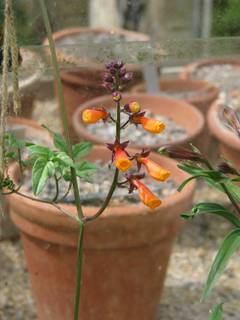
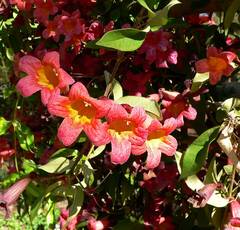
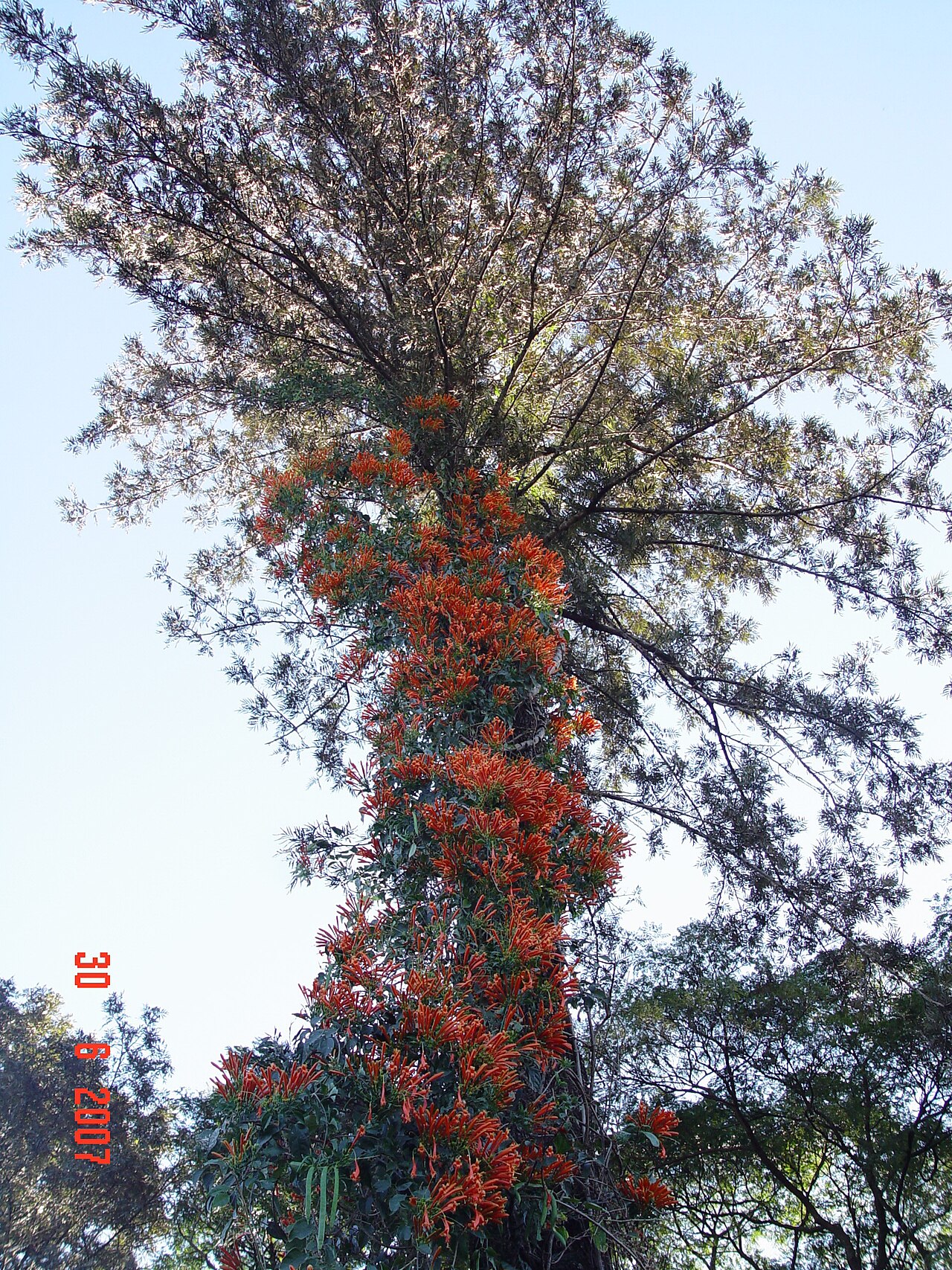
Pyrostegia venusta is a vigorous, evergreen, woody climber in the trumpet vine family (Bignoniaceae), reaching 20–40 feet (6–12 m) in length, with a spread of 10–15 feet (3–4.5 m) on a support. Stems are slender and climb by branched, three-pronged tendrils. Leaves are opposite and compound, with 2–3 ovate leaflets 2–3 inches (5–7.5 cm) long, glossy dark green, and the terminal leaflet often replaced by a tendril. Flowers are tubular, 2–3 inches (5–7.5 cm) long, bright orange, with four short, reflexed lobes and protruding stamens, and hang in dense, pendulous clusters of 10–20 at the stem tips. Flowering occurs in winter and early spring, from December to March in the northern hemisphere. Fruits are narrow capsules 6–12 inches (15–30 cm) long, which seldom form in cultivation. Growth of 6–10 feet (1.8–3 m) per year produces dense masses that cover fences and small trees. Plants are damaged at 28°F (−2°C) and regrow from the base after light frost. The species is naturalized and regarded as invasive in parts of Australia, South Africa, and Hawaii.
Native Range
Pyrostegia venusta is native to South America, in southern Brazil, Paraguay, Bolivia, and northern Argentina. It grows in forest edges, scrub, and riverbanks at elevations from sea level to 3,300 feet (1,000 m) in seasonally dry subtropical climates.Suggested Uses
Used to cover fences, pergolas, walls, and arbors in warm climates, with plants spaced 6–10 feet (1.8–3 m) apart. Flowers are visited by hummingbirds, bees, and butterflies in winter. The vine is restricted in areas of Australia and South Africa where it has escaped cultivation and displaces native vegetation.How to Identify
Appearance
Size & Dimensions
Height20' - 40'
Width/Spread10' - 15'
Bloom Information
Flowers open from December to March in the northern hemisphere and from June to September in the southern hemisphere, in dense pendulous clusters of 10–20. Each flower lasts 5–7 days, and plants stay in bloom for 8–12 weeks. Blooms form on new growth that matures in the preceding season.
Detailed Descriptions
Foliage Description
Glossy dark greenGrowing Conditions
Sun Requirements
Requires 6-10 hours of direct sunlight daily
• Full Sun: 6+ hours of direct sunlight
• Partial Shade: 3-6 hours of direct sunlight
• Full Shade: Less than 3 hours of direct sunlight
Care & Maintenance
Care Guide
Grows in full sun in well-drained soil with a pH of 5.5–7.5. Hardy in USDA zones 9–11, with leaf and stem damage at 28°F (−2°C). Established plants tolerate dry periods of 3–4 weeks, and young plants receive 1 inch (2.5 cm) of water per week for the first year. Stems climb by tendrils onto trellises, fences, and pergolas, and plants need supports rated for dense growth weighing 50–100 pounds (23–45 kg). Flowering is limited in shade and in cool, wet winters. Scale insects, mealybugs, and aphids occur on new growth, and rampant growth requires regular cutting back in warm climates.Pruning
Pruning takes place after flowering in April–May, with stems cut back by one-third to one-half to limit size and promote branching. Overgrown plants are cut to 2–3 feet (60–90 cm) above ground and regrow in 1–2 seasons. Unpruned plants form dense mats of stems 12–18 inches (30–45 cm) thick, which shade lower foliage.Pruning Schedule
Prune: April–May
late spring