Pseudopanax, Genus,
- Genus
lancewood
New Zealand (endemic; lowland to montane forests; approximately 12–20 species in the genus)
Overview
Pseudopanax is the lancewood genus, approximately 12–20 species of evergreen trees endemic to New Zealand, growing 15–50 feet (4.5–15 m) tall and 6–15 feet (1.8–4.5 m) wide. The genus is defined by heteroblastic development: a single individual passes through distinct juvenile and adult leaf forms over 10–20 years. The juvenile form is a single-stemmed unbranched pole with long narrow sword-like downward-pointing leaves 12–36 inches (30–90 cm) long, dark brown to dark green. After 10–20 years the tree transitions to the adult form, which has a branching crown and shorter broader leaves 3–6 inches (7–15 cm). The two leaf forms are so different that early botanists described them as separate species. P. crassifolius (lancewood) shows the most pronounced juvenile-to-adult transition and is the species seen in cultivation more often than others in the genus. The genus sits in the ginseng family (Araliaceae). The heteroblastic transition is hypothesized as an anti-browsing adaptation against the extinct moa (Dinornithiformes); the downward-pointing sword leaves of juvenile plants may have deterred the flightless bird from browsing. Dioecious — male and female flowers occur on separate plants — with small black drupes on female plants. Frost tolerance is low: foliage is damaged below 20°F (−7°C). Non-toxic. Deer-resistant. Full sun to partial shade. Hardy in USDA zones 8–10. This entry represents the genus; individual species differ in leaf shape, color, and growth rate.
Native Range
Endemic to New Zealand, in lowland to montane forests. The genus contains approximately 12–20 species.Suggested Uses
Commonly planted as a specimen in USDA zones 8–10 where the heteroblastic leaf transition can be observed over 10–20 years from a single plant. The juvenile sword-like form functions as a narrow vertical accent in borders, courtyards, and architectural plantings during the first decades. Container culture in 10-gallon (38 L) or larger pots suits the juvenile stage, with the pot providing overwintering mobility in zones 7 and colder. The genus is a New Zealand endemic, non-toxic, and deer-resistant. This entry represents the genus; individual species should be selected for specific height, leaf color, and growth rate.How to Identify
Appearance
Size & Dimensions
Height15' - 50'
Width/Spread6' - 15'
Bloom Information
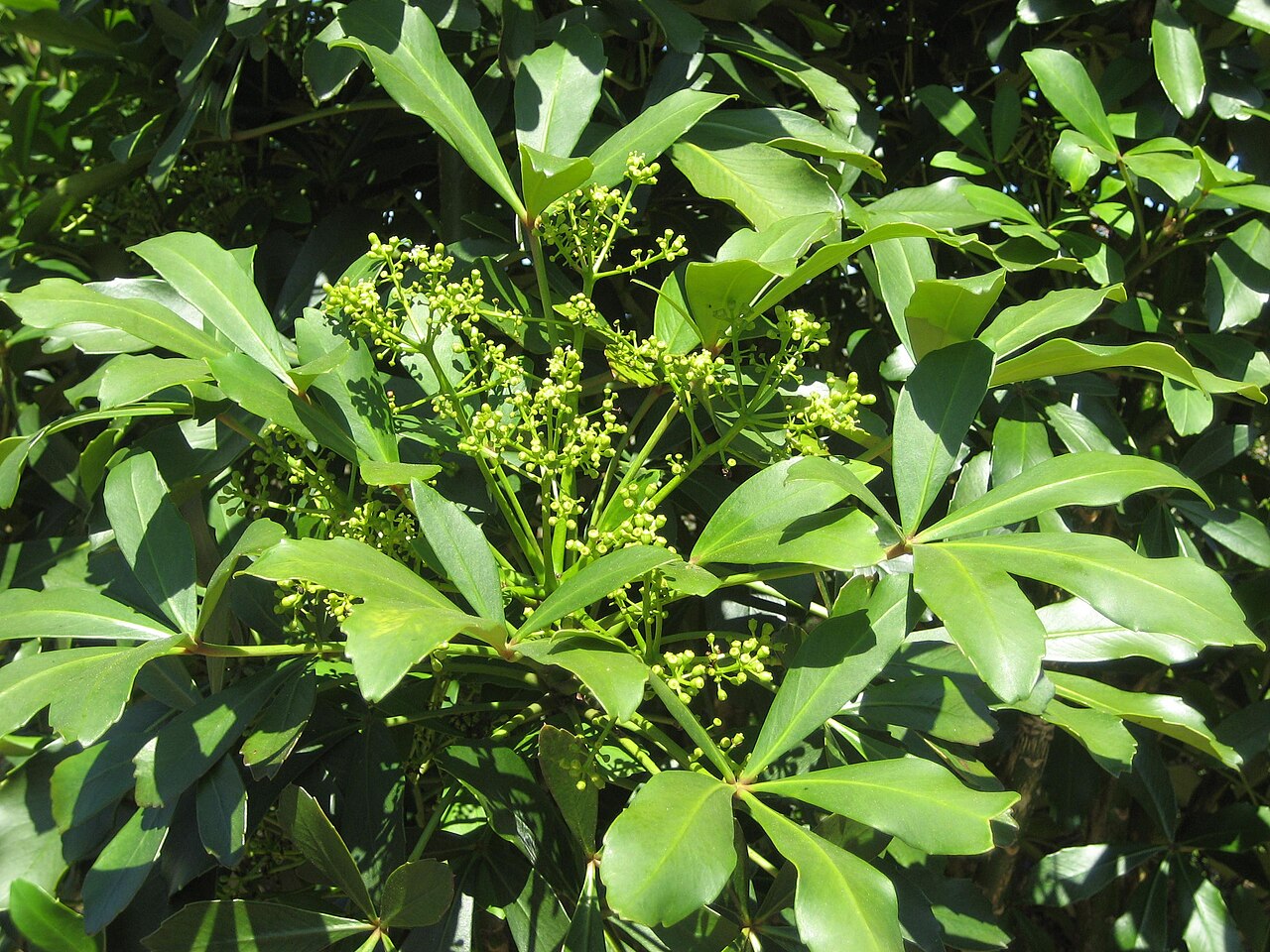
Produces greenish, small, inconspicuous flowers in compound umbels. Small black drupes 0.25 inch (6 mm) follow on female plants. The genus is dioecious. The heteroblastic foliage development across the life of the tree is the year-round visual feature.
Detailed Descriptions
Flower Description
Greenish, small, inconspicuous, in compound umbels; dioecious; black drupes 0.25 inch (6 mm) follow on female plantsFoliage Description
Dark brown to dark green; juvenile form carries long narrow sword-like 12–36 inch (30–90 cm) stiff downward-pointing leaves on an unbranched stem; adult form carries shorter broader 3–6 inch (7–15 cm) leaves on branching stems; the two leaf forms appear on the same individual at different life stagesGrowing Conditions
Sun Requirements
Requires 4-10 hours of direct sunlight daily
• Full Sun: 6+ hours of direct sunlight
• Partial Shade: 3-6 hours of direct sunlight
• Full Shade: Less than 3 hours of direct sunlight
Care & Maintenance
Care Guide
Plant in full sun to partial shade in well-drained loam, sandy, or silty soil at pH 5.5–7.0. Hardy in USDA zones 8–10. Frost tolerance is low; foliage is damaged below 20°F (−7°C), so unheated greenhouse or conservatory overwintering is used in colder zones. The juvenile-to-adult heteroblastic transition takes 10–20 years on most species; the juvenile pole stage is the garden-interest phase for several decades before the canopy broadens. Dioecious: fruit set requires a female plant and a nearby male pollen source. Drought tolerance is moderate once established. Deer do not browse the stiff juvenile foliage.Pruning
Pruning is not used. The heteroblastic transition from juvenile unbranched pole to adult branching crown unfolds on its own timeline over decades. Topping the juvenile pole or heading cuts into the main stem disrupts the natural transition and are avoided. Remove dead or damaged branches only.Container Growing
Suitable for container growing
Minimum container size: 10 gallons