Image 1 of 5
1 / 5
Plant Reference
Schefflera, Genus, arboricola, Species,
- Genus & species
dwarf umbrella tree
Taiwan, Hainan Island; subtropical and tropical lowland forest
Overview
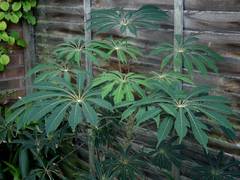
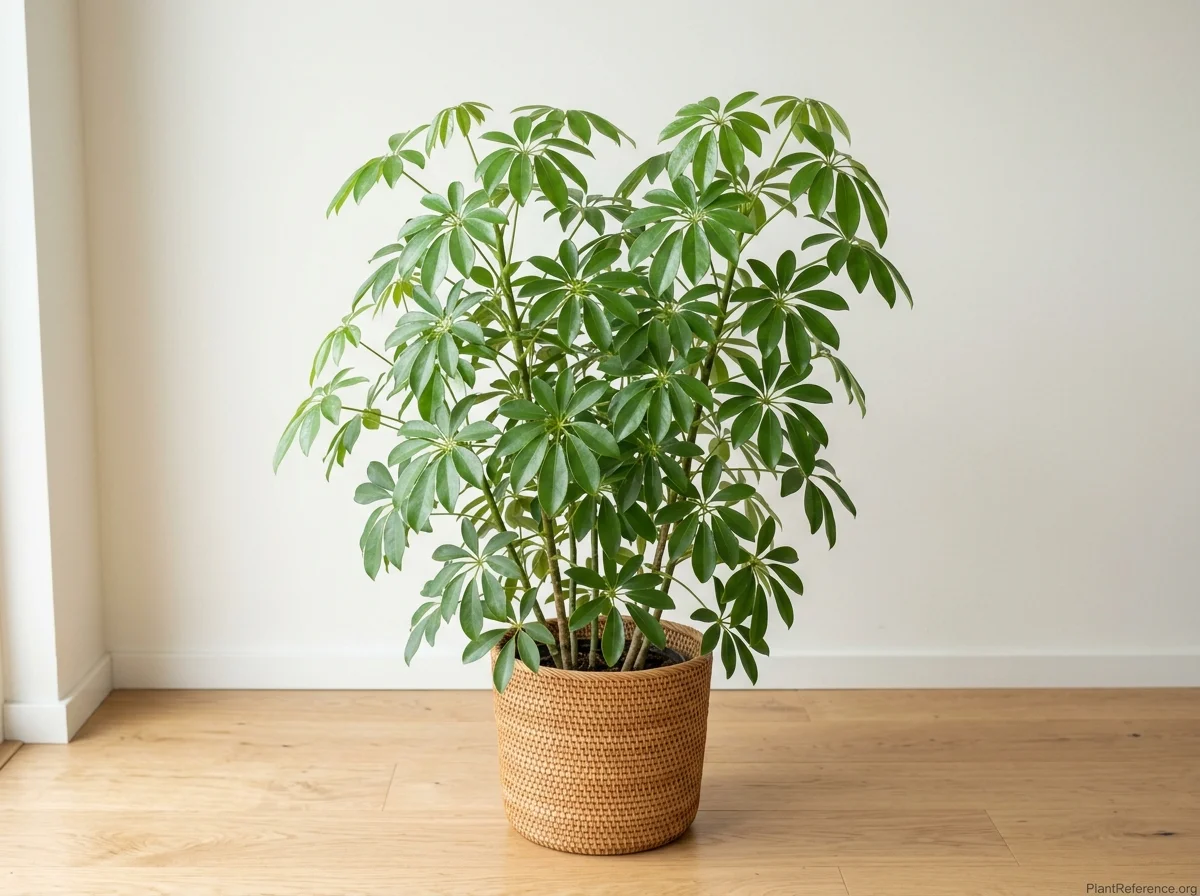
Schefflera arboricola is an evergreen shrub or small tree from Taiwan and Hainan, growing 8–15 feet (2.4–4.5 m) in tropical landscape and 36–96 inches (90–240 cm) under indoor culture. Compound palmate leaves bear 7–11 oblong leaflets 2–6 inches (5–15 cm) long, glossy mid-green, radiating from a central petiole 4–8 inches (10–20 cm) long, in a pattern that resembles spokes of an umbrella. Variegated cultivars including 'Gold Capella' and 'Trinette' carry yellow or cream blotches on the leaflets. Stems are slender and produce multiple side branches readily without pruning. Indoor specimens rarely flower; mature outdoor plants in tropical zones 10–12 produce small reddish flowers in compound panicles 4–10 inches (10–25 cm) long, followed by purple-black berries 0.2 inch (5 mm). All parts contain calcium oxalate crystals; chewing or ingesting any part causes oral irritation, drooling, vomiting, and difficulty swallowing in dogs, cats, and humans. Cold-tender: foliage damage occurs below 50°F (10°C) and plant death below 32°F (0°C). Listed as a Category II invasive in Florida and naturalized in Hawaii through bird dispersal of seed. Growth rate is moderate to fast — 12–24 inches (30–60 cm) per year indoors with adequate light. Common indoor pests include scale, spider mite, and aphid.
Native Range
Native to Taiwan and Hainan Island in subtropical and tropical lowland forests. Naturalized in Florida (where it is listed as Category II invasive by the Florida Exotic Pest Plant Council) and in Hawaii through bird dispersal of fruit.Suggested Uses
Grown as an indoor specimen on bright windowsills and floor positions in temperate climates, and as a hedge or specimen tree outdoors in tropical zones 10–12. Container culture in 5–10 gallon (20–40 liter) pots with well-drained potting mix supports indoor heights of 36–96 inches (90–240 cm). Outdoor planting in Florida and Hawaii is restricted by invasive-species listings.How to Identify
Appearance
Size & Dimensions
Height3' - 8'
Width/Spread2' - 5'
Bloom Information
Indoor plants flower rarely. Mature outdoor plants in tropical zones 10–12 produce small reddish flowers in compound panicles 4–10 inches (10–25 cm) long, sporadically through the year, followed by purple-black berries 0.2 inch (5 mm) in diameter. Bloom duration is 4–6 weeks. Flowers are pollinated by bees and small flies.
Detailed Descriptions
Flower Description
Reddish in compound panicles (rare in cultivation)Foliage Description
Glossy mid-green compound palmate, 7-11 leaflets 2-6 inches (5-15 cm) long; variegated cultivars carry yellow or cream blotchesGrowing Conditions
Sun Requirements
Requires 4-6 hours of direct sunlight daily
• Full Sun: 6+ hours of direct sunlight
• Partial Shade: 3-6 hours of direct sunlight
• Full Shade: Less than 3 hours of direct sunlight
Care & Maintenance
Care Guide
Grows in bright indirect to medium light at 60–80°F (16–27°C). Direct midday sun in summer scorches leaves on indoor plants; deep shade slows growth and produces sparse, leggy stems. Watering occurs when the top 1–2 inches (2.5–5 cm) of potting mix have dried — typically every 7–10 days in active growth and every 14–21 days in winter. Air humidity 30–50% is sufficient. Plants tolerate hard renovation pruning to bare stubs and regrow within 4–8 weeks. Plants are re-potted every 2–3 years into a container 2 inches (5 cm) larger than the root ball.Pruning
Pruning is performed at any time of year, with most regrowth response in spring. Stems are cut to maintain height and shape; cuts above a leaf node trigger branching from dormant buds within 4–8 weeks. Tip cuttings of 4–6 inches (10–15 cm) root in moist potting mix or water within 6–10 weeks. Hard renovation pruning to 6–12 inch (15–30 cm) stubs is tolerated and produces new growth from the base.Pruning Schedule
Prune: March–April
spring
Container Growing
Suitable for container growing
Minimum container size: 5 gallons