Image 1 of 15
1 / 15
Plant Reference
Oplopanax, Genus, horridus, Species,
- Genus & species
devil's club
Alaska south through British Columbia, Washington, and Oregon to California; east through the Rocky Mountains; moist old-growth conifer forests, ravines, stream banks, and forest edges
Overview
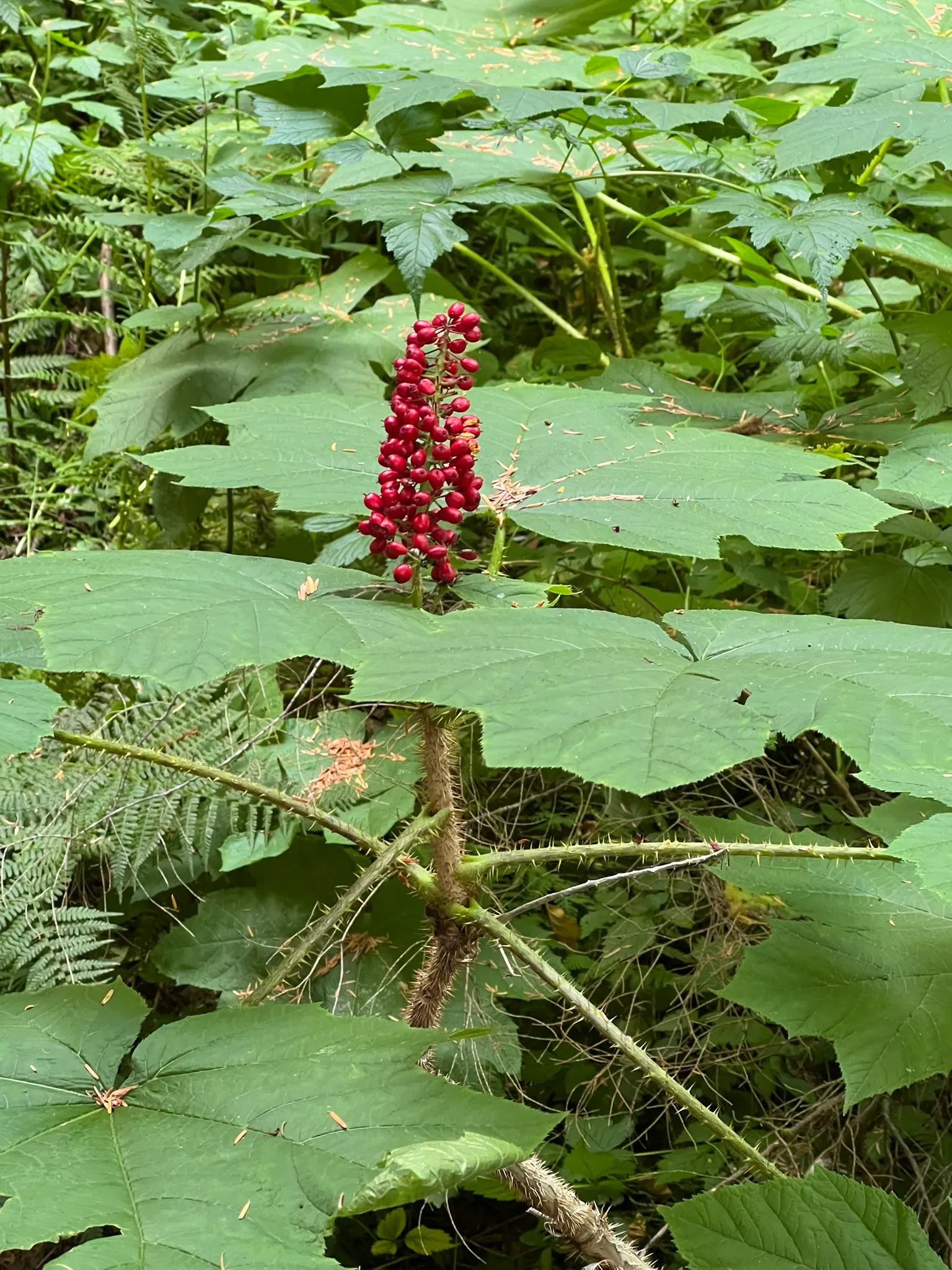
Oplopanax horridus is devil's club (Alaskan ginseng), an upright deciduous shrub growing 3-10 feet (90-300 cm) tall and 4-8 feet (1.2-2.4 m) wide. Palmately lobed maple-like leaves 8-16 inches (20-40 cm) wide are broader than the leaves of other native Pacific Northwest shrubs. Pale yellow spines cover ALL stems, petioles, and leaf vein undersides (horridus = bristling). Greenish-white flowers form in large compound terminal umbels in June-July (5 weeks); bright red flattened berry-like drupes develop in tight clusters in August-September. Family Araliaceae (ginseng family). Native to Alaska south through British Columbia, Washington, and Oregon to California, east through the Rocky Mountains. Found in moist old-growth conifer forests, ravines, on stream banks, and at forest edges. The pale yellow spines break off in skin and cause painful slow-healing puncture wounds; wounds are notorious for becoming infected and taking weeks to heal. Devil's club has profound cultural and medicinal significance to many Indigenous peoples of the Pacific Northwest and Alaska, used ceremonially and for treating diabetes, respiratory conditions, and arthritis; modern research has identified anti-inflammatory and antimicrobial compounds. The genus Oplopanax is closely related to ginseng (Panax); both are in Araliaceae, and devil's club is sometimes called Alaskan ginseng. Bright red berries are eaten by bears and grouse but are bitter and not edible for humans raw. Spreads by horizontal stems that root and arching new growth. Hardy in zones 4-9. Grown in full to partial shade. Growth rate is slow.
Native Range
Native to Alaska south through British Columbia, Washington, and Oregon to California, east through the Rocky Mountains. Found in moist old-growth conifer forests, ravines, on stream banks, and at forest edges.Suggested Uses
Oplopanax horridus is grown as a foliage feature in cool moist shaded conifer woodland gardens, native plant gardens, and Indigenous cultural plant collections, spaced 4-8 feet (1.2-2.4 m) apart. The dense pale yellow spines break off in skin and cause painful slow-healing puncture wounds; siting is unsuitable in areas with frequent foot traffic, children, or pets. Hardy in zones 4-9.How to Identify
Appearance
Size & Dimensions
Height3' - 10'
Width/Spread4' - 8'
Bloom Information
Early to mid summer (June-July). Greenish-white to cream small flowers form in large compound rounded terminal umbels 4-10 inches (10-25 cm) — the typical Araliaceae ginseng-family inflorescence. Bloom lasts about 5 weeks. Bee-pollinated. Bright red berry-like drupes follow in August-September.
Detailed Descriptions
Flower Description
Greenish-white to cream, small flowers form in large compound rounded terminal umbel clusters 4-10 inches (10-25 cm) — the typical Araliaceae (ginseng family) inflorescence; June-July. Tight clusters of bright red flattened berry-like drupes follow in August-September; the berries are an important food for bears.Foliage Description
Bright to medium green above, paler beneath; palmately lobed maple-like leaves 8-16 inches (20-40 cm) wide with 5-9 pointed toothed lobes — broader than the leaves of other native Pacific Northwest shrubs. Pale yellow spines on petioles, leaf vein undersides, and ALL stems (horridus = bristling). Foliage turns yellow in fall.Growing Conditions
Sun Requirements
Tolerates up to 3 hours of direct sunlight daily
• Full Sun: 6+ hours of direct sunlight
• Partial Shade: 3-6 hours of direct sunlight
• Full Shade: Less than 3 hours of direct sunlight
Care & Maintenance
Care Guide
Grown in full to partial shade with 0-3 hours of direct sun. Soil is moist, humus-rich loam or peat with a pH of 5.0-7.0. Cool moist conifer forest understory conditions are essential. ALL stems, petioles, and leaf vein undersides bear dense pale yellow spines that break off in skin and cause painful slow-healing infected wounds. Hardy in zones 4-9.Pruning
Minimal pruning is required. Damaged stems are cut back in early spring (February-March). The dense pale yellow spines break off in skin during handling and cause slow-healing puncture wounds.Pruning Schedule
Prune: February–March
early spring