Image 1 of 19
1 / 19
Plant Reference
Fatsia, Genus, japonica, Species,
- Genus & species
fatsia
Overview
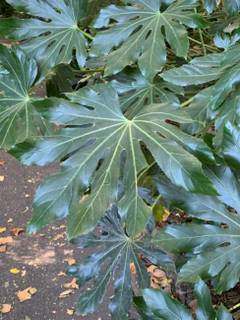
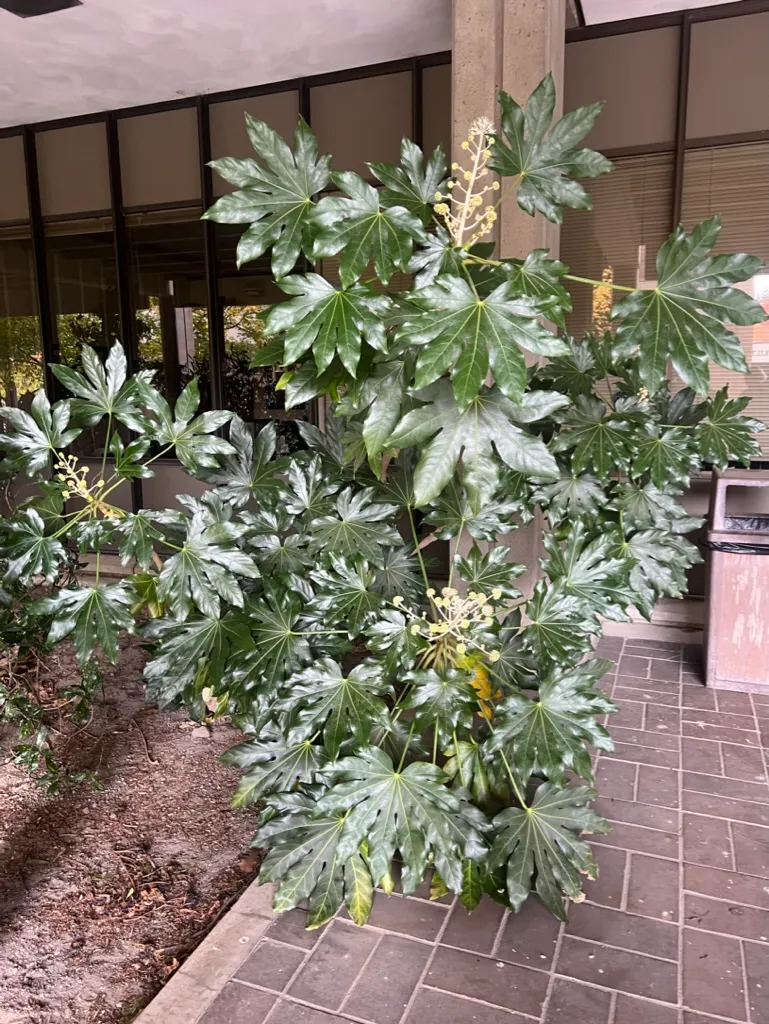
Fatsia japonica is an evergreen shrub growing 6–10 feet (1.8–3 m) tall and 6–8 feet (1.8–2.4 m) wide, with a rounded upright habit and stout, sparsely branched stems. Leaves are large, glossy, and deeply palmately lobed, 8–16 inches (20–40 cm) across with 7–9 pointed lobes, giving the plant a tropical leaf texture in temperate shade gardens. From October through December, cream-white spherical flower umbels 1 inch (2.5 cm) across appear in large terminal panicles 12–18 inches (30–45 cm) long — among the few woody plants flowering in temperate gardens during this period, providing late-season nectar for flies and late-flying bees. Small black berry-like fruit ripens in late winter. The species is in the ivy/ginseng family (Araliaceae) and is the Fatsia parent of the intergeneric hybrid × Fatshedera lizei. Cultivars include 'Spider's Web' (white-speckled leaves) and 'Variegata' (cream-edged leaves). Stems are damaged below 15°F (−9°C), which limits the plant to zones 8–10 in open positions and to sheltered sites in zone 7. Direct sun causes leaf scorch in summer. All parts contain falcarinol, a skin irritant and gastrointestinal toxin in mammals. Native to coastal forest understory in Japan and South Korea.
Native Range
Native to Japan and South Korea, growing in coastal and lowland forest understory.Suggested Uses
Grown in deep shade and sheltered positions in zones 8–10. The bold tropical-textured foliage and the late-season flowers extend interest into winter. Tolerates urban pollution and coastal salt spray, suiting coastal and city gardens. Container culture in pots of at least 10 gallons (38 L) allows overwintering indoors in zones below 8.How to Identify
Appearance
Size & Dimensions
Height6' - 10'
Width/Spread6' - 8'
Bloom Information
Blooms October through December in zones 8–10, lasting 3–4 weeks. Cream-white spherical flower umbels 1 inch (2.5 cm) across appear in large terminal panicles 12–18 inches (30–45 cm) long. Small black berry-like fruit ripens in late winter. Flowering occurs during a period when most temperate woody plants are dormant, making the plant a late-season nectar source for flies and late-flying bees.
Detailed Descriptions
Flower Description
cream-white, in spherical umbels 1 inch (2.5 cm) arranged in large terminal paniclesFoliage Description
dark green, glossy, deeply palmately lobed (7-9 lobes), 8-16 inches (20-40 cm) acrossGrowing Conditions
Sun Requirements
Requires 1-4 hours of direct sunlight daily
• Full Sun: 6+ hours of direct sunlight
• Partial Shade: 3-6 hours of direct sunlight
• Full Shade: Less than 3 hours of direct sunlight
Care & Maintenance
Care Guide
Plant in partial to full shade; full sun causes leaf scorch in summer. Tolerates deep shade, urban pollution, and coastal salt spray. Soil should be moist, well-drained, and pH 6.0–7.5; the plant accepts loam and clay. Stems are damaged below 15°F (−9°C), which restricts open-garden cultivation to zones 8–10. Established plants are drought-tolerant in shade. All parts contain falcarinol, a skin irritant and gastrointestinal toxin; sap contact causes dermatitis in sensitive individuals.Pruning
Prune for shape in early spring (March–April). The plant tolerates hard renovation pruning to 12 inches (30 cm); regrowth emerges from the stump within one growing season. Leggy stems are removed at the base to maintain a compact form. Suckers are removed if not desired.Pruning Schedule
Prune: March–April
early spring
Container Growing
Suitable for container growing
Minimum container size: 10 gallons