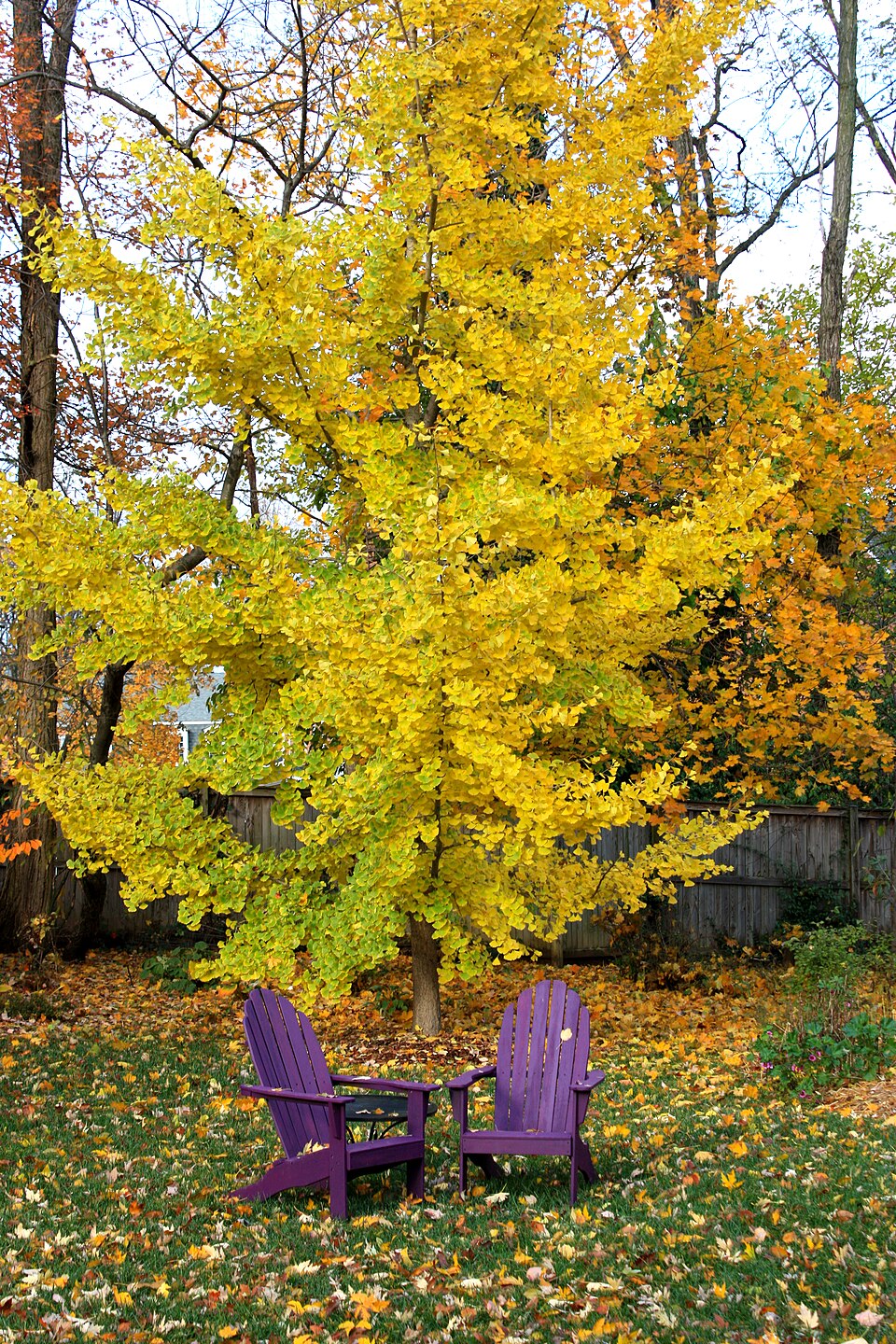
Ginkgo, Genus, biloba, Species, 'Princeton Sentry', Cultivar,
- Genus & species
- Cultivar
Princeton sentry columnar ginkgo
Overview
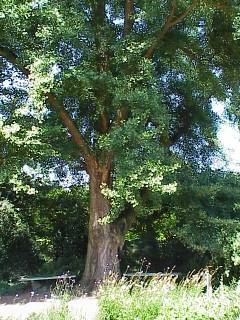
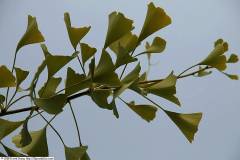
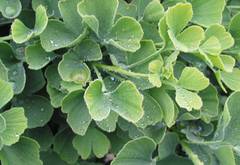
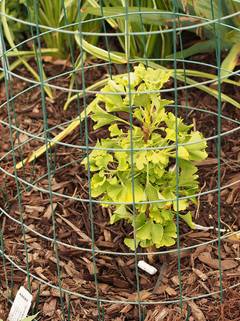
Ginkgo biloba 'Princeton Sentry' is a deciduous tree reaching 40-50 feet (12-15 m) tall and 15-25 feet (4.5-7.5 m) wide at maturity, with a narrow upright to columnar habit roughly 2.5 to 3 times taller than wide. The trunk is single and central, with relatively short ascending branches set at 45-60 degrees from vertical. Leaves are fan-shaped, 1.5-3 inches (4-7.5 cm) wide, often with a central notch dividing the blade into two lobes, and parallel dichotomous venation. Foliage emerges bright green in May, holds medium green through summer, and turns clear yellow in October-November, dropping over a 7-10 day window once color develops. As a male clone, this selection produces only pollen-bearing strobili 0.5-1 inch (1.3-2.5 cm) long in April; no fruit forms, so the rancid odor of mature seed coats associated with female G. biloba does not occur. Bark is grey-brown, becoming furrowed on trunks over 12 inches (30 cm) in diameter. Mature width is 30-40% of typical G. biloba species spread. Growth rate is 10-12 inches (25-30 cm) per year on irrigated sites, slower in drought.
Native Range
The species Ginkgo biloba is native to a small region of eastern China in the Tianmu Mountains of Zhejiang Province at 1,000-3,300 feet (300-1,000 m) elevation, where small wild populations persist in mixed broadleaf forest. G. biloba has been cultivated in China and Japan for more than 1,000 years and now occurs as a horticultural plant on every continent except Antarctica. The cultivar 'Princeton Sentry' was selected and introduced by Princeton Nurseries in New Jersey in 1967 from cultivated stock.Suggested Uses
Planted as a street tree, parkway tree, or vertical accent in confined urban sites, spaced 15-20 feet (4.5-6 m) apart in line plantings. Used in parking lot islands and along pedestrian corridors where wide-spreading G. biloba would interfere with sightlines or buildings. Mature heights of 40-50 feet (12-15 m) make this cultivar unsuitable under power lines or other overhead structures.How to Identify
Appearance
Size & Dimensions
Height40' - 50'
Width/Spread15' - 25'
Bloom Information
Male strobili appear in early to mid-April, just before leaf emergence, hanging in 0.5-1 inch (1.3-2.5 cm) catkin-like clusters from short shoots. Pollen release lasts 5-10 days. As a male selection, no female reproductive structures or fruit develop.
Detailed Descriptions
Flower Description
Yellow-green male strobiliFoliage Description
Bright green in spring; medium green in summer; clear yellow in fallGrowing Conditions
Sun Requirements
Requires 6-8 hours of direct sunlight daily
• Full Sun: 6+ hours of direct sunlight
• Partial Shade: 3-6 hours of direct sunlight
• Full Shade: Less than 3 hours of direct sunlight
Care & Maintenance
Care Guide
Trees establish well in full sun on a wide range of soils from sandy loam to clay loam at pH 5.5-8.0; tolerance of urban soils and air pollution is documented across street-tree studies. Watering at 15-20 gallons (57-76 L) weekly during the first three growing seasons is typical; established trees withstand droughts of more than two weeks once roots reach 18-24 inches (45-60 cm) deep. Insect and disease pressure are low, with no significant pest problems reported in North American street-tree plantings. Salt tolerance is moderate, and trees survive brief winter de-icing salt exposure that damages many other street species. Columnar form holds true without staking. Growth rate is 10-12 inches (25-30 cm) per year in zones 4-7, slowing to 6-8 inches (15-20 cm) in zones 8-9 due to summer heat stress.Pruning
Pruning is performed in late winter (February-March) when trees are dormant; minimal structural pruning is required because the columnar form is genetically determined. Co-dominant leaders, dead wood, and crossing branches are removed during the first 10 years to set strong scaffold structure. Lower branches may be removed up to 6-8 feet (1.8-2.4 m) on street and parkway specimens. Heavy pruning in summer can cause sap bleeding from cut surfaces.Pruning Schedule
Prune: February–March
winterearly spring
Container Growing
Minimum container size: 25 gallons