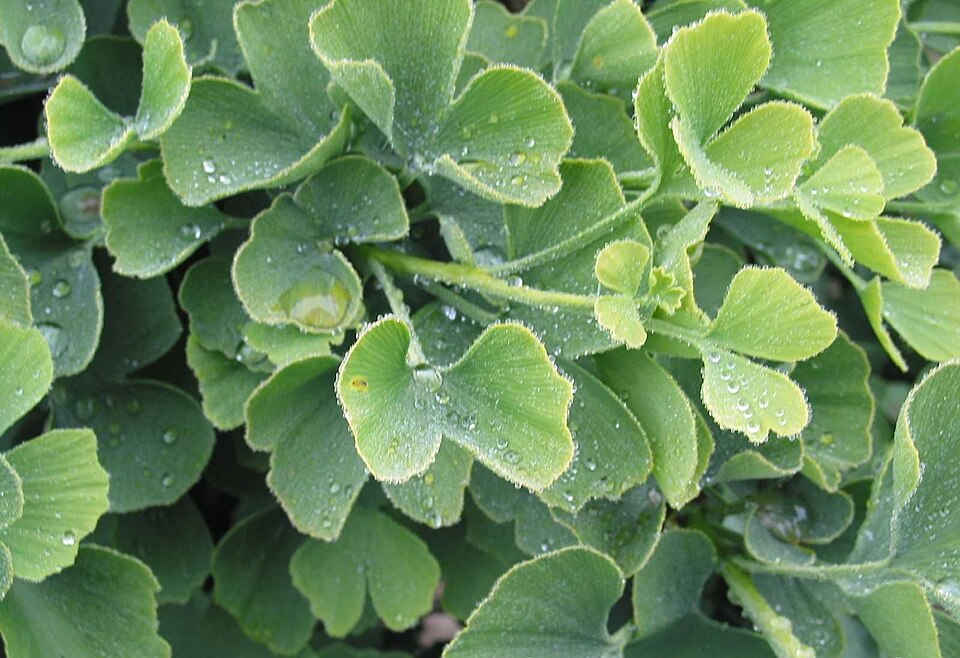
Ginkgo, Genus, biloba, Species, 'Jade Butterflies', Cultivar,
- Genus & species
- Cultivar
jade butterflies ginkgo tree
Overview
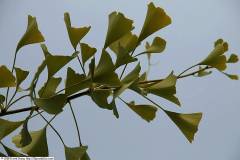
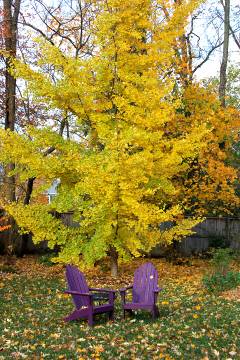
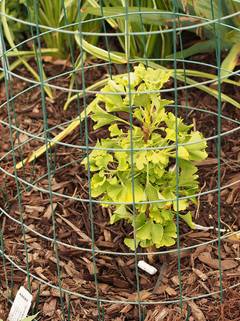
Ginkgo biloba 'Jade Butterflies' is a slow-growing semi-dwarf deciduous tree reaching 10-15 feet (3-4.5 m) tall and 6-10 feet (1.8-3 m) wide at maturity (30-40 years), with an upright oval to broadly conical habit. Branching is denser and more upswept than typical G. biloba, producing a tightly packed crown with shorter internodes than species seedlings. Leaves are fan-shaped, 1-2 inches (2.5-5 cm) wide, smaller than the 2-4 inch (5-10 cm) leaves of typical species seedlings, and held closely along the stems in pairs that some references describe as butterfly-like. Foliage emerges bright jade green in spring, holds medium green through summer, and turns clear yellow over 7-10 days in October before dropping in a 2-3 day window. As a male clone, pollen-bearing strobili 0.4-0.8 inch (10-20 mm) long appear on short shoots in April; no seeds or fleshy seed coats develop. Bark is grey, smooth on young trunks, becoming finely furrowed on stems over 6 inches (15 cm) in diameter. Annual height growth is 4-6 inches (10-15 cm) per year on irrigated sites, slower in drought or zone 8-9 heat.
Native Range
The species Ginkgo biloba is native to eastern China in the Tianmu Mountains at 1,000-3,300 feet (300-1,000 m) elevation, where small wild populations persist in mixed broadleaf forest. The cultivar 'Jade Butterflies' was introduced from cultivated stock in the United States and does not occur in wild populations.Suggested Uses
Planted as a specimen in mixed shrub borders, foundation plantings, and small residential gardens at 8-12 foot (2.4-3.6 m) spacing. Suitable for large containers (15-25 gallon / 57-95 L) on patios and decks for 10-15 years before repotting. Used in collections of Ginkgo cultivars to compare leaf size and habit against full-sized forms.How to Identify
Appearance
Size & Dimensions
Height10' - 15'
Width/Spread6' - 10'
Bloom Information
Male strobili emerge in early to mid-April, just before leaf-out, in catkin-like clusters 0.4-0.8 inch (10-20 mm) long on short shoots. Pollen release lasts 5-10 days. No female structures or seeds are produced.
Detailed Descriptions
Flower Description
Yellow-green male strobiliFoliage Description
Bright jade green in spring; medium green in summer; clear yellow in fallGrowing Conditions
Sun Requirements
Requires 6-8 hours of direct sunlight daily
• Full Sun: 6+ hours of direct sunlight
• Partial Shade: 3-6 hours of direct sunlight
• Full Shade: Less than 3 hours of direct sunlight
Care & Maintenance
Care Guide
Trees establish well in full sun on soils from sandy loam to clay loam at pH 5.5-8.0; tolerance of urban conditions matches typical G. biloba. Watering of 5-10 gallons (19-38 L) weekly during the first three growing seasons is typical; established trees withstand droughts of more than two weeks once root systems reach 18 inches (45 cm) deep. Insect and disease pressure are low in reported plantings, in line with the species. Slow growth means container culture in pots of 15-25 gallons (57-95 L) supports specimens for 10-15 years before repotting becomes necessary. Branches are upswept and rarely require structural correction; lower limbs maintain themselves over time. Trees grow 4-6 inches (10-15 cm) in height per year in zones 4-7, slowing in zone 8-9 heat.Pruning
Pruning is performed in late winter (February-March) when trees are dormant. Co-dominant leaders and crossing branches are removed in the first 5-10 years to set a single trunk. Dead twigs are removed from the dense interior canopy each year. Summer pruning causes sap bleeding from cut surfaces.Pruning Schedule
Prune: February–March
winterearly spring
Container Growing
Suitable for container growing
Minimum container size: 15 gallons