Image 1 of 7
1 / 7
Plant Reference
Ginkgo, Genus, biloba, Species, 'PNI 2720', Cultivar,
- Genus & species
- Cultivar
ginkgo
Eastern China; cultivated throughout East Asia
Overview
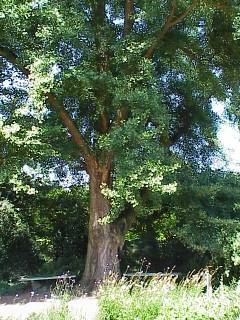
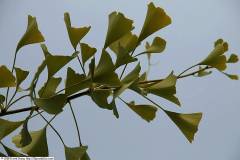
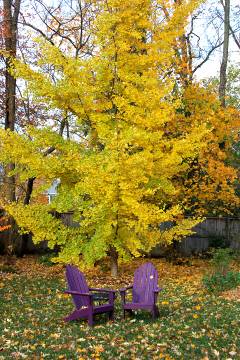
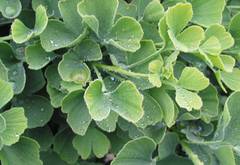
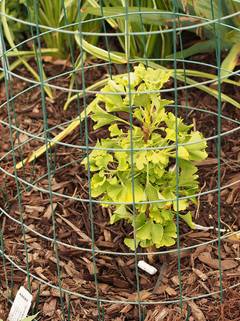
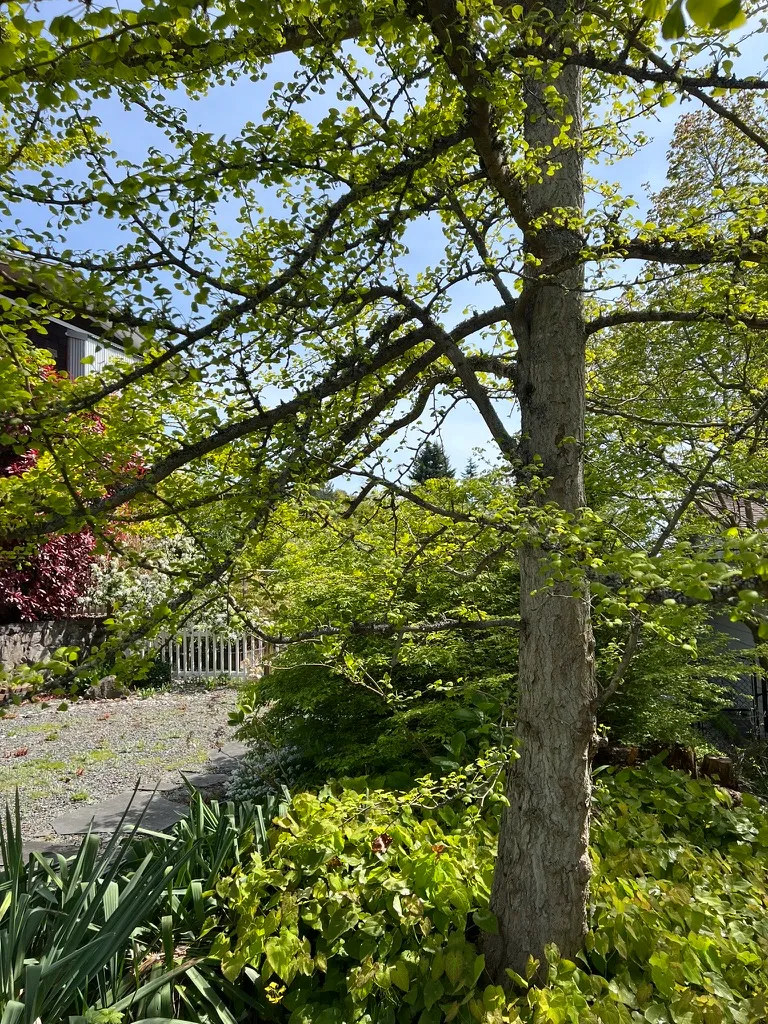
Ginkgo biloba 'PNI 2720' (sold under the trade name Golden Colonnade) is a medium-sized narrowly columnar deciduous tree growing 40-50 feet (12-15 m) tall and 10-15 feet (3-4.5 m) wide, with ascending tightly-held branches that form a narrowly oval crown. The cultivar is a male selection introduced by Princeton Nurseries (the designation PNI refers to the nursery). Ginkgo biloba is the sole surviving species of an ancient gymnosperm lineage dating to the Permian period; the species epithet biloba means two-lobed and refers to the leaf shape. Leaves are fan-shaped, 2-3 inches (5-8 cm) wide, with parallel dichotomously branching veins and a notched outer margin that divides each leaf into two lobes — this leaf form is not matched by other commonly cultivated trees. Foliage is bright green in spring and summer and turns uniformly bright golden-yellow in fall, typically October-November in the Pacific Northwest, dropping over 1-3 weeks. Being a male cultivar, this selection produces no seed-bearing ovules and therefore no malodorous fleshy seed coats. Tolerates compacted urban soils, air pollution, reflected heat, and a wide pH range (5.0-7.5). Growth rate is 12-18 inches (30-45 cm) per year. All parts, particularly raw seeds and leaves consumed in quantity, contain toxic compounds including ginkgotoxin and long-chain alkylphenols.
Native Range
Species native to mountain forests of eastern China; wild populations are now restricted to small areas in Zhejiang and Guizhou provinces. The species has been cultivated in China and Japan for centuries and is widely planted around Buddhist temples. 'PNI 2720' is a cultivar introduced by Princeton Nurseries.Suggested Uses
Grown as a street tree, specimen, or avenue tree in urban landscapes where a narrowly columnar deciduous tree with reliable fall color is needed in limited horizontal space, spaced 10-15 feet (3-4.5 m) apart. The 10-15 foot (3-4.5 m) crown width suits median strips, parking lot perimeters, and tight urban plantings where the broad-crowned species would not fit. Being male, this cultivar does not produce the malodorous fleshy seed coats of female ginkgos. All parts toxic if ingested in quantity. Hardy in zones 4-9.How to Identify
Appearance
Size & Dimensions
Height40' - 50'
Width/Spread10' - 15'
Bloom Information
This cultivar is male-only and produces small catkin-like pollen cones on short spurs in April-May as the leaves emerge. No female reproductive structures, ovules, or fleshy seed coats are produced. Fall foliage transitions to bright golden-yellow in October-November and drops over 1-3 weeks.
Detailed Descriptions
Foliage Description
bright green in spring and summer; bright golden-yellow in fallGrowing Conditions
Sun Requirements
Requires 6-10 hours of direct sunlight daily
• Full Sun: 6+ hours of direct sunlight
• Partial Shade: 3-6 hours of direct sunlight
• Full Shade: Less than 3 hours of direct sunlight
Care & Maintenance
Care Guide
Site in full sun in moist, well-drained soil with a pH of 5.0-7.5; tolerates a wide range of soil types including compacted urban soils, air pollution, and reflected heat. Water consistently during the first two growing seasons; established trees tolerate moderate drought. Growth rate is 12-18 inches (30-45 cm) per year. Fall foliage color develops most reliably on sites with adequate sun exposure and distinct autumn temperature cooling. Does not tolerate prolonged waterlogging. All parts contain toxic compounds; raw seeds and quantities of leaves are toxic to humans and pets. Deer-resistant. Hardy in zones 4-9.Pruning
No pruning is required to maintain the columnar form. Remove dead or crossing branches in late spring (May) or early fall (September). Lower branches can be raised progressively to expose the trunk as the tree matures. Winter pruning is not recommended — ginkgo bleeds heavily from dormant-season wounds.Pruning Schedule
Prune: May & September
late springfall